🎨Painting and plaster
Stairwell Painting in Holon: Scope and Work Plan
By KABLAY Editorial · · 12 min read · Updated:
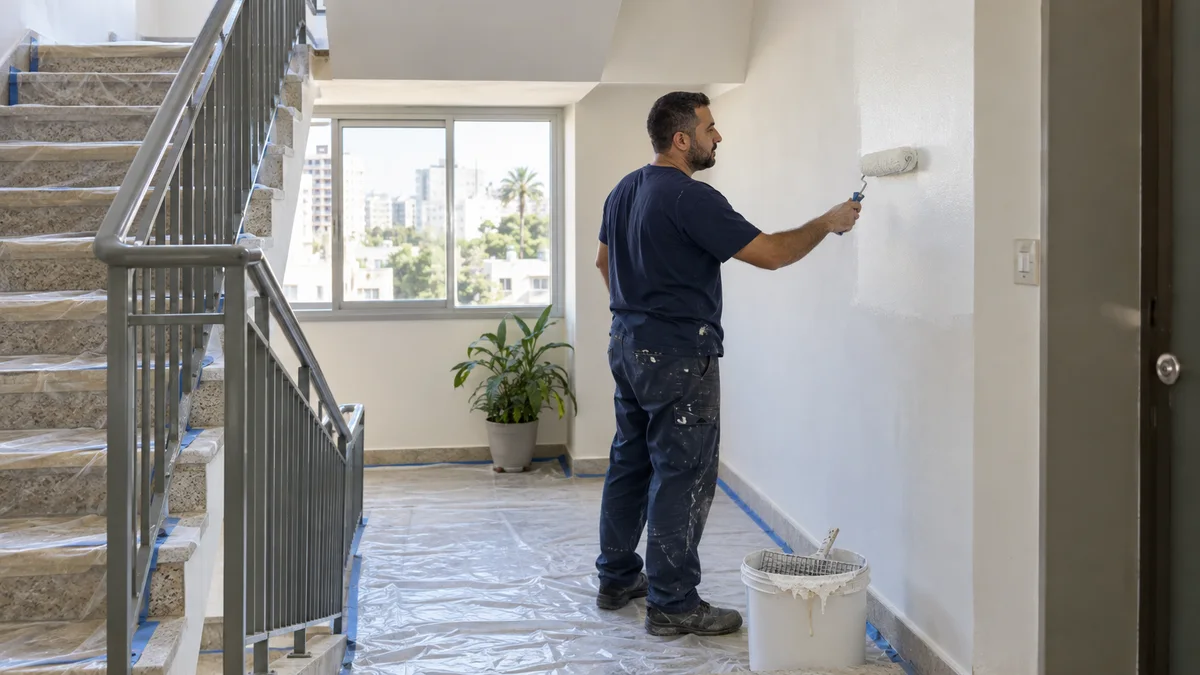
Stairwell painting in Holon takes place in a space residents continue to use. A proposal should therefore describe access, preparation, protection, sequencing and inspection as well as colour and walls. Equal floor counts do not mean equal workloads: heights, landings, ceilings, substrate condition and working access vary from building to building.
The painter and building contact need an understandable plan before work begins. This guide helps collect information and compare offers; budget and authorisation decisions belong to the people responsible for the particular building. Residential rooms have a separate wall painting guide. In a shared passage, phased access and one coordinating contact are especially useful.
Define the areas included
List floors, landings, entrance areas, walls and ceilings. Say whether lift surroundings, service rooms and the outside entrance are included. Avoid merging internal and external painting into one undefined line because conditions and coating systems can differ. Collect photographs of each surface type and any available layout.
Doors, railings, metal handrails and floors are separate materials and jobs. If they are being renewed, specify their preparation and coating independently. Wall paint is not automatically suitable for stair treads. Where these elements remain unchanged, record their protection and their condition check after work.
Measure areas and heights, not just floors
Wall lengths, heights and landing features help describe the work. A high space above a flight can need specialised access even when the paint area is small. If measurements are uncertain, say so and request an inspection. A price per floor can hide different areas and methods, making comparison difficult without details.
Show turns, narrow points, doors and large projections. Identify where equipment cannot be placed without disrupting access. Do not measure an upper area yourself using an unsuitable ladder on steps. Photographs and the described limitations let the painter assess appropriate arrangements during the visit.
Inspect defects before selecting the finish
Photograph peeling, cracks, water marks and previous repairs. Crack history, recurring stains and layer condition affect preparation. More paint does not solve every defect. Active moisture or concerns about the substrate need assessment before decoration so a fresh surface does not merely cover an unresolved cause.
Sherwin-Williams’ peeling guidance identifies moisture, contamination and weak existing adhesion as relevant concerns. Preparation still needs to suit the actual substrate and the chosen product’s instructions.
For a recurring defect, see the guide to peeling wall paint. Agree on local repairs, areas requiring wider preparation and who decides on newly discovered problems. That is a defined scope, rather than advance approval for any additional work the painter might encounter.
Approve one sample
Stairwell lighting changes with windows, lamps and surrounding finishes. A sample on site is more useful than an image on a phone. Agree the colour, sheen and expected texture with the responsible contact and retain the decision. Several residents giving different instructions on the day can create disagreement even where application is competent.
If two colours or a lower painted zone are planned, show the boundaries on a drawing. An unchanged older finish may look different beside fresh paint. Establish whether more uniform preparation is required or an existing texture is acceptable. Make it look nice is not a substitute for a sample that can be checked at handover.
Plan residents’ passage during the work
Create a phased plan preserving an agreed route. A landing, flight and entrance may be treated at different times; materials, cables and tools should not accidentally block the only passage. Discuss pushchairs, residents with limited mobility and periods of heavy use. These are conditions of your building, rather than a common feature of every Holon address.
The coordinating contact should tell residents which zone is in use and when restrictions end. Do not promise access over a new coating merely because it looks dry. A floor refurbishment needs its own materials and readiness conditions. Wall painting should not be taken as permission to change how the stair surfaces can be used.
Assess high areas and equipment positions
Ask the painter to assess high sections and describe suitable equipment. A ladder improvised across different step levels is not a plan simply because the quote is small. Agree delivery, storage and the work zone. Actual height and geometry determine access requirements, rather than the number of lines in the estimate.
During inspection, identify lighting, electrical cabinets, sensors, signs and other equipment. Protecting it from paint differs from disconnecting or moving it. Electrical interventions belong to appropriate specialists. Do not let painting become an unagreed alteration to operational systems that is only discovered after completion.
Protect doors, handrails and flooring
Name retained surfaces: stairs, landings, handrails, doors, handles, glass and entrance components. Agree suitable protection and its removal without harming the finish. Protection itself should not create an unexpected obstacle. Initial photographs help check the retained areas after coverings are removed.
Do not coat moving mechanisms, locks, seals or markings without an appropriate plan. A door repair is a separate task. Dust and waste should be handled through the agreed process rather than left outside apartment entrances. The quote should explain what working-area cleanup means at the end of each phase.
Select a compatible system and drying sequence
Preparation, primer and finish need to suit the substrate and intended service. Ask for materials or agreed performance characteristics so you can understand the offer. Do not impose one coat count or waiting period on every product. Instructions, temperature, humidity and surface condition affect the sequence and the permitted next stage.
A low odour does not mean other working instructions can be ignored. Agree ventilation and compliance with the selected material guidance. If the space cannot support the proposed process, revise the arrangements instead of rushing. The ceiling painting guide covers related preparation and inspection questions, particularly where old stains exist.
Compare one complete shared-area scope
Compare offers using the same zone list, pictures and sample. A lower figure excluding preparation, access or protection is a different job. Identify which defects are allowed for, what needs further assessment and who approves expansion. Changes should be agreed before work with the responsible person, rather than a passing resident on the stairs.
- Zones, areas, heights and included surfaces.
- Preparation, local repairs, materials and sample.
- Height access, protection and passage arrangements.
- Phases, intermediate cleanup and readiness dates.
- Total, VAT where applicable and approval of additions.
List railings, doors, floors and outside areas separately if included. A complete stairwell line without detail is difficult to inspect. Photographs and agreed boundaries help both the painter and the building representative. Keep them with the approved colour so later maintenance can refer to the actual decision.
Use one contact and an achievable schedule
Nominate someone to confirm samples, answer questions and accept stages. Collect residents’ concerns through that contact. Check applicable timing restrictions with the people responsible for the building and work instead of assuming noisy work can take place at any hour. There is no need to invent a city timetable; check the conditions for the address and process.
Allow a margin for newly identified preparation and drying. If inspection requires another step, update the schedule and residents’ notice. Keep the sequence clear: preparation, treatment, readiness and removal of restrictions. This matters when furniture deliveries or other building work also occupy the passage.
Inspect by completed section
Check walls and ceilings in ordinary lighting after their specified readiness stage. Compare colour and texture with the sample and inspect edges, corners, missed areas and runs. Check retained finishes and door operation if protection was removed. An intermediate coat is not the result of the completed process.
A concern list with an overall picture and detail helps arrange corrections. Obtain material details, shade and care guidance at completion. Do not wash a new wall before its permitted regime. Keep photographs of previously problematic areas so a returning stain or crack can prompt assessment of its cause rather than automatic repainting.
A Holon booking example
You could write: “Stairwell painting in Holon. Photographs of floors, landings and high areas attached. Include walls and ceiling; protect rather than paint railings and doors. There is local peeling requiring preparation assessment. Please include a sample, phases preserving passage, a complete quote and cleanup. Changes are approved by the named building contact.”
Compare responses through the Holon painter page using that single plan. A useful booking makes the area, substrate and access visible. The work can then be inspected against agreed conditions while the refurbished stairwell continues to serve the building’s everyday needs.
Internal links
Useful pages on this topic
Frequently asked questions
- Is floor count enough for a Holon stairwell painting quote?
- No. Define zones, area, height, condition and access. Equal floor counts can involve different preparation and equipment.
- Are railings and doors painted automatically?
- Not necessarily. They are separate surfaces with different preparation and materials. List them explicitly or specify protection only.
- How can residents retain passage?
- Agree phases, route, work zone and notices with the responsible contact. Equipment and materials should not unexpectedly block the agreed route.
- How should stairwell painting be inspected?
- Inspect completed sections after the required drying stage against the sample, colour, texture, edges and retained elements. Submit one concern list with photographs.