🎨Painting and plaster
Ceiling Painting in Israel: Stains, Prep and Quotes
By KABLAY Editorial · · 12 min read · Updated:
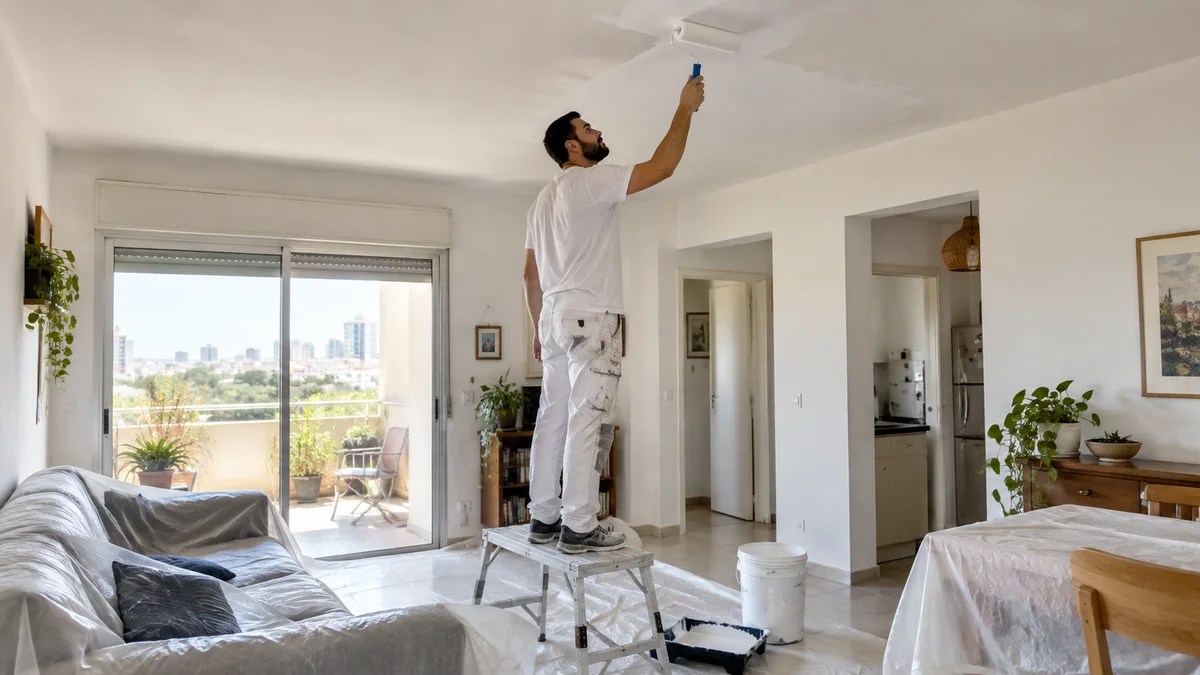
A freshly painted ceiling can make an Israeli apartment feel brighter, but it also reveals every ridge, repaired patch and old water stain when daylight crosses the room. The useful question is therefore not simply how much a painter charges per square metre. It is what condition the ceiling is in, how it will be prepared, how access will work and what result the agreed coating system can reasonably deliver.
This guide covers ordinary interior ceilings in occupied and empty apartments. It helps you describe a job, compare proposals and inspect the finished work. A ceiling with an active leak, loose plaster, an uncertain old surface or an electrical hazard needs diagnosis before decoration. New white paint cannot make those underlying conditions disappear.
Start with a description of the ceiling
Photograph the whole room, then take closer pictures of stains, peeling edges, cracks and previous repairs. Include an angled photograph with daylight coming from a window. Straight-on pictures often hide the ridges that become obvious after repainting. Give the room dimensions, approximate ceiling height, your city and whether furniture will remain inside during the work.
Separate cosmetic complaints from functional problems. “The colour is dull” describes a different job from “the stain returns after rain” or “paint flakes every time the bathroom is used”. Explain when a change appeared and whether a plumber or roofing specialist has already investigated it. Keep their report or photographs so the painter can understand what was repaired.
Water stains: solve the source before covering the mark
A dry-looking brown mark does not establish that a leak has stopped. It may follow a roof defect, a pipe problem, drainage from an air conditioner or water from the apartment above. Record the weather and appliance use when the mark changes. If water is near a light fitting or other electrical equipment, keep people clear and arrange an appropriate professional assessment.
Moisture is a recognised cause of paint adhesion failure. Sherwin-Williams explains that the moisture cause should be addressed before loose paint is removed and the surface prepared. For a ceiling, ask the painter how dryness and stability will be checked, and what would make them postpone the finishing stage.
Do not agree to an arbitrary promise that every wet ceiling can be painted the next morning. Materials, depth of wetting and room conditions differ. A moisture reading, where appropriate, is one piece of evidence rather than a universal deadline. Put the sequence in writing: source repair, observation or drying, substrate repair, stain treatment if required, then the finish.
Identify the old surface and its condition
Ask whether the existing surface is sound acrylic paint, an older chalky coating, plasterboard, a repaired cement-based area or another finish. The new system must suit both the material and the existing layers. A primer that is useful on one surface does not automatically solve every adhesion problem on another.
If rubbing the surface releases powder or the old finish separates in sheets, preparation may be much more substantial than a light clean. Request a small inspection or trial area and a clear explanation of how unstable material will be dealt with. Avoid indiscriminate sanding of unidentified old layers; uncertainty about the material should be resolved before dust-producing work begins.
Local repairs versus smoothing the entire ceiling
Filling a few holes and flattening an entire ceiling are different scopes. A local patch may be structurally sound yet remain visible under side lighting because its texture differs from the surrounding area. Decide whether your priority is ordinary presentable decoration or a smoother result under demanding lighting, then ask the painter to price the appropriate preparation.
Document large cracks, sagging sections or recurring separation and have the relevant professional assess their cause. Cosmetic filler is not a structural diagnosis. For an ordinary repaired area, specify the repair material, the boundaries of the work and how dust will be removed before further coating. If the extent cannot be known until loose layers are removed, agree on a written variation process.
Choose the coating system and finish
Ask for the product names, intended surface and finish level rather than accepting “good white paint”. A matte finish and a more reflective finish can look very different on the same ceiling. View the proposed colour and sheen in the room if possible, especially when the walls are already white but use another shade.
The specification should distinguish a bonding primer, any suitable stain-blocking treatment and the final paint. These products perform different jobs. Tell the painter whether the room is a bedroom, kitchen or bathroom and explain ventilation and previous condensation. Ask how the selected system suits those conditions; a label mentioning moisture resistance is not a repair for a continuing leak.
Protect floors, furniture and adjoining finishes
In an occupied apartment, discuss where furniture will go and which pieces the team is prepared to move. Heavy cabinets, appliances and fragile items need a separate plan. Photograph existing scratches and finishes before covering them. Dust sheets should protect the actual walking and working area, with a clear safe route through the apartment.
Include wall edges, doors, windows and fitted cabinets in the protection plan. Specify whether light fittings remain in place, who handles any electrical disconnection and how their surrounds will be finished. Decorative work must not turn into unplanned electrical work. The quotation should also state whether protection is removed and ordinary painting debris is collected at the end.
Height and access affect the quotation
Give the painter the ceiling height and describe stairwells, narrow passages or areas over fixed furniture. A normal room and a ceiling over a staircase cannot be priced as identical access. Ask what stable working platform is proposed and whether its delivery, assembly and removal are included.
For work you are considering doing yourself, limit the task to a surface you can safely reach with suitable equipment and understand. Do not build a platform from chairs or boxes. Large overhead repairs, unstable material or awkward access can justify a professional even when the visible painted area seems small.
Compare quotations by scope, not only by total
There is no useful single price for every ceiling in Israel. Compare two or three written offers for the same rooms and preparation. Ask whether the price includes materials, access equipment, protection, repairs, primer, the agreed finish coats, cleanup and VAT where applicable. A ceiling-only quotation should make the boundary with wall painting explicit.
- Rooms, measured area and approximate height.
- Current coating, stains and known repairs.
- Loose-paint removal and substrate preparation.
- Local patching or whole-surface smoothing.
- Product names, colour, sheen and coating sequence.
- Furniture movement, access equipment and protection.
- Drying intervals, visits and room availability.
- Waste removal, payment milestones and correction arrangements.
If a contractor quotes only a square-metre rate, request the minimum job charge and all exclusions. Small ceilings often involve travel, setup and more than one visit. Keep an allowance for genuinely unknown repair work, but do not leave the contractor free to add unspecified extras without your approval.
Plan the order of work and cleaning
When ceiling painting is part of a larger renovation, schedule dust-producing repairs before final paint and deep cleaning afterward. Let the painter and cleaner agree on when surfaces can be touched or wiped. Freshly applied material can look dry while still needing the product's specified curing period.
In an occupied home, decide which room is unavailable on each visit and how ventilation will be maintained. Discuss children, pets and belongings before work begins. Keep a copy of product information so later cleaning follows the coating manufacturer's instructions rather than an improvised solvent treatment.
Inspect the ceiling after it has dried
Inspect in normal daylight and with the room's usual lights, from several sensible positions. Look for missed areas, obvious roller bands, paint on adjoining finishes and repairs that differ from the agreed standard. Do not inspect only from a photograph taken directly below the centre of the room.
Different textures can remain visible even when the colour is consistent. Refer back to whether local repairs or full smoothing were included. Photograph concerns, list them together and arrange any correction after the appropriate drying interval. A specific agreed list is easier to resolve than repeated general statements that the ceiling does not look perfect.
If a stain returns or a repair opens again, document when it happened and contact the painter and the professional responsible for the original cause. Avoid immediately adding another coat and losing the evidence. The original scope and repair record help determine whether the problem concerns decoration, an unresolved leak or movement in the substrate.
A useful brief for a Kablay request
Write: “Ceiling painting in a two-room apartment in [city], approximate height [height], furniture [present/removed]. One old water stain was investigated on [date]; I can provide the repair record. Please specify preparation, any stain treatment, products, protection, visits and cleanup.” Attach overall and close photographs. This lets a painter ask focused questions and provide a comparable proposal.
For related planning, read the wall preparation and painting guide and the after-renovation cleaning checklist. The best ceiling job starts with a sound, understood surface, a clear written scope and enough time to inspect the finish before the room returns to normal use.
Internal links
Useful pages on this topic
Frequently asked questions
- Can a ceiling water stain simply be painted over?
- First confirm the water source has been addressed and the substrate is ready. Agree on repairs, suitable stain treatment and the finish; white paint alone does not establish that the cause is resolved.
- Does painting include smoothing the whole ceiling?
- Not automatically. Local repairs and full-surface smoothing are different scopes and should be specified separately.
- Why are roller bands visible after painting?
- Assess the surface, preparation, application, drying and lighting after the appropriate interval, then compare with the agreed finish standard.
- How do I get a useful ceiling painting quote?
- Provide dimensions, height, defect photographs and furniture details. Request preparation, materials, access, protection, visits, cleanup and variation terms in writing.