🎨Painting and plaster
Peeling Wall Paint in Israel: Causes and Lasting Repairs
By KABLAY Editorial · · 12 min read · Updated:
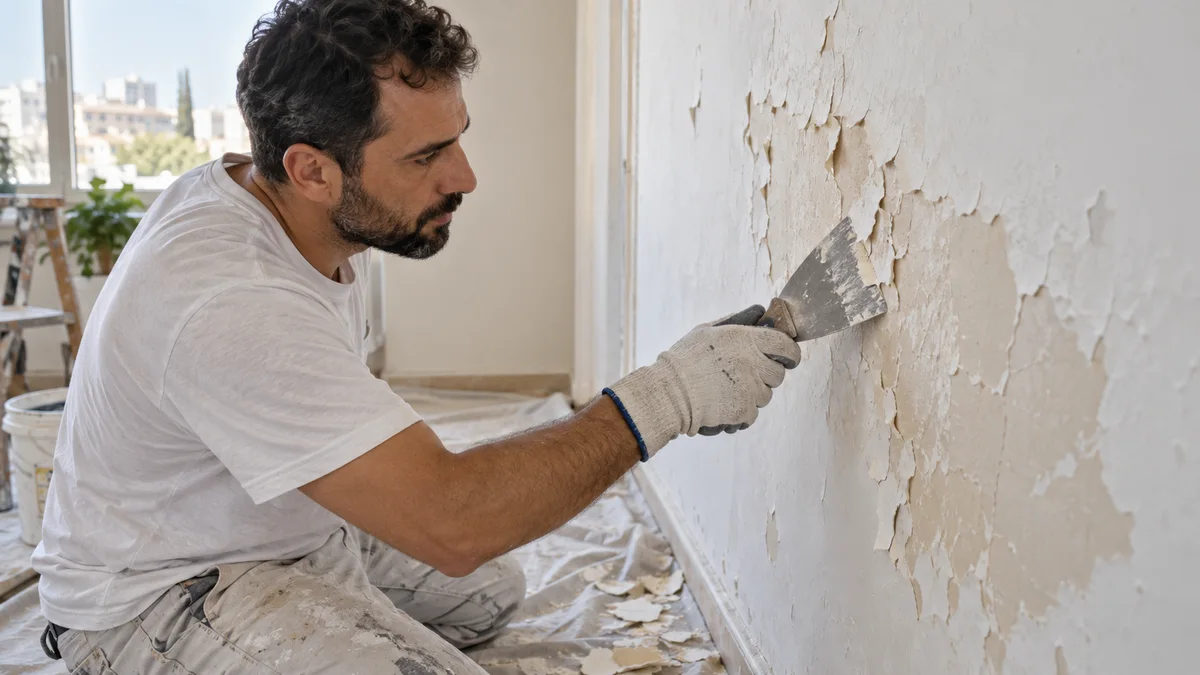
Peeling paint is a symptom, not a specification for the repair. A wall can flake because the old coating is unstable, the preparation was unsuitable, water keeps reaching the surface or several different problems overlap. Another coat may briefly improve the appearance while leaving the failing layer underneath.
This guide helps apartment owners and tenants in Israel document the problem, distinguish a cosmetic job from work on its cause, and compare a painter's proposal. It does not diagnose a wall from a photograph. Significant moisture, loose plaster, unusual old materials or cracks associated with movement call for the relevant assessment before routine decoration.
Describe how and when the failure appeared
Photograph the whole wall, the affected area and an edge where the finish has separated. Add a picture under ordinary side lighting. Record whether the damage began after painting, rain, a plumbing repair or repeated bathroom use. Say whether it is growing, returning in the same place or appearing across several walls.
Useful descriptions include bubbles, thin paint flakes, powder that comes off when touched, and plaster separating with the coating. These are different observations. Describe what you actually saw rather than declaring that the painter definitely used bad paint. A clear timeline and the names of previous materials, if available, make the next inspection more productive.
Moisture and adhesion can be connected
Look for a pattern, such as changes after rain or appliance use, without treating the pattern as a complete diagnosis. Possible sources include a roof, facade, pipe, drainage problem or repeated condensation. If water is near electrical equipment, restrict access and arrange a suitable professional assessment before cleaning, scraping or coating the area.
Sherwin-Williams identifies moisture as a cause of lost paint adhesion. Ask how the proposed repair will address the actual source and establish that the substrate is ready. A finish described as moisture resistant does not prove that the leak, persistent wetting or ventilation issue has been resolved.
If a source repair has already been carried out, keep the report and photographs. Agree on what observation or drying period is needed before decoration. Avoid accepting a universal waiting time for every wall; the material, depth of wetting and conditions differ. An appropriate measurement can support the assessment, but should not replace an explanation of the source.
A dry wall can still have an unstable coating
When moisture is not the identified cause, ask the painter to examine the existing layers and preparation. The finish may be chalky, incompatible with a previous coating, poorly attached to dust or applied over a surface that needed another treatment. Different failure patterns can look similar from across the room.
Ask for a small inspection or trial area with agreed boundaries. Determine whether the problem lies in the new coat, an older layer or the plaster beneath them. The repair should stop at a sound, understood substrate. Painting over a weak lower layer can leave a new finish attached to something that still separates from the wall.
Do not confuse paint flakes with loose plaster
If fragments include the substrate rather than only the thin finish, the scope may require more than repainting. A painter can explain ordinary surface preparation, but substantial separation, a hollow or unstable area and repeated cracking deserve appropriate assessment. Keep people clear of material that could fall, and do not make a decorative quotation substitute for that assessment.
Clarify who repairs the substrate and which materials are proposed. Ask how the repaired area will meet the surrounding surface and how remaining dust will be removed. If the extent becomes clear only after loose material is removed, define a variation process so additional work is explained and approved before it expands.
Old or unidentified layers need a careful approach
Do not start aggressive sanding simply because a wall is old and the new colour is already chosen. Identify the material and agree on an appropriate method first. Some old finishes require information or specialist handling that cannot be supplied by a normal colour consultation. Tell the contractor about previous renovations and any material documentation you have.
For routine preparation on identified surfaces, ask about protection, dust collection and the working area. Explain whether people will remain in the apartment. Define how adjoining furniture and rooms are protected, which surfaces are available to the team and who cleans the work area before the next coating stage.
Cracks, bubbles and stains need separate descriptions
A crack is not automatically the same problem as paint flaking. Record its location, width as observed, history and whether it reopens after earlier repairs. If it is large, changing or associated with other movement signs, seek the appropriate assessment rather than accepting filler as a structural conclusion.
For an ordinary cosmetic repair, specify how the crack or damaged area will be treated and blended. A brown stain can remain after a resolved water incident, but recurring changes require investigation. Ask the painter to distinguish treatment of the visible mark from correction of the underlying cause. Those are separate tasks even when one quotation coordinates them.
Specify preparation before the finish
The useful scope names what will be removed, what will remain, how the substrate will be repaired and how the chosen coating will attach. Request product names and their intended surfaces. The primer and finish should be selected as a compatible system for the actual conditions, rather than as a collection of products that happened to be available.
Do not specify an arbitrary number of coats as the whole solution. Ask which preparation makes those coats appropriate and which drying intervals apply. A bonding primer, a repair compound, a stain treatment and a final decorative coat have different functions. The written sequence helps you understand what is being paid for and inspect the work before it is hidden.
Local repair or repainting the complete wall?
A small repair may leave a noticeable colour or texture boundary even when it is stable. Compare a local patch with repainting the whole wall from corner to corner. Ask whether the surrounding finish is available in a matching product and whether its age makes a perfect visual match unlikely.
Full-wall painting does not mean full-wall smoothing. If your expectation is a particularly even surface under strong side lighting, ask for the appropriate preparation separately. Photograph the starting texture and agree on a sample or a practical finish standard. This prevents a discussion about adhesion repair from silently becoming a demand to flatten every old imperfection.
What to include in a comparable quotation
A useful price follows an inspection or sufficiently clear evidence. It identifies the affected rooms, preparation, repairs, materials, access, protection and finishing boundaries. Ask whether VAT, debris collection and return visits are included where applicable. A cheap repaint and a substrate repair are not comparable until both proposals describe the same work.
- Location, dimensions and photographs of each area.
- Known moisture history and source-repair records.
- Existing coating or uncertainty that requires inspection.
- Removal boundaries and substrate repair.
- Products, sequence, colour and finish level.
- Local blend or complete-wall repainting.
- Protection, access, visits and drying intervals.
- Extra-work approval and correction arrangements.
Ask what the contractor's correction commitment covers and what it excludes, particularly a renewed leak or later movement. A promise that paint will never peel anywhere is less useful than a clear statement tied to the assessed surface and agreed process. Keep the quotation, photographs and relevant product information together.
Coordinate the right professionals
A recurring water mark may require a plumber, roof specialist or other contractor before a painter. Tell each person what the previous professional found so work follows a clear sequence. Decide who schedules the return visit and how the repaired source will be documented. Paying for decoration before cause work is complete can mean repeating the same setup.
If visible mould is involved, avoid treating fresh paint as evidence that the moisture problem has gone. Discuss the appropriate assessment and cleaning separately, especially when the extent or material is unclear. For more context, read the apartment mould guide; the current job still needs its own inspection and specification.
Inspect at sensible stages
Before the new finish hides the work, ask to see the prepared surface and compare it with the agreed removal and repair boundaries. At handover, after the appropriate drying interval, inspect in normal room lighting. Check visible edges, colour consistency, missed areas, dust residue and damage to adjoining finishes.
Do not deliberately pull or scratch a newly applied coating as an improvised strength test. If a compatibility trial or other assessment was agreed, follow the specified method and timing with the contractor. Ask when ordinary cleaning and use can resume. Keep records of materials and preparation for a future repair rather than relying on memory.
If the symptom returns, photograph it before adding another layer. Record the date, weather, appliance use and any new work nearby. Contact the contractor with the original scope and source-repair evidence. The pattern can help determine whether the same cause has returned, another layer has failed or a different issue needs inspection.
Write a clear Kablay request
For example: “Peeling paint on an interior wall in [city], about [area]. First noticed after [event]; attached overall and close photographs. Moisture source [unknown/repaired with record]. Please inspect the layers and quote removal, substrate repair, compatible products and local versus complete-wall finishing.” A painter can then respond to the actual evidence.
For an unresolved plumbing source, describe a separate plumbing task. To coordinate the final finish, use the wall preparation guide. The goal is a sound coating on an understood surface, with the cause addressed and a scope you can verify, rather than repeated cosmetic visits to the same failing patch.
Internal links
Useful pages on this topic
Frequently asked questions
- Can I simply repaint peeling paint?
- Establish the cause and condition of the underlying layers first. A new coating can separate with an unstable substrate; agree on preparation and moisture-source work before finishing.
- Must the entire wall be repainted?
- Compare local repair and whole-wall finishing for texture, colour match and the surrounding coating's condition. Full-surface smoothing is a separate scope.
- Do bubbles prove that a pipe is leaking?
- No. Determine the cause from inspection, history and appropriate checks. Bubbles or peeling alone do not identify the exact source.
- What should I do if peeling returns?
- Photograph changes before another coat, record the date and circumstances, and provide the original scope and source-repair records for reassessment.