🎨Painting and plaster
How to Paint Walls Like a Pro in Israel: Complete 2026 Guide
By KABLAY Editorial · · 11 min read
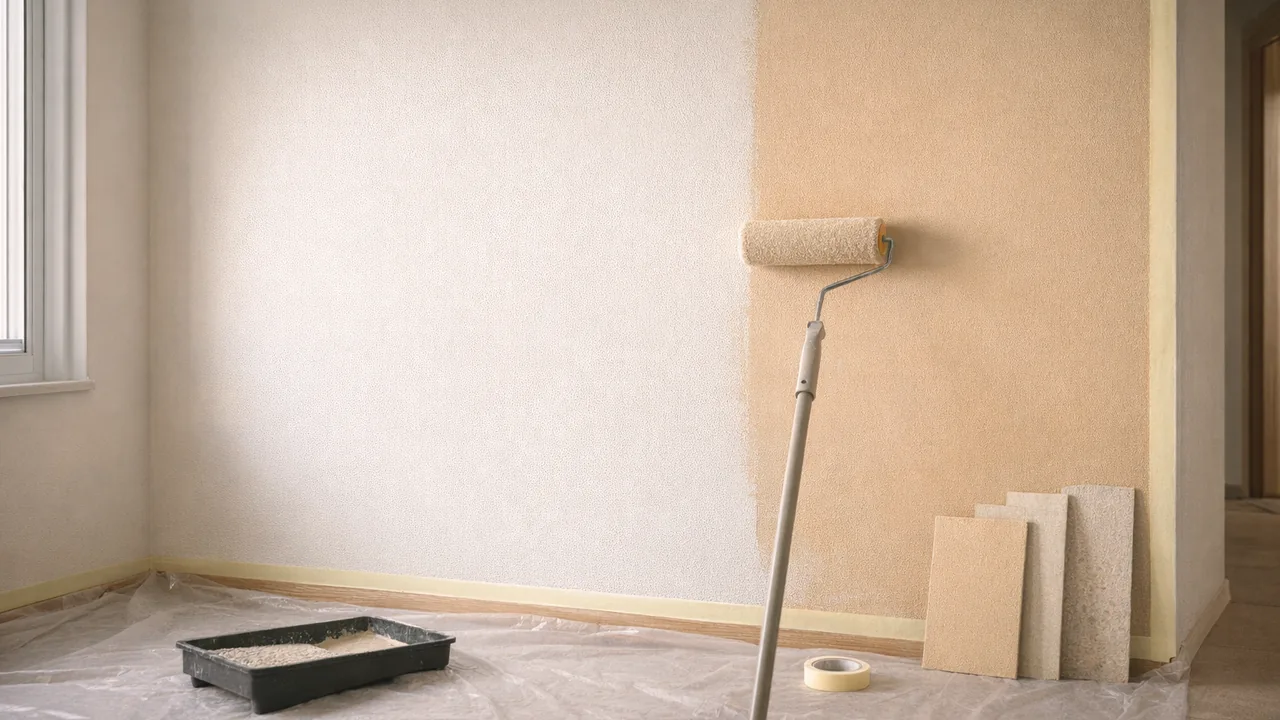
Painting walls looks simple at first glance: a brush, a roller, a can of paint — and in one weekend the room is transformed. But the difference between amateur and professional work is instantly visible: a pro leaves a smooth, even wall with no streaks, drips, or patchy spots, and the paint lasts for years without peeling. DIY paintwork shows streaks, orange-peel texture, visible seams between strokes, and the paint film starts to crack within a year.
The secret is in preparation and technique, not in expensive paint. In this guide we cover everything: how to prepare a wall, which paint to choose for each room (especially for Israel's humid climate), the tools you actually need, how to apply paint correctly, how much it costs in Israel in 2026, and when it is better to hire a professional painter through KABLAY.
Wall preparation — 80% of quality painting
Professional painters in Israel repeat one sentence: paint does not forgive bad preparation. No premium paint will hide poorly filled cracks or a dusty wall. Here is what needs to happen before the first stroke.
1. Clean the surface
- Remove dust with a dry soft cloth or a vacuum with a brush attachment
- Grease stains (especially in the kitchen) should be washed with soapy water or a degreaser
- Soot and nicotine marks — a soda solution or a specialized cleaner
- Mold and mildew — an anti-fungal treatment, then dry completely
2. Remove the old finish
- Old wallpaper — strip completely, soaking with water or a wallpaper remover
- Peeling paint — scrape with a putty knife down to a sound surface
- Glossy or oil-based paint — must be sanded so new paint adheres
3. Repair cracks and imperfections
In Israeli apartments, cracks are common: old concrete panels, temperature swings, building settlement. Do not ignore them.
- Small cracks — fill with acrylic caulk or finishing spackle
- Large cracks — widen with a putty knife down to a sound edge, fill with two layers of spackle
- Screw and nail holes — fill with spackle or a multi-purpose filler
- After drying (6–24 hours) — sand with P180–P240 sandpaper
4. Primer — the step 90% of DIYers skip
Primer (פריימר in Hebrew) is not a manufacturer marketing gimmick but a critical step. It:
- Creates adhesion — paint will not peel off a year later
- Evens out absorbency — paint goes on uniformly
- Saves paint — without primer you need 3 coats instead of 2
- Isolates stains and the old color
For drywall and spackle use a penetrating primer; for kitchens and bathrooms use a primer with anti-mold additives. Price in Israel: ₪60–₪150 per 3 L.
Important: never paint over new plaster or fresh drywall — you need at least 4 weeks for full drying. Otherwise paint will bubble up and crack.
Choosing paint — which fits which room
In Israel, the primary factor is humidity. In summer, air conditioning creates sharp temperature swings; in winter, some apartments get condensation and mold. Paint must be chosen for the conditions of the room, not only for color.
Latex (acrylic) paint
The universal choice for living spaces: dries fast, low odor, cleans up with warm water. 90% of apartments in Israel are painted with it.
- Matte (mat) — hides wall imperfections but does not tolerate washing. For bedrooms and ceilings
- Eggshell / satin — soft sheen, can be wiped with a damp cloth. For living rooms, hallways, children's rooms
- Semi-gloss — tolerates active washing. For kitchens, bathrooms, door frames
Specialized paint for bathrooms and kitchens
In Israel labeled as «עמיד ללחות» (moisture-resistant) or «אנטי-עובש» (anti-mold). Mandatory for:
- Bathrooms and toilets
- Kitchens (especially near the stove and sink)
- Service balconies
- North-facing and corner rooms prone to condensation
Popular paint brands in Israel
- Tambour — the largest Israeli manufacturer, consistent quality, huge range. ₪180–₪350 per 5 L
- Nirlat — the second most popular, slightly cheaper than Tambour. ₪150–₪300 per 5 L
- Caparol — German premium brand. ₪280–₪500 per 5 L
- Multilak, Akemi — budget segment for utility spaces. ₪100–₪180 per 5 L
Coverage: 1 liter of quality latex paint covers 8–12 sqm in a single coat. Always plan for 2 coats and add a 10% reserve.
Tools — what you actually need
A painter kit can be assembled for ₪300–₪500 at any Home Center or building-materials store.
Rollers
- Nap 10–12 mm — for smooth walls, thin coat without orange-peel texture
- Nap 18–20 mm — for textured walls and porous surfaces
- Width 18–25 cm — optimal for room walls
- Microfiber or velour — gives the smoothest result with latex paint
Brushes
- Flat 50–75 mm — for corners and areas the roller cannot reach (cutting in)
- Angled sash brush — for wall-ceiling joints and window reveals
- Synthetic bristles — better for latex; natural bristles — for oil-based paint
Essential extras
- Painter's tape (blue or green — leaves no adhesive residue) — ₪15–₪35 per roll
- Tray with a grid to distribute paint evenly on the roller
- Plastic sheeting or masking paper for the floor
- Extension pole for the roller — to paint near the ceiling without a ladder
- Sandpaper P180–P240 for inter-coat sanding
- Safety glasses and a respirator (especially when working with primer)
Application technique — how a pro paints
Step 1: prepare the room
- Remove everything you can — furniture, paintings; unscrew or tape over sockets and switches
- Cover the floor with plastic sheeting, taping it down around the edges
- Tape off baseboards, door frames, windows with painter's tape
- Ensure ventilation, but without drafts (dust will settle on the paint)
Step 2: cutting in — corners and edges
With a brush, paint a 5–7 cm strip along all corners, the ceiling, baseboards, and around switches. This is done before rolling, so no seams are visible. Important: do not wait for the cut-in to dry — roll immediately, over a wet edge.
Step 3: rolling — the W or M technique
- Load the roller in the tray, roll on the grid to remove excess
- Draw a large W or M on the wall (roughly 1×1 m)
- Without lifting the roller, fill that square with horizontal or vertical strokes
- Finishing passes — in one direction (top to bottom), with light pressure
- Start the next square overlapping the previous one by 5–10 cm — no seams
Wet edge rule: paint an entire wall in one continuous session without stopping. If part starts drying while an adjacent part is still wet, you will see a visible seam at the join.
Step 4: how many coats and how long to wait
- Always plan for a minimum of 2 coats — even if the manufacturer promises one-coat coverage
- Between latex coats — 2–4 hours (faster in Israel's summer heat, slower in humid weather)
- Full dry — 24 hours
- Full cure (washable) — 2–3 weeks
Step 5: remove the tape — at the right moment
Remove painter's tape while the paint is still slightly wet (20–40 minutes after the last coat). If you wait for full drying, the paint film will tear along with the tape. Pull at a 45° angle to the wall, slowly.
Common mistakes to avoid
- Skipping primer — saving ₪150 turns into a redo a year later
- Painting over a dusty or greasy wall — paint will fall off
- Too thick a coat — drips and orange-peel texture
- Cheap roller shedding fibers — lint stuck in wet paint means repainting
- Stopping in the middle of a wall — a visible seam between dry and wet sections
- Painting below 10°C or above 30°C — paint does not lay down well (relevant in Israel in summer without AC)
- Removing tape after full drying — tears the edge of the paint
- Cutting corners on paint — cheap paint needs 3–4 coats instead of 2, and coverage is worse
How much painting costs in Israel (2026)
DIY — materials only
- Paint (5 L, 2 coats, ~40 sqm): ₪180–₪350
- Primer (3 L): ₪80–₪150
- Spackle, brushes, rollers, tape, sheeting: ₪250–₪400
- Total for a 15 sqm room: ₪500–₪900
With a professional painter
- Labor only (walls + ceiling): ₪25–₪45 per sqm
- Labor + materials (turnkey): ₪45–₪80 per sqm
- 15 sqm room (walls ~40 sqm, ceiling 15 sqm): ₪1,500–₪3,500 turnkey
- 3-bedroom apartment (~70 sqm floor): ₪6,000–₪12,000 turnkey
- Decorative techniques (Venetian plaster, concrete effect): ₪150–₪400 per sqm
Prices in Tel Aviv and Gush Dan are 15–25% higher than in peripheral areas. Rush jobs — a 30–50% surcharge.
When it is better to hire a professional
- High ceilings (over 3 m) — scaffolding work, unsafe to do alone
- Decorative techniques — Venetian or Moroccan plaster, concrete effect
- Perfectly smooth walls — requires finish-grade skimming and sanding to Class 0
- Large area (whole apartment) — one painter finishes in 3–5 days what would take you 4 weekends
- Work overlaps with other trades — sequencing matters (painter before or after flooring and electrical)
How to choose a good painter in Israel
- Review their portfolio — photos of completed jobs
- Check reviews from previous clients
- Request a written quote with a breakdown: materials, labor, preparation, waste removal
- Clarify whether preparation (spackling, priming) is included
- Ask about warranty — a good painter offers a 1–2 year warranty
- Clarify whose paint is used (theirs or yours) and whether a reserve is included
- KABLAY is a marketplace connecting clients with independent specialists. KABLAY does not guarantee availability, the number or timing of responses, licensing, documents, price, quality, or outcome; check the specialist and proposed terms before contracting.
Conclusion
KABLAY is a marketplace connecting clients with independent specialists. KABLAY does not guarantee availability, the number or timing of responses, licensing, documents, price, quality, or outcome; check the specialist and proposed terms before contracting.
Internal links