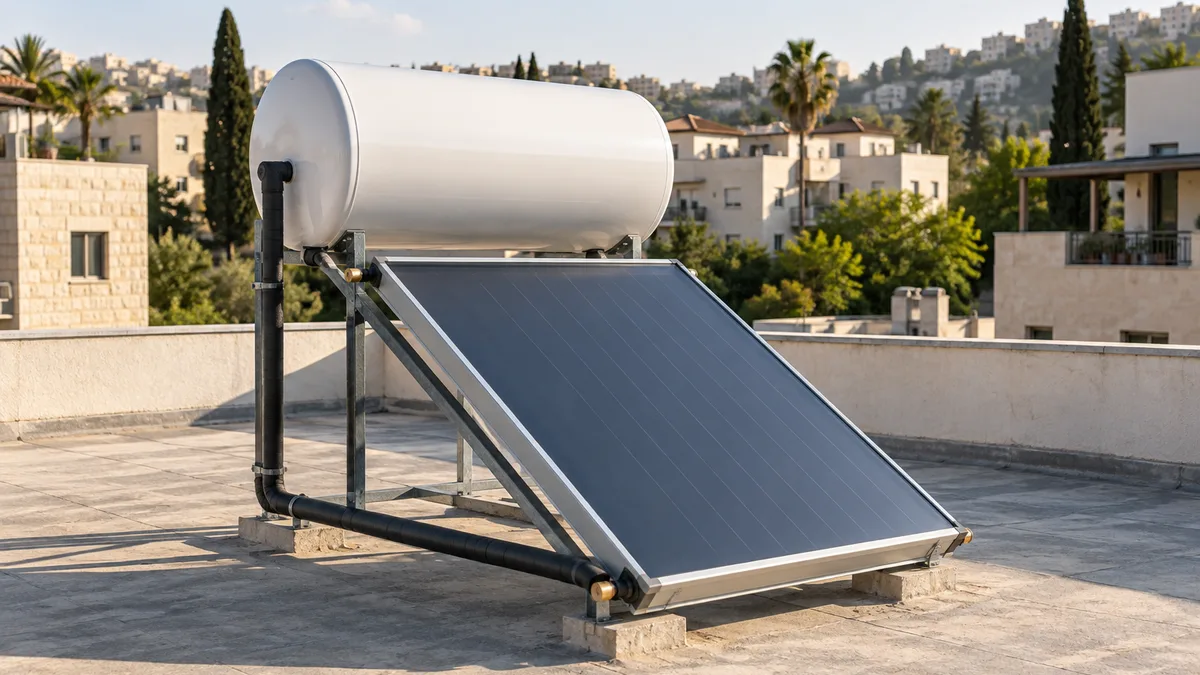
The water-heater switch is on and its light is glowing, yet the shower is cold. Or the water starts warm and runs cold almost immediately. In an Israeli apartment, similar complaints can involve an electric storage heater, a separate solar heater, a tank connected to the building’s shared solar system or a fault at one mixer. Buying a replacement tank before separating those possibilities can be premature.
This guide explains what to record before a service visit, how to distinguish operating modes and how to compare repair with replacement. It is not a dismantling procedure. Electrical covers, pressurised hot water and roof access require professional handling. Most useful initial observations can be collected inside the apartment without opening equipment or accessing the roof.
Five questions before booking a visit
- Is the water cold at every outlet or only in the shower?
- Does a sunny day produce hot water without electric heating?
- Does the usual electric-heating routine still work?
- Is the water completely cold, slow to warm or quickly exhausted?
- Are there trips, leaks, smells, noises or recent repairs?
Compare the kitchen and bathroom through ordinary tap use while avoiding scalding. Do not hold your hand under potentially very hot water to assess it. If one outlet works normally and another does not, do not declare the whole heater broken. Record the difference and ask for assessment of the hot-water distribution, mixer and relevant connections.
When to stop using the heater
Leave electric heating off if the RCD trips, a burning smell appears, the wall switch becomes unusually hot, water is near electrical equipment or there is unfamiliar crackling. Repeated switching is not a diagnostic method. Do not handle wet equipment or remove covers. Unusually hot water or steam also calls for professional assessment before further use.
With a leak, distinguish the tank body, a pipe connection, valve discharge or an unknown location if this can be observed safely. Never block a safety-valve outlet or force a seized valve. Photograph an accessible safe area and describe the water to the specialist. If the equipment can only be seen from the roof, leave that inspection to someone with appropriate safe access.
Identify the type of system
A dud hashmal uses electric heating. A dud shemesh uses solar collection and generally also has electric backup. Apartment buildings can have a shared solar circuit with individual storage tanks and a different circulation arrangement. Tell the specialist whether you know the system type, tank location and service contact for common equipment.
The wall switch does not identify the complete system. A shared solar installation can still have an electric backup switch in each apartment. If neighbours have the same problem, notify the building committee or management company. This helps separate a building issue from an apartment issue, without deciding in advance who is responsible for the bill.
Solar heating works but electric heating does not
That distinction is useful. A glowing wall indicator shows the state of part of the controls; it does not prove that electricity reaches the element or that the element is working. Possible areas to assess include the supply, switch, timer, thermostat, heating assembly and connections. A single symptom is not enough to select a replacement component.
Chromagen’s manufacturer guidance describes heating elements that fail or develop electrical leakage. These are possibilities for professional investigation, not a diagnosis based on cold water alone. If protection operates, also read the guide to recurring RCD and breaker trips.
Electric heating works but solar heating does not
A cool winter shower does not automatically establish a collector fault. Weather, shading, consumption and incoming water temperature affect the result. Compare similar conditions: a sudden change across several sunny days is more informative than comparing a winter morning with a summer evening. Describe what happened rather than stating that the collector must be blocked.
The solar circuit may require inspection of collectors, pipes, circulation and the specific system arrangement. For shared equipment, ask the building committee whether an existing service contact should attend. Do not isolate shared lines or attempt flushing yourself. Those actions affect other apartments and may involve work quite different from servicing your private electric heating assembly.
Slow heating and hot water that runs out quickly
Heating time depends on tank capacity, element output, initial temperature and water consumption. A universal claim that half an hour is enough for every household is unsuitable. Record the old routine, current result and number of people using showers. Note any recent change to the shower head, mixer, timer or heating schedule.
If water suddenly goes cold only in the shower, the mixer also needs consideration. If every outlet behaves similarly, the storage and heating system become relevant. Incorrect timer settings may shorten actual heating time. Scale can play a part, but saying that the local water is hard does not replace assessment of the equipment and its condition.
Weak hot-water flow is a separate symptom
Water that is hot but barely flows presents a different investigation from water that never heats. Compare normal hot and cold flow at several outlets without dismantling connections. A weak flow at one tap and weak hot water throughout the apartment suggest different areas to check. State whether the change was gradual or followed a water interruption or repair.
The specialist assesses the relevant water path and valves according to the findings. Do not request a new tank just because the shower flow is poor. The hot-water distribution task helps frame that request. For broader selection questions, read the complete solar water-heater guide.
Photographs and documents to prepare
- The wall switch and accessible timer display, without dismantling.
- Brand, model, capacity and installation date from documents.
- Tank location and known access conditions.
- Outlets with cold water or low flow.
- When the problem began and work completed before it.
- Warranty details, earlier repairs and shared-system information.
A tank photograph is useful only if it can be obtained safely. Do not climb onto a roof for a label or remove insulation. Purchase paperwork often supplies the same details. Give the apartment floor, access arrangements and whether management approval is needed. These affect preparation, equipment and the scope of the visit.
Heating assembly, thermostat or replacement tank?
A component repair and complete tank replacement are separate proposals. A flange assembly can include several components, so ask exactly what is supplied. Clarify seals, what happens if the mounting area is damaged and how the system will be checked for leaks. “Complete repair” does not define the parts or the work.
Repair can be reasonable when the problem is local, the tank condition allows it and the cost makes sense. Replacement becomes relevant with appropriate body damage, poor connection condition, recurring faults or a system unsuitable for the household. Age matters but is not the only criterion. Ask for the reasoning and compare repair, replacement and warranty terms separately.
What belongs in the quote
Separate the visit and investigation, parts, plumbing work, electrical work, access and final checks. For a replacement tank, specify the model, capacity, removal of the old unit, disposal, connections and collector condition. Replacing a tank does not necessarily mean replacing a collector. A collector repair does not necessarily require a new storage tank.
Request either an assessed price or a clear method for approving extras. Ask about VAT, who purchases parts, possible return visits and warranty service. The plumbing price reference can help frame a comparison, but your proposal must account for actual access and findings. One total with no description is difficult to compare fairly.
Who handles each part of the job?
Water connections, solar circuits, electrical equipment and common building systems can involve different responsibilities. Electrical work requires appropriate current authorisation; licence scope is explained by Israel’s Ministry of Labor. Clarify the actual person doing that work, especially when a proposal includes the wall switch or wiring.
If a warranty remains active, check its terms and contact the service provider first. Do not assume the visit is free before receiving confirmation: tank, collector and component coverage can differ. Agree shared-system access with building management. In a rented apartment, notify the responsible contact and record approvals; payment responsibility depends on the situation and agreement.
An example of a useful service request
“Apartment in Netanya. Solar hot water works, but evening electric heating leaves all taps cold. No electrical trip, burning smell or visible leak. Documents show a 150-litre tank installed several years ago. Access is through the serviced building roof. Please quote investigation and a repair price after checking.” Unknown details can simply be labelled unknown rather than filled in with assumptions.
A second useful example is “Only the shower turns cold; kitchen hot water remains normal.” That tells the specialist not to approach the job as an automatic tank replacement. Attach accessible photographs and list recent mixer work. If the issue affects neighbours too, include that fact and the committee’s contact arrangement rather than sharing private contact details publicly.
Verification after the visit
Ask when and under which operating conditions to check heating, which parts changed and whether any limitations remain. Have the specialist explain timer settings and confirm connection checks. Keep the work record and warranty terms. Compare the next heating result under the agreed conditions rather than immediately judging a large cold tank by a short wait.
Do not turn on electric heating until the specialist confirms that the system is ready for operation. If the symptom returns, report the time, operating mode and affected outlets. A new trip, smell or leak requires another safety assessment, even after a recent repair. Agree follow-up contact and charging terms before the initial visit ends.
Your next step on KABLAY
Start with plumbing services or the hot-water problem request. If diagnosis already supports replacement, use water-heater installation. State the symptom, system type, access, preferred language and timing. Compare proposals covering the same work and confirm availability directly with the specialist.
Internal links
Useful pages on this topic
Frequently asked questions
- Why is the switch light on while the water stays cold?
- An indicator does not prove that the heating element works. Supply, controls, heating and water distribution need assessment according to the symptoms.
- Does rapidly exhausted hot water mean I need a new tank?
- Not necessarily. First compare outlets, heating routine, consumption, settings and system condition. Replacement should follow diagnosis.
- Should I climb onto the roof for a tank photograph?
- Do not use unsafe roof access for a photograph. Use purchase documents or let the specialist inspect the equipment with safe access.
- What if electric heating trips the RCD?
- Leave electric heating off and arrange investigation by someone whose electrical licence covers the work.