⚡Electrical work
RCD or Breaker Keeps Tripping in Israel: What to Do
By KABLAY Editorial · · 12 min read
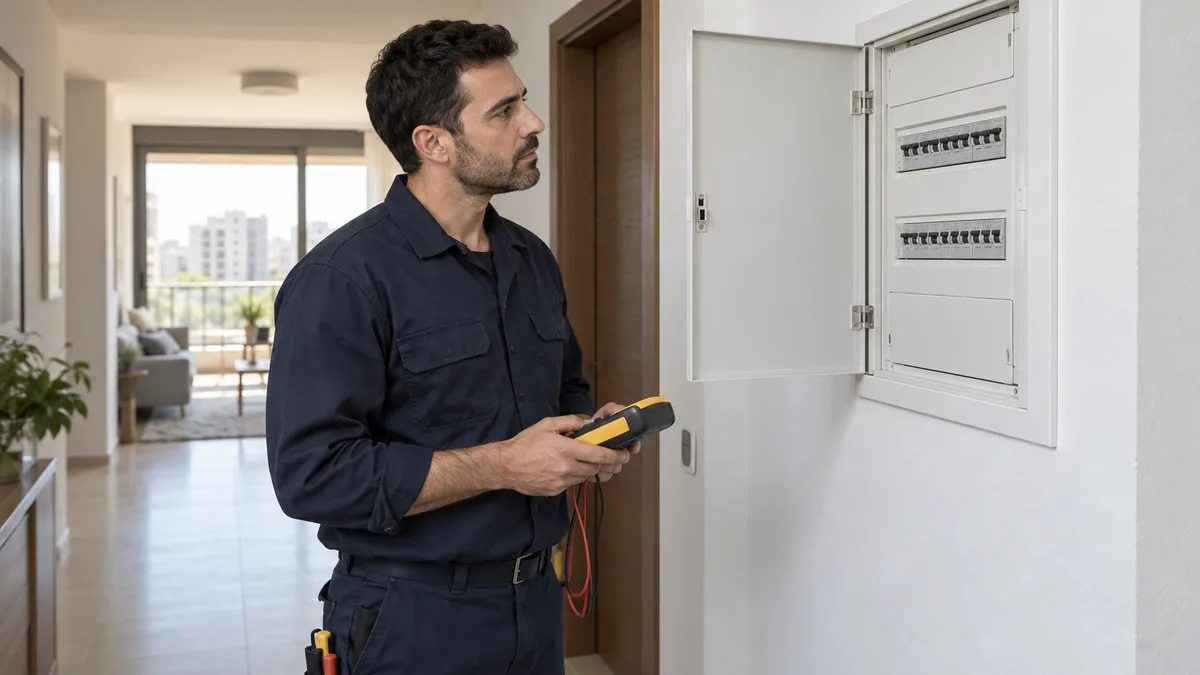
When the lights go out and a switch drops in an apartment distribution board, people in Israel often describe it as “the pahat tripped” or simply “an electrical short”. Those descriptions can refer to different protective devices and different faults. An RCD, an individual circuit breaker and the main protective device do different jobs. Replacing whichever switch happens to be down can leave the actual fault unresolved.
This guide helps you collect useful observations, recognise when to stop and prepare an electrician’s visit. It covers trips connected with a water heater, oven, air conditioner, washing machine, dishwasher, rain or apparently random events. Symptoms help plan the visit; they cannot establish a final diagnosis remotely. The purpose is to make the investigation and its price clear before approving a repair.
First actions when the power trips
If there is smoke, a burning smell, crackling, sparks, unusual heat or water near electrical equipment, stop using that area. Do not touch a wet board or repeatedly try to restore power. Move away from the hazard and seek appropriate urgent assistance. Only use an ordinary accessible switch if the area and equipment are dry and safe. Removing covers to reach a switch is not a household safety check.
Without danger signs, record when the trip happened and which appliances were operating. You can switch off accessible dry appliances using their normal controls, and unplug an undamaged plug from an accessible dry socket. Do not pull out heavy built-in equipment or handle damaged connections. Keep the suspected appliance off if the fault returns or its condition is uncertain, and arrange a professional investigation.
RCD, circuit breaker and main switch
The pahat, ממסר פחת, is generally an RCD. It responds to a specified difference between currents that can indicate leakage. It commonly has a test button. Identifying that button does not establish whether the whole installation is safe, and using it is not a substitute for professional verification. Some installations also use combined devices providing more than one form of protection.
An individual circuit breaker, מאמ״ת, normally protects a particular circuit against overload and short circuit. Losing only kitchen sockets or one room’s lights is therefore useful information. A main device concerns the apartment’s overall supply. Do not identify a device by the size of its lever alone. Photograph the board with its internal protective covers intact and mark the switch that changed position.
What the timing tells the electrician
- Immediately after starting one appliance: the appliance, cable, socket or circuit may be involved.
- Several minutes into heating: the heating stage and component condition become useful lines of investigation.
- Several powerful appliances together: overload is possible, but leakage and poor connections still need consideration.
- After rain or cleaning: mention outdoor lighting, the balcony, water ingress, heater equipment and wet rooms.
- Overnight or intermittently: note timers, automatic appliance cycles and how often the event occurs.
Do not deliberately reproduce a fault by repeatedly restarting the suspected appliance. Describe events that have already occurred. A recent kitchen, bathroom or balcony project also matters: the appearance of a new appliance can coincide with moisture or damage to existing wiring. A useful report separates observed facts from guesses about the cause.
Trips when the water heater is switched on
A dud combines water, electrical heating and controls. A trip at the wall switch, several minutes into heating or only after rain are different observations. Tell the specialist whether solar heating still produces hot water and whether anyone recently worked on the flange, thermostat, timer or wall switch. Do not remove the heater’s electrical cover or climb onto the roof to investigate.
Before accepting a heater repair, clarify who will do any electrical work and whether their licence covers it. Plumbing experience does not itself establish authorisation to alter electrical connections. When the symptom is cold water rather than a trip, use the focused guide to solar and electric heaters with no hot water to prepare the service request.
Ovens, air conditioners and kitchen loads
Repeated disconnection is not something to accept merely because an appliance is powerful. Record the model, operating mode and other equipment running at the time. “The kitchen circuit drops while the oven and kettle are on together” is more informative than “the breaker is weak”. A new appliance can expose a limitation in the existing circuit, but it can also have its own fault.
A larger-rated breaker is not a household fix without assessment of the cable and protection requirements. Moving powerful equipment onto a random extension lead elsewhere in the apartment is also a poor response. Depending on the findings, the job may involve a dedicated circuit, changes to loading or an appliance service visit. Ask what evidence supports the proposed work before approving it.
Information to prepare without opening the board
- A general photograph with internal protective panels left in place.
- The switch that moved, identified without dismantling anything.
- Rooms and sockets that lost supply.
- Appliances and operating modes immediately before the event.
- Frequency and any connection with rain, cleaning or recent work.
- Details of heat, moisture, smells and earlier repairs.
Keep personal paperwork and unnecessary address details out of photographs. If circuit labels are missing or misleading, ask for accurate labelling after the electrician has investigated. A comprehensible board helps the next occupant and makes future service calls easier. Do not create labels based only on assumptions about which room a switch serves.
What a professional investigation should establish
The specialist should determine why protection operates and distinguish an appliance problem from a fault in the fixed installation. Depending on the circumstances, this can involve appropriate measurements of circuits, insulation, connections and protective devices. The exact work follows the symptoms and site conditions. A photograph cannot establish that replacing an RCD will solve the problem.
Agree a limit or pricing method for fault finding before work starts. After investigation, ask for a short explanation of the cause, location, proposed repair and method of verifying the result. If the dishwasher or washing machine itself appears faulty, clarify whether an appliance technician is needed afterwards. Two specialists may have separate responsibilities in the same overall problem.
Call-out prices and repair costs
The public HaMiktzoanim price list, checked on 29 September 2026, lists ₪250–350 for a normal visit, ₪300–550 for fault finding excluding repair, and ₪400–600 for a single-phase RCD replacement including the part. These are external comparison ranges, subject to conditions and urgency.
Do not automatically add those items together. One electrician includes the call-out in a repair, another charges diagnosis separately, and another prices an intermittent investigation by time. Ask about VAT, the replacement part, whether investigation charges are credited and what happens if the fault is absent during the visit. Agree night, holiday or Shabbat terms before arrival, along with actual availability.
Checking the electrician’s documents
Ask for the person’s name, licence number and current licence document. Permitted work depends on licence type and installation characteristics, as explained by Israel’s Ministry of Labor. Match authorisation to the proposed work rather than relying on an advertisement or a photograph of a card.
Ask whether the specialist investigates recurring trips, how additional work is approved and what work record is supplied. Reviews can help assess communication, but they do not replace documents and agreed terms. A proposal to replace the entire board should explain its condition, the faults discovered and why a smaller repair would not resolve the problem.
Example: the power fails only in the evening
Imagine an apartment where electricity works through the day but protection operates in the evening, when the heater, oven and washing machine are running. That timing alone does not prove overload. The device that operates and the appliance stage both matter. The resident records the previous events, leaves suspected equipment off and sends a photograph of the board.
The electrician first agrees the investigation. If a heating component is faulty, replacing the whole board would miss the necessary repair. If the circuit is the problem, replacing an otherwise sound appliance would not help. Good information reduces assumptions and helps prepare the visit while preserving the need for on-site measurements.
Checks after the repair
Ask for an explanation of the verification and any remaining restrictions. Clarify whether the formerly isolated appliance can be used, whether appliance servicing remains necessary and which parts changed. Keep the work description, date, device model and warranty terms. “It no longer trips” is not a complete explanation if the original cause has not been identified.
If it trips again, avoid experimenting with protection. Send the specialist the new timing, appliance mode and affected area. New moisture, smells or overheating need a fresh safety response even if a repair took place yesterday. An intermittent fault may require another visit, so agree follow-up terms when arranging the initial work.
Writing the KABLAY request
Open the electrical services category or a request for electrical diagnosis. For example: “Apartment in Ashdod. Pahat trips several minutes into electric water heating. Solar hot water still works. Heater currently off. Board photograph attached. Please specify call-out, investigation and repair approval terms.” Add your preferred language, access times and any danger signs observed.
The guide to danger signs in apartment electrics covers other warning symptoms. Compare proposals with clear investigation scope, documents and pricing. A request marked urgent does not establish that someone is available; confirm the arrival arrangement directly with the specialist.
Internal links
Useful pages on this topic
Frequently asked questions
- Why does the RCD trip while the circuit breaker stays on?
- They respond to different conditions. An RCD can respond to leakage while a breaker responds to overload or short circuit. Identify the device and arrange measurements before drawing a conclusion.
- Can I install a higher-rated breaker?
- Do not increase its rating without professional assessment of the circuit and cable. Protection must suit the installation.
- Who should check a heater that trips the power?
- Someone whose electrical licence covers the required investigation. Heater servicing may also be necessary depending on the findings.
- What information helps before the visit?
- A photograph with protective covers intact, the device that tripped, running appliances, timing and any moisture, smell or heat.