🔧Plumbing
Sink Gurgles When the Washer Drains: What to Check
By KABLAY Editorial · · 8 min read · Updated:
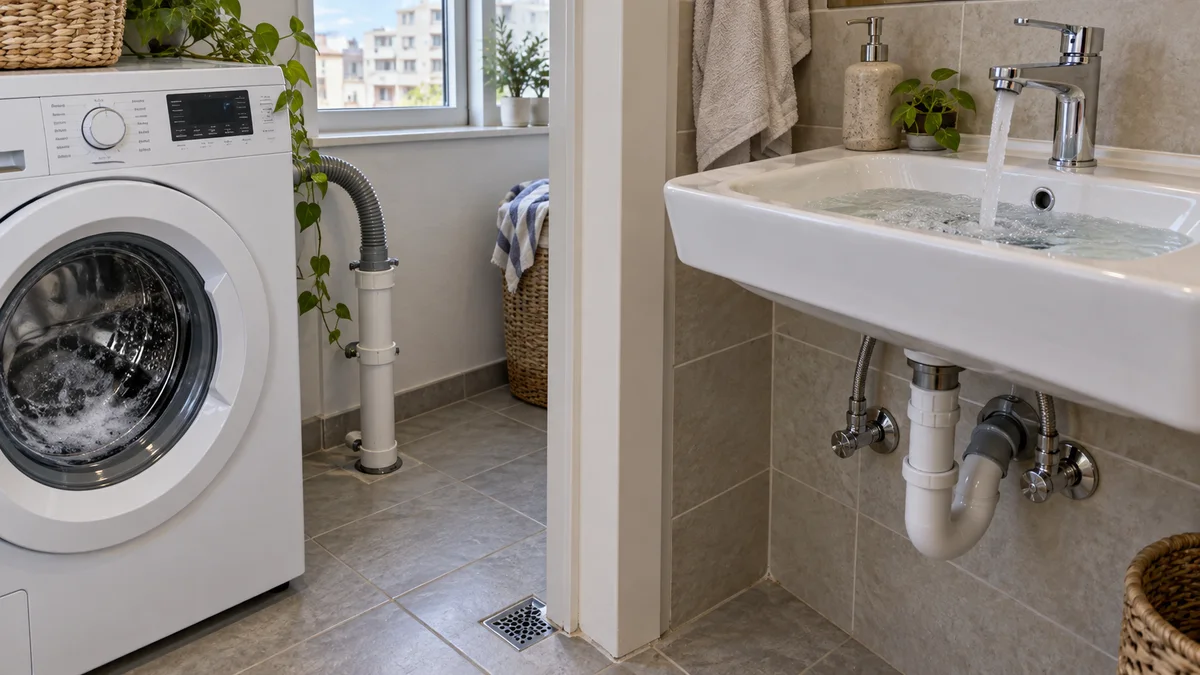
The sink gurgles when the washing machine pumps out. It can be an ordinary sound in a shared drain, but a new noise accompanied by odour, slow drainage or rising water needs attention. Do not choose a harsh drain chemical on sound alone. Establish where the washer hose enters, which fixtures share the line and exactly what changes when the pump runs.
Record the sequence
Note which stage of the wash produces the sound, how long it lasts and whether the sink drains normally between cycles. Record sewer odour, movement in a shower floor trap or water at the washer standpipe. Photograph the accessible hose and trap without dismantling them. A short video showing the sound and water level is more helpful to a plumber than the word “blockage”. Mention any recent machine, hose, trap or cabinet replacement. A connection error often begins immediately after a move.
Rule out an overflow first
If water rises from the sink, floor drain or washer connection, stop the cycle, avoid another drain run and contain the water. Do not keep the pump running to force a blockage; that can worsen a leak in a hidden niche. Use a safe accessible method to isolate power when water approaches electrical equipment; do not handle wet plugs. If multiple fixtures or floors react in an apartment building, alert the building manager and a plumber, since the shared line may be involved.
Inspect the hose, not just the sink
Check that the machine has not crushed the hose, that it is not kinked behind a cabinet and that it is not pushed too deeply into its standpipe. The correct height and insertion depth depend on the washer model and its installation manual. Whirlpool's guidance calls out both an over-inserted hose and a blocked standpipe; its exact measurements should not be copied to another brand. Do not seal the hose tightly into the pipe with improvised tape. The connection must be installed as designed, including air movement and retention. If the hose jumps out during discharge, use the manufacturer's approved restraint.
Sink trap and partial clog
Test the sink separately with a modest amount of water while the washer is idle. If the sink has itself become slow and its water rises briefly during a washer drain, a partial blockage after the junction is plausible. Hair, grease and renovation debris require different approaches; the plumber should identify the access point. A removable trap can be cleaned only if you know its design, have a container beneath it and can check the seal after reassembly. Leave fragile old connections alone rather than twisting them until they break.
Air, trap seal and odour
Moving drain water also moves air. Gurgling with sewer odour may mean the trap's water seal is being disturbed or that the drain lacks proper air movement, but sound alone does not prove a vent failure. Fragrance poured into the pipe will not diagnose it. A plumber can inspect the trap geometry, washer connection, flow and, when indicated, the building vent. Two causes may coexist in an older building: a dirty local trap and a restricted shared pipe. Ask which cause was actually verified.
Why strong chemicals can complicate the job
Caustic cleaner can remain in the trap and expose the person who opens it, affect some materials or mix with a product already used. It will not correct hose height, drain slope or ventilation. Never mix products, and tell the plumber what has already been poured in. Clean accessible components only according to their instructions; repeated blockages call for mechanical diagnosis. A camera, cable or flushing method should be chosen for the actual pipe and its condition, not simply because it sounds stronger.
Brief and accept the repair
Provide the washer model, hose connection photo, trap and standpipe photo, list of fixtures on the line, timing of the noise, odour and any overflow. Ask for separate quote lines for access, trap cleaning, shared-line inspection, replacement parts and a real washer-drain retest. At handover, run a short drain, check fittings with a dry paper towel and watch the sink and floor trap. If the fault lies in a shared line, obtain a written note for the building manager. Create a plumbing request with these details.
Internal links
Useful pages on this topic
Frequently asked questions
- Does gurgling alone prove a clog?
- No. A new sound, slow drainage, odour or rising water matters more. Inspect the hose and other fixtures on the same line to narrow the cause.
- Should I pour in drain cleaner?
- Do not mix chemicals or use them instead of checking the connection, trap and shared line. Tell the plumber if a product has already been used.