A sharp bang in the wall just after closing a tap is often called water hammer. A loose pipe, worn valve or equipment in another apartment can sound similar. Distinguish one knock from several rapid impacts or continuous vibration. The noise alone is not enough to order a universal arrestor: the triggering fixture and location need to be identified first.
Record a useful symptom
Note which fixture starts the noise: kitchen tap, shower, washing machine, dishwasher or toilet fill valve. Does it happen on opening, or specifically on quick closing? Is it local to one wall or heard throughout the apartment? Make a short recording during ordinary use; do not slam a tap shut harder just to demonstrate it. Tell the plumber about recent pipe work, a replaced valve or pressure changes after a building water shutdown.
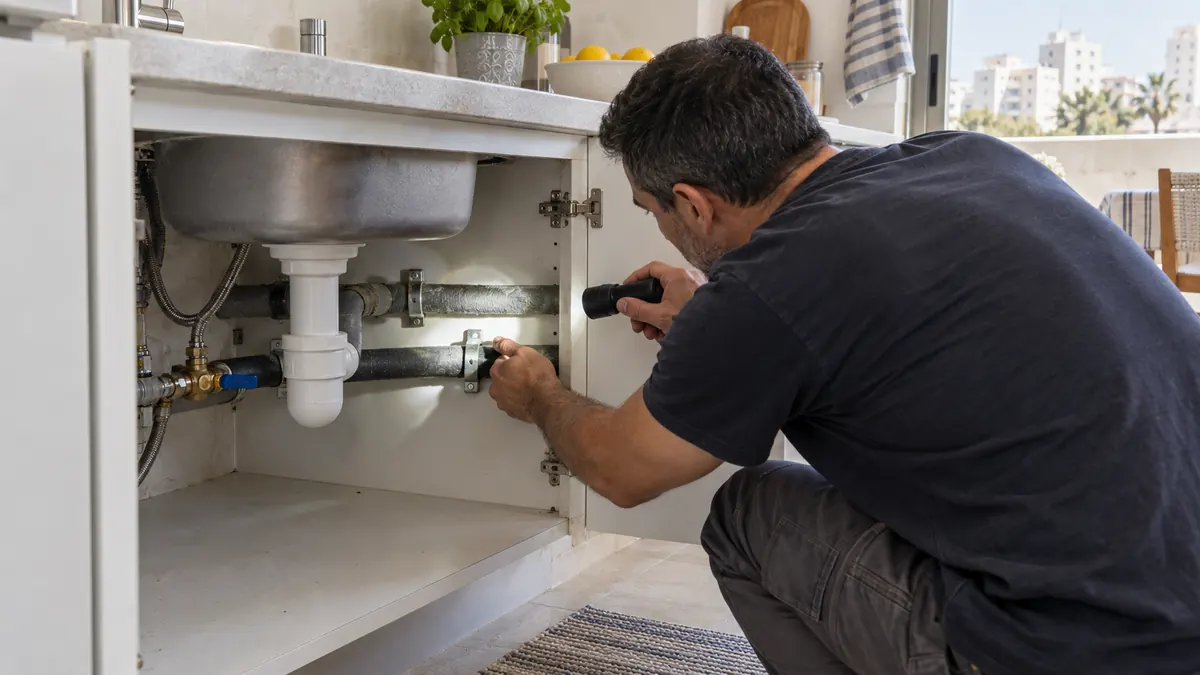
Look at accessible pipework below a sink or near an appliance without taking it apart. Is a flexible connection moving? Are there drops or a visibly loose support? Do not tighten old fittings at random. If there is an active leak or a rapidly spreading damp patch, isolate the accessible water supply and request urgent help.
Why a pipe can bang
Stopping water flow quickly changes pressure for a short time, and a poorly supported line may strike the surrounding structure. WaterSafe notes that banging can indicate water hammer and points to pressure and pipe supports as possible factors. A loose bracket, faulty valve and vibrating appliance may need different repairs. In an apartment block the source may be in a shared riser, so ask whether neighbours hear the same event.
What a plumber should check
The plumber can match the recording to the actual noise, inspect visible supports and valves, measure working pressure with suitable equipment and observe normal closing of the fixture. Sometimes a support or failed valve is the answer. In other installations, a correctly selected arrestor, pressure regulator or work on a shared line may be appropriate. Ask for the observed cause before agreeing to a part. An arrestor fitted far from the source may leave the original noise unchanged.
Compare the scope and test the fix
Your request should identify where the sound is heard, what triggers it, how often it occurs and whether any water escapes. Ask the quote to separate diagnosis, parts, access to concealed pipework, making good and a final test. Agree on any wall or cabinet opening in writing. If a shared pipe is implicated, establish responsibility with building management; do not close a communal riser yourself.
After the work, operate the same tap several times at normal speed with the plumber, then check nearby fixtures. Look for new drips and keep the part details and invoice. If the bang remains, document that result so the next diagnostic step builds on evidence rather than repeating a guess. Request a plumber with the recording. If the shower temperature also shifts, see our temperature guide.
Internal links