🔧Plumbing
Solar Water Heater (Dud Shemesh) in Israel 2026: How to Choose, When to Replace, Prices & Repairs — Full Guide
By KABLAY Editorial · · 15 min read
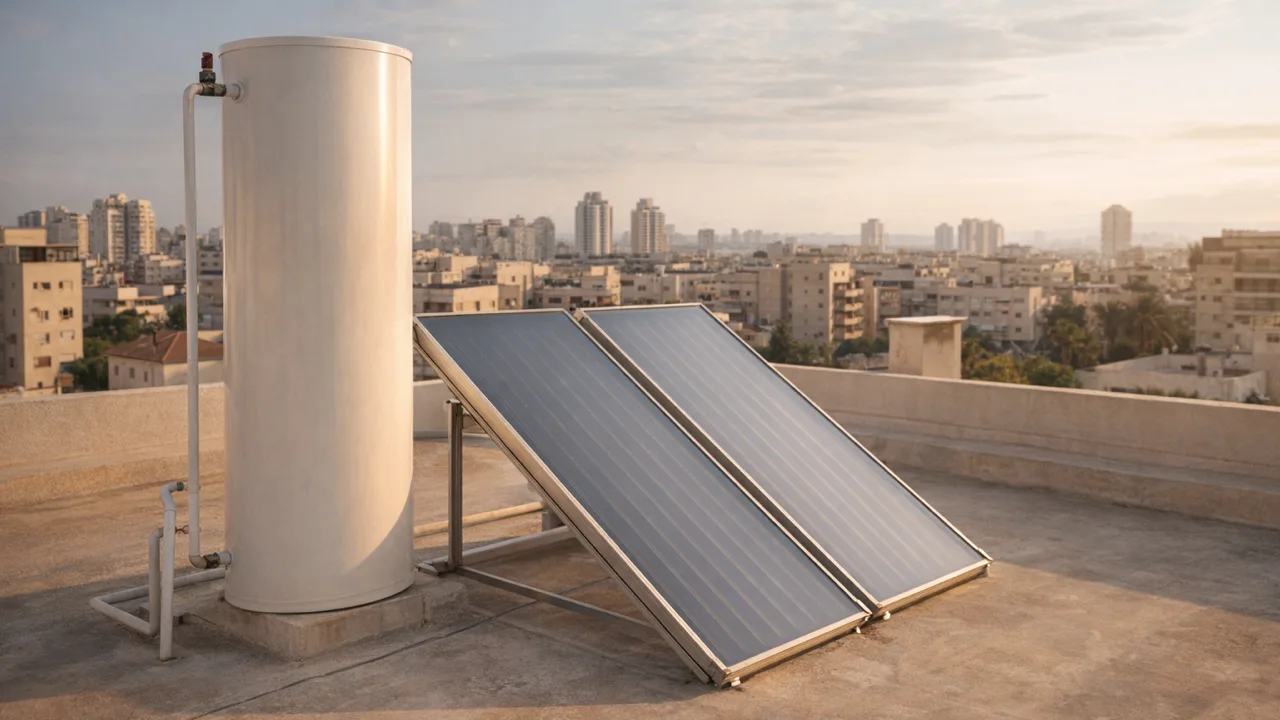
A dud shemesh (Hebrew for 'sun boiler') — the solar water heater — is one of the most recognizable symbols of Israeli life. The white cylinders on rooftops stand on virtually every building, and for good reason: a 1980 law (Planning and Building Regulations — Solar Water Heater Installation) requires a solar water heater in every new residential building. The result: Israel is the global leader, with 85% of households heating water this way.
What the law does not mention: a dud shemesh lasts 8-15 years, after which it starts leaking, heating poorly, or filling your tub with rusty water. This guide covers everything you need to know about a dud shemesh in 2026: how it works, when to replace it, what it costs, which brands to buy, and how to avoid the key mistakes.
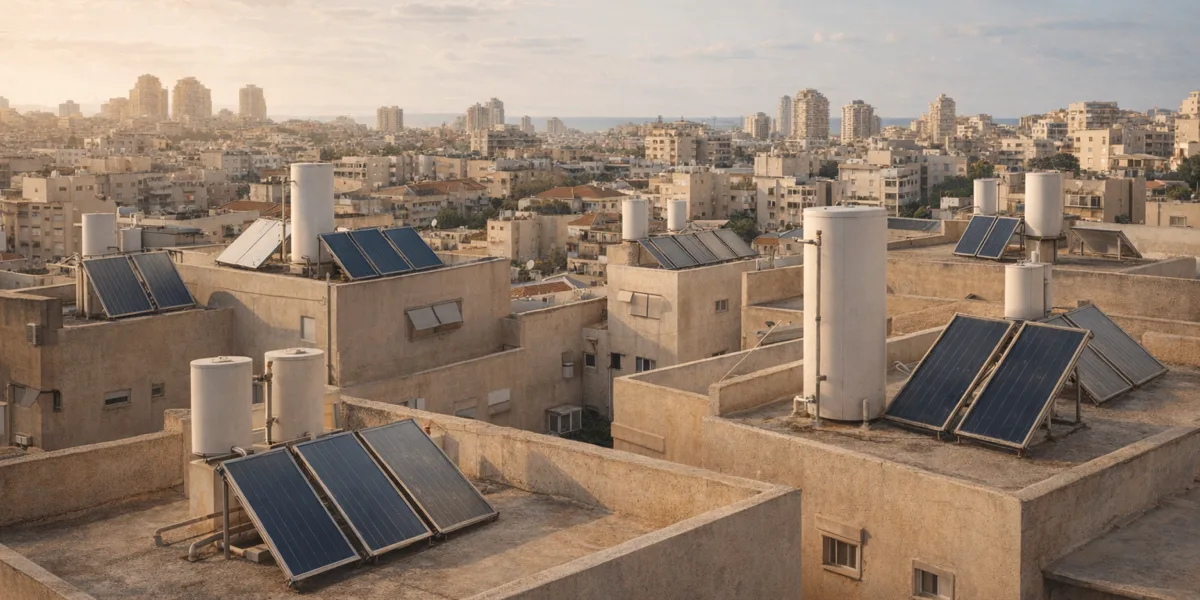
Also worth opening: if you are comparing repair versus replacement, see the plumbing page and the task guide for hot-water distribution problems.
How a dud shemesh works: 6 key components
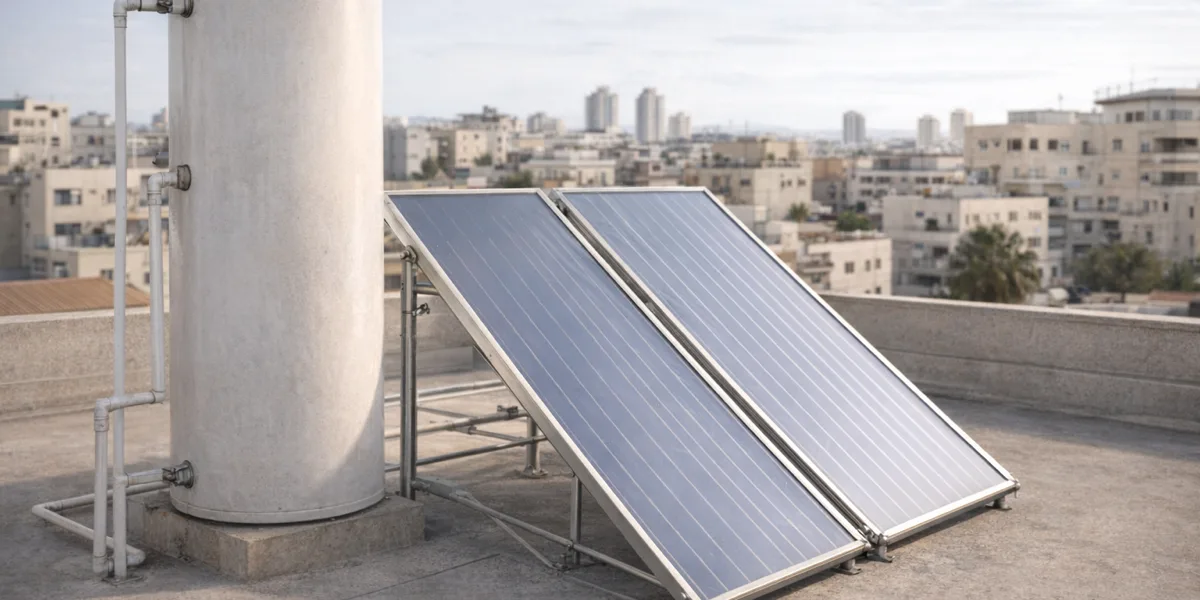
Behind the simple exterior sits a system of interconnected parts:
- Collector (קולטים) — flat blue panels on the roof that heat the fluid inside. In Israel — usually a selective flat-plate collector with a black copper absorber
- Tank (מיכל / דוד) — insulated reservoir, typically 120, 150, 200, or 250 liters. Inside — a steel vessel enameled on the inside with polyurethane foam insulation
- Electric heating element (גוף חימום) — 1,500-3,000 W element for winter and cloudy days
- Thermostat (תרמוסטט) — switches off the element at the target temperature (usually 55-65°C)
- Magnesium anode (אנודה מגנזיום) — protects the tank from rust. A consumable, replace every 3-5 years
- Pressure relief valve (שסתום ביטחון) — releases pressure on overheat so the tank does not explode
Key fact: 90% of dud shemesh problems come from the magnesium anode and the heating element — the two most consumable parts. Replacing them costs many times less than replacing the whole heater.
4 types of dud shemesh systems in Israel
1. Thermosiphon (passive) — the standard
The most common system in Israel (95%+ of homes). Water circulates between collector and tank by natural convection: heated fluid rises, cool fluid drops. No pumps, no electronics — minimal failure points.
- Pros: reliability, zero circulation energy cost, low price
- Cons: tank must sit higher than the collector (usually on the roof), harder in multi-story buildings
- 2026 price: ₪3,500-8,500 installed
2. Active system with circulating pump
The tank can live inside the apartment (e.g. in the safe room or utility closet) while collectors stay on the roof. A small pump circulates the fluid.
- Used in: villas, penthouses, homes with limited rooftop access
- Pros: flexible placement, high efficiency, supports large volumes (300-500 L)
- Cons: needs electricity, pump adds a failure point, more complex maintenance
- Price: ₪6,500-14,000
3. Evacuated tube collectors
Instead of flat panels — a row of glass vacuum tubes. Higher efficiency in cold and cloudy conditions.
- Pros: 20-30% more efficient than flat-plate, especially in winter
- Cons: fragile (tubes can crack in hail), higher cost
- Price: ₪5,500-11,000 (premium of ₪1,500-3,500 over standard)
- Best fit: Jerusalem, Tzfat, Golan, Negev in winter
4. Hybrid with electric backup
Not a separate type — an add-on. Every standard Israeli heater has an electric element for winter and nighttime. Toggled by switch or timer.
Average electricity use: 15-25 kWh/month in summer, 80-150 kWh/month in winter. At current Hevrat Hashmal rates — ₪40-100 in summer, ₪180-400 in winter.
How to size the tank: 120 / 150 / 200 / 250 liters?
Correct sizing matters more than price. Undersized = the third shower ends cold. Oversized = wasted money and standing heat loss.
- 120 liters: 1-2 people, studio or 1-bedroom
- 150 liters: 2-3 people, standard for a 3-room apartment
- 200 liters: 3-4 people, family apartment
- 250 liters: 4-6 people, apartments with tub + separate shower
- 300+ liters: large villas, kosher kitchens with split hot-water supply
Rule of thumb: size up one step — cold morning showers win every argument about saving money.
7 signs it is time to replace your dud shemesh
1. Age: over 10-12 years
A quality Israeli heater lives 12-15 years. Budget models — 7-10 years. If you moved into an apartment with the builder's heater and have lived there 12+ years — start planning.
2. Rusty or brown hot water
A whitish-silvery stream at hot-tap opening that clears up is not a crisis. But consistently brown water, a metallic smell, or orange staining on the sink — the tank is corroding. Replacement is unavoidable.
3. Leak from tank or valve
A wet patch under the tank on the roof or on the floor below the utility closet = tank has cracked. Local repair is not an option — only replacement.
4. Weak hot-water pressure
Cold water runs normally, hot is a trickle. Cause — limescale (even) clogging the outlet. Sometimes a flush helps, but if it repeats — replace the tank.
5. Water does not heat even on sunny days
If mid-summer water is lukewarm — collector damaged (cracked glass, fluid leaked) or clogged tubes. Sometimes only the collector is the issue — replacing just that is cheaper than the full system.
6. Element runs constantly, electric bill has jumped
When tank insulation degrades or the heating element is limescaled over, electricity can burn ₪200-400/month even in summer. Element and anode replacement fixes 50% of cases; the rest need a new tank.
7. Knocking, rumbling, or boiling sounds in the tank
The knocking is usually limescale buildup at the tank bottom. Chemical flushing (₪400-800) sometimes works, but often it signals the tank is on its last legs.
2026 prices for dud shemesh in Israel: full breakdown
Full new system installed
- 120 L tank + standard collector: ₪3,500-5,500
- 150 L tank + standard collector: ₪4,000-6,500
- 200 L tank + standard collector: ₪5,000-8,500
- 250 L tank + standard collector: ₪6,000-11,000
- Premium for evacuated tubes: +₪1,500-3,500
- Premium brands (Chromagen, Amcor): +15-25%
Tank-only replacement (keep collector)
- 120 L: ₪2,200-3,800
- 150 L: ₪2,500-4,500
- 200 L: ₪3,000-5,500
- 250 L: ₪3,800-6,500
Collector-only replacement (keep tank)
- Standard flat-plate: ₪1,500-2,800
- Evacuated tubes: ₪2,500-4,500
Repairs
- Heating element (גוף חימום): ₪350-700
- Thermostat: ₪250-450
- Magnesium anode: ₪200-400
- Pressure relief valve: ₪180-350
- Chemical descaling of tank: ₪400-800
- Fixing leaky joints: ₪200-450
- Roof pipe replacement: ₪800-1,800
Related costs
- Removal and disposal of old heater: ₪200-500
- Rooftop lift (no elevator, 5+ floor): +₪300-700
- Weekend/evening work: +20-40%
- Emergency callout (tank burst, flooding): +₪200-500
Leading dud shemesh brands in Israel 2026
Chromagen (כרומגן)
The largest Israeli manufacturer, leading brand since 1962. Chromagen tanks sit on most new builds. Reliability standard: 10-year tank warranty, 3-5 on collectors.
- 150 L full system: ₪5,500-7,500
- Recommended when: reliability and nationwide service network matter
Nerot Shemesh (נירות שמש)
Local producer with a strong price/quality ratio. Stainless-steel tanks with long warranties.
- 150 L: ₪4,500-6,000
- Recommended when: you want a value/quality balance
Amcor (אמקור)
Israeli appliance giant. Amcor heaters are solid mid-range with wide service availability.
- 150 L: ₪4,800-6,500
Solcor (סולקור) and Solel (סולל)
Budget local brands. Acceptable quality but shorter warranty (5-7 years on the tank).
- 150 L: ₪3,800-5,200
Pazgas (פזגז)
Better known for gas, but also makes mid-range dud shemesh. Decent warranty, good service support.
Tip: the dud shemesh is not where to cut corners. A ₪1,500 upgrade to a brand-name tank pays back with 5 extra years of service.
What to check BEFORE replacement: 5 critical items
1. Roof condition
A new heater weighs 40-80 kg + water (another 120-250 kg). If the roof is old, damaged, or poorly waterproofed — you may need extras: support reinforcement (₪400-1,200), waterproofing under the mount (₪300-800).
2. Roof pipe condition
Tanks get replaced but pipes often stay — and they may have rusted over 15 years. Six months later, new leaks begin. Ask your plumber whether pipes need replacement (₪800-1,800).
3. Building committee approval (ועד בית)
In condos, replacing a heater may need sign-off from the building committee, especially if the roof is shared. Clarify ahead — the process usually takes 1-2 weeks.
4. Drainage for the relief valve
The valve periodically releases hot water — it has to go somewhere. Make sure the drain line is clear and exits safely.
5. Electrical breaker and wiring
A 2-3 kW element needs a dedicated breaker and proper wiring. Older buildings may need a new cable run (₪300-700).
The replacement process step by step
Replacement day — what to expect
- Duration: 4-6 hours standard, 8-10 hours with complications
- Water off: 3-5 hours
- Rooftop crew: usually 2 workers + a lift crane for heavy tanks
- After install: water may run cloudy or with fine particles for 24 hours — normal
What a plumber does (done right)
- Shuts off water and power
- Drains the old tank (into sewer or onto the roof)
- Dismantles the old tank and collector
- Inspects the mounting frame and repairs if needed
- Installs the new tank and collector
- Connects plumbing lines with fresh seals
- Verifies electrical connections on the element
- Fills the system and pressure-tests for 30 minutes for leaks
- Tests the element and thermostat
- Hauls away the old tank
Common failures and what they cost
No hot water in winter
Cause: burnt-out element or faulty thermostat. Diagnosis: ₪150-250. Element replacement: ₪350-700.
Dirty or rusty water
Cause: magnesium anode consumed, tank starting to corrode. Anode replacement: ₪200-400. If rust is heavy — tank replacement is unavoidable.
Dripping from the relief valve
Cause: system pressure too high or valve clogged. Valve replacement: ₪180-350.
Knocking and noise in the tank
Cause: limescale at the bottom. Fix: chemical flush (₪400-800), or replacement if recurring.
Weak hot-water pressure
Cause: limescale clogging tank or collector. Flush: ₪500-1,200. If persistent — replace the tank.
Tank leaks, dripping from the roof
Cause: tank wall fails (corrosion or joint wear). Fix: tank replacement only — local repair is technically possible but economically pointless.
Maintenance every 2-3 years
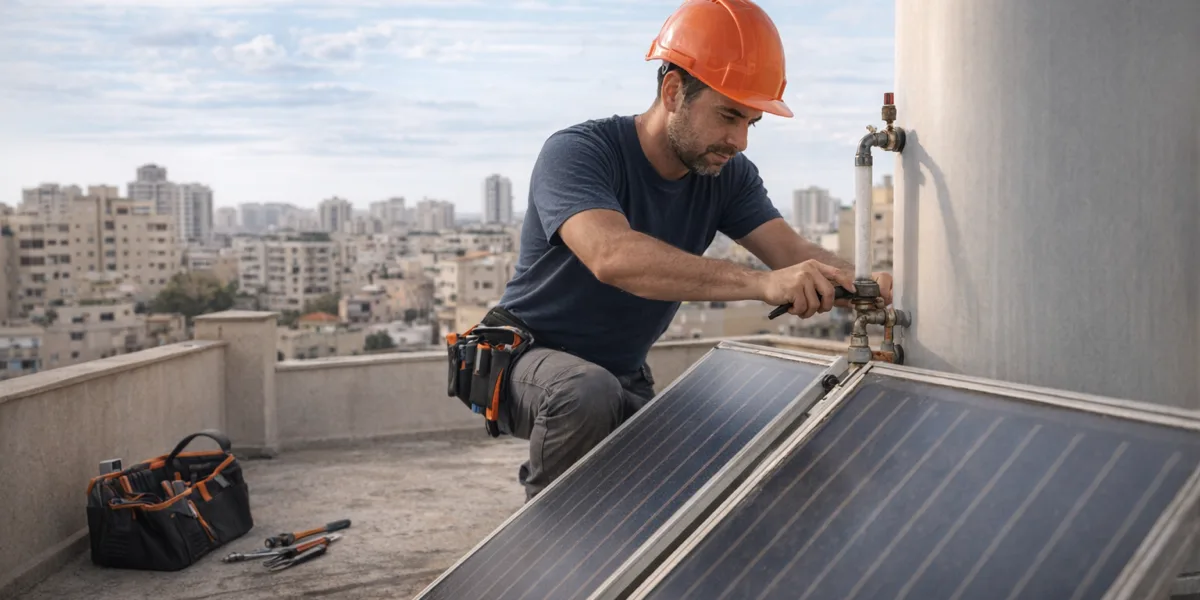
Routine service adds 3-5 years of life and prevents 80% of emergencies.
- Magnesium anode check/replacement every 3-4 years: ₪200-400
- Tank descaling every 5-7 years (more often in hard-water areas): ₪400-800
- Pressure relief valve check yearly: plumber lifts the lever, water should spurt out
- Visual collector inspection — no cracks, chips, or absorber fade
- Rooftop joint tightness check
- Element and thermostat test before winter
Money-saver: in hard-water areas (Tel Aviv, Beer Sheva) install a water softener (merakech mayim) on the heater inlet for ₪800-2,500. Extends tank life by 3-5 years.
Electric vs. solar: which to pick
Dud shemesh (solar) is better when:
- You own the apartment or home with roof access
- You plan to stay 5+ years
- You want electricity savings (~₪2,000-4,000/year)
- You can spend ₪4,000-8,000 on install
Electric boiler is better when:
- You rent (not your investment)
- You live on the first floors with no roof access
- Penthouse with tiny roof or shared-roof building
- Budget-constrained — a 100 L electric boiler is ₪1,200-2,500
Hybrid reality: most dud shemesh in Israel are effectively hybrid — sun in summer, electric in winter. That is the best-in-class option for cost.
7 mistakes when replacing a dud shemesh
- Skimping on brand. A cheap ₪2,500 tank lasts 5-7 years vs. 12-15 for branded. A 30-40% premium buys 2x service life
- Replacing only the tank when the collector is worn. Hot-water issues will come back within a year — you call the plumber again
- Leaving old rooftop pipes. Old pipes leak 6-12 months after tank replacement
- Undersizing the tank. 'Saved' ₪500, now cold shower every other day
- No paperwork or warranty. Serious brands offer 7-10 year tank warranties. Without a receipt and certificate — no warranty
- Hiring an unlicensed pro. A poorly installed heater = leak into the neighbor's apartment = ₪20,000+ lawsuit
- Forgetting the magnesium anode. Many go 10 years without replacing it — then wonder why the tank rotted in 7
How to choose a plumber for dud shemesh work
- Solar water heater experience — not every plumber does it. Ask about the last 3-5 jobs
- Roof access — fall-protection insurance, right tools (crane lift for heavy tanks)
- Workmanship warranty — minimum 12 months on joints, install, sealing
- Specific brand and model in the quote — not '150 L tank' but 'Chromagen Premium Plus 150L model XYZ'
- Itemized quote: tank separate, collector separate, labor separate, disposal separate
- Rapid service — if something goes wrong in the first 24-48 hours, they come back free
- Reviews from neighbors or Facebook groups — solar water heaters are where word-of-mouth works best
Conclusion: when to act
A dud shemesh is not a consumable, but it is not forever either. If your heater is 10+ years old, every 6 months check 3 things: water color, temperature after a sunny day, and wet patches on the roof. Any warning sign is the cue to start planning replacement — not wait for a failure. A planned replacement is ₪4,000-8,000; one after the neighbors flood is ₪15,000-40,000 with repairs and legal mess.
KABLAY is a marketplace connecting clients with independent specialists. KABLAY does not guarantee availability, the number or timing of responses, licensing, documents, price, quality, or outcome; check the specialist and proposed terms before contracting.
Internal links