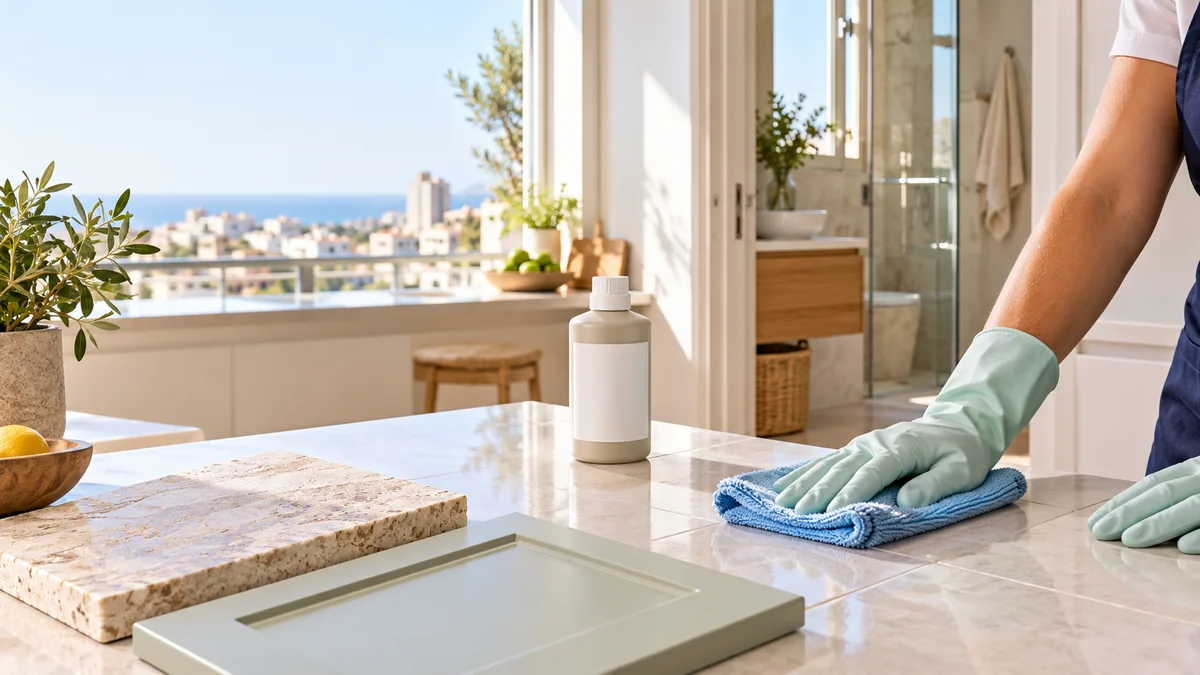
A stain on shower glass, a painted wall and a stone countertop may look similar in a photo, but the same cleaner can leave three very different results. The useful question is not “what is the strongest product?” It is “what surface is this, what left the mark, and what does its manufacturer permit?” A white patch can be mineral scale, dried detergent or permanent etching. A greasy mark on glazed tile is not the same job as grease on a painted cabinet door. This guide gives homeowners in Israel a practical sequence for ordinary cleaning and for deciding when to stop before an expensive finish is damaged.
The instructions for the particular surface and product take priority over generic tips. If you do not know whether the glass has a coating, which sealer protects the stone or what paint is on the cabinet, begin with the least forceful method in an inconspicuous spot. Routine household cleaning often needs water, a soft cloth and an appropriate detergent. CDC distinguishes cleaning from disinfection and says constant disinfection is not necessary in most homes. More chemicals cannot compensate for misidentifying the material.
Identify the mark before choosing a bottle
Photograph the mark in daylight and from the side. Remove loose crumbs, sand and dust before using a damp cloth, because grit can scratch a finish as you wipe. Grease generally feels tacky and attracts dust. Mineral deposits often follow the outline of evaporated water drops. Soap residue may lift with a mild wash where hard scale does not. A rusty streak by a fitting may point to continuing corrosion. Dark lines around silicone can mean surface dirt, damaged sealant or moisture behind it. Appearance is a clue, not proof of the cause, so use a small controlled test.
Work on an area that is out of sight. Remove dry debris, apply only a cleaner approved for that material, follow the label's contact and rinsing instructions, and let the spot dry fully before judging it. Look at the finish as well as the mark: has the gloss changed, has colour lifted, or does paint now feel sticky? Do not immediately add a hard brush, a longer dwell time or a stronger concentration when the first test disappoints. The mark may actually be damage, and making the treated area larger will not restore the original surface.
Kitchen grease on tile, cabinets and extractor filters
Fresh grease on glazed kitchen tile often comes away with warm water and a suitable mild detergent. Let a damp cloth soften it, clean a small area at a time, and remove residue with clean water. Avoid metal scourers. Painted cabinets, veneer and laminated doors need more care: excessive water can enter an edge and a powerful degreaser can change the finish. Check the cabinet maker's instructions and test inside a door first. Stainless steel, glass ceramic cooktops and matt decorative panels each have their own care rules even when they sit beside the same hob.
For grease on an extractor grille, first find out whether its filter is designed to be washed. A metal grease filter and a replaceable charcoal filter serve different purposes; the latter is usually replaced according to the model instructions. Do not wash the motor, wiring or hidden housing without knowing the appliance. Grease that appears again immediately may indicate a dirty filter, fan or reachable duct section. Ask a specialist to define which parts can actually be accessed and cleaned. “We wash all your ventilation” is too vague to be a useful quote.
White bathroom marks on glass, tile and taps
A cloudy shower screen might carry mineral scale, a film of soap or damage to its coating. Test a small area with a product approved for that particular screen. Do not assume that vinegar, an acid descaler or a scraper is safe around protective films and metal hardware. Our guide to cloudy shower glass explains why removing a deposit is different from restoring etched glass. Agree on a limited trial and a realistic end result before paying for an entire enclosure to be treated.
Glazed ceramic tile can often be cleaned gently with moisture, but grout and silicone joints deserve separate decisions. If grout crumbles or darkens again after it dries, repeated bleaching will not fix a moisture or sealing problem. An abrasive pad or prolonged exposure to aggressive cleaner may also damage the finish on a chrome tap. Where water continues to emerge from a connection, removing the stain only hides a symptom. Our under-sink leak checklist helps organise observations before a plumber visits. Cleaning works best after the source of new water is controlled.
Natural stone, terrazzo and porcelain are not interchangeable
Israeli homes use natural stone, terrazzo, porcelain tile and engineered materials. They may look alike in a listing photo while reacting differently to water, acids and abrasion. The Natural Stone Institute advises neutral cleaners for natural stone and warns that vinegar or lemon can dull calcium-based stone such as marble and travertine. A sales description saying “stone” does not tell you its geology or sealer. Ask the owner, installer or renovation file for the product name when you can.
An everyday mark on porcelain may lift with a gentle cleaner and microfiber, but the grout, adjacent stone and silicone may still limit your options. Do not transfer a tile-cleaning method to every joint. Cement residue after renovation, ingrained rust and old building compounds require a compatibility test. If the trial spot looks lighter or rougher, that is not always a cleaning success: you may have altered the upper layer or coating. Stop and show a professional the material label, a close photo and the result of the test instead of treating the entire floor in the same way.
Painted walls and furniture finishes
Finger marks on a wall invite a damp sponge, yet some matt paints develop a visible shiny patch even from clean water and friction. Check the paint instructions, allow a fresh coating to cure as directed and test a hidden spot before washing a broad area. Use a lightly damp cloth rather than soaking plaster. A melamine sponge is also mildly abrasive; test it rather than treating it as a harmless eraser. If the mark remains, a limited touch-up or repainting a whole wall plane may be more predictable than repeated scrubbing.
On furniture, distinguish dirt from fading, chipped paint or worn lacquer. The yellow area near a handle can contain grease and a missing topcoat at the same time. If laminate is lifting at an edge, water can enter and worsen the defect. A cleaner should record existing damage and agree on limited treatment instead of promising “as new”. Photographing the door before work gives both the customer and the crew a clear basis for assessing what changed.
Upholstery, carpets and mattresses need a drying plan
For textiles the fibre, dye, padding and ability to dry completely matter as much as the stain. Remove loose dust with a suitable vacuum, blot rather than rub a fresh spill and check the care label. Test an approved method out of sight. A generic foam can leave a ring or set a stain, while excessive water can remain inside a mattress or sofa. A professional extractor is not a guarantee that an old stain will disappear, especially where the textile dye has already changed.
If the item has been soaked by a large leak, sewage or prolonged dampness, the task goes beyond ordinary upholstery cleaning. The source of water needs diagnosis, and drying or replacement may be necessary. Ask how moisture will be checked, what protects the floor and when the item can be used again. A cleaning crew may help after the leak is repaired, but cleaning does not repair a pipe. Bringing a room back into use before hidden padding is dry can make the problem harder and more costly to resolve.
Know when to stop trying harder
Three signs call for a pause: the surface changes colour or texture, the product causes noticeable irritation, or the mark returns rapidly after drying. Recurrent dark spots by an air conditioner, a soft shower joint, a musty cupboard and a new line under a pipe may all involve continuing moisture. Find and fix the source before repeating a cosmetic wash. If a product causes coughing, burning eyes or difficulty breathing, stop, get fresh air and seek medical help as appropriate. Never mix cleaning products, especially bleach with acidic or ammonia-containing cleaners.
Large areas, valuable finishes and unknown materials can make a specialist crew a sensible choice. Describe the job precisely: “matt porcelain near the hob, sticky grease, first test a 20 by 20 centimetre area and agree before treating the full floor.” Ask for product compatibility, protection of adjoining finishes, residue removal, drying time and an acceptance check. That is more actionable than “deep clean the flat.” Post-renovation work has a different scope, covered in our renovation cleaning checklist.
A short method to keep for the next spill
Name the surface and finish, identify the likely contaminant, remove dry dirt and find the care instructions. Make a limited trial, let it dry and inspect it before expanding the area. For routine care, choose the least intensive action that works. Disinfection, bleaching and strong acids are special tools rather than default parts of every clean. If success would require removing the finish, stopping honestly is cheaper than replacing a stone worktop, shower screen or cabinet door.
Keep before-and-after photographs of the trial. They help a cleaner understand the exact problem and let you compare quotes on the same basis. When posting a task on KABLAY, include your city, the material, approximate area, access to water and power, prior damage and the outcome you actually need. A defined trial and acceptance check make the service measurable. Neither a viral household trick nor an expensive team can substitute for matching the cleaning method to the surface in front of you.
Internal links
Useful pages on this topic
Frequently asked questions
- Can vinegar remove every white deposit?
- No. Identify the surface and the mark first. Acids may damage marble, travertine, coated glass and nearby fittings.
- What if a test patch turns matt?
- Stop, remove the product as directed, let the area dry and document it. A gloss change may mean the finish has been altered.
- Can tile and grout be cleaned the same way?
- Not automatically. Tile, grout and silicone differ in composition and resistance. Check compatibility with each before treating a larger area.
- When is a cleaning crew useful?
- When the area is large, the material is unknown, damage already exists or special equipment is needed. Agree on a test and a realistic outcome.