🧹Cleaning
Construction Dust After Renovation: Clean Safely and Inspect the Job
By KABLAY Editorial · · 9 min read · Updated:
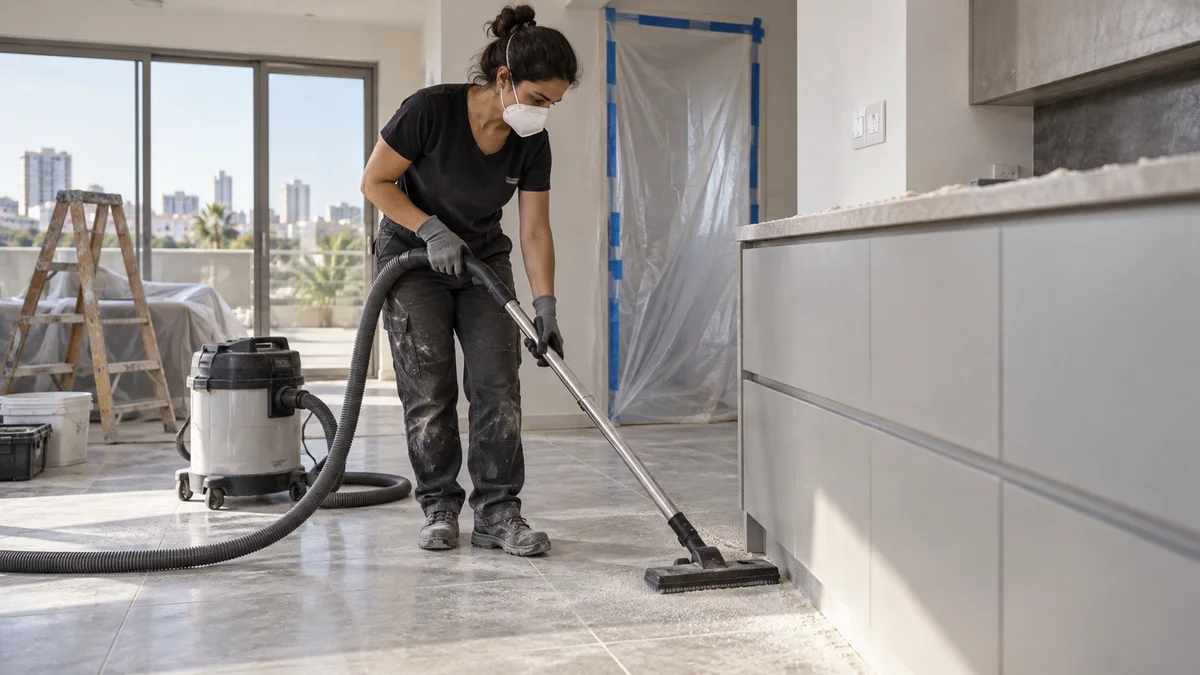
After sanding filler, cutting tile and fitting cabinets, an apartment can look clean until the first low beam of sunlight reveals fine powder on upper shelves, window tracks and behind skirting. One quick floor mop cannot remove it. The job needs an order of work, suitable equipment and care for surfaces that do not tolerate water. Above all, settled fine dust should not be sent back into the air while residents are present.
Finish dusty construction before final cleaning
Confirm that drilling, sanding and cutting have ended, debris has been removed and installers are not coming back in an hour. If work continues, ask for containment of adjacent rooms, protection at doorways and dust capture at the tool. A thorough first clean before the last dusty task is largely wasted. Map the zones: kitchen drawers, bathroom, accessible vents, windows, balcony, fitted storage and routes used by workers. Mark sensitive finishes separately, including natural stone, wood, fresh paint and matte cabinet fronts.
Construction dust is not one material
Cutting tile, concrete and some stone can generate particles whose significance cannot be judged by the thickness of a visible layer. NIOSH describes serious occupational risks from construction dust, including respirable crystalline silica. That is evidence about worker exposure, not a medical diagnosis for a resident after a single renovation. It explains why dust control at the cutting or sanding step matters. If older construction may contain asbestos or lead-bearing materials, pause ordinary cleaning until a qualified specialist assesses the material.
Avoid a dry broom and compressed air
A broom, stiff brush or blast of air spreads the fine fraction around the room. OSHA's construction guidance favours wet methods and HEPA-filtered vacuuming where dry sweeping can create respirable silica exposure. This is a US workplace rule, not a claim about Israeli legal duties. The useful apartment principle is to avoid turning settled powder into a cloud. Ask the cleaning team for a vacuum suitable for fine construction dust, a functioning filter and proper bag disposal. An ordinary vacuum without appropriate filtration can release the fine fraction again.
Work top to bottom, clean to dirty
Start with upper horizontal surfaces, light fittings where accessible, cabinet tops and accessible vent grilles. Continue through shelves, sinks, door frames and skirting, then finish with floors. Use attachments that will not scratch the finish and move slowly through corners, hinges and tracks. Once the dry fraction is collected, wipe compatible surfaces with a slightly damp cloth, changing water and cloth as they load with dirt. Do not soak fresh plaster, unsealed wood, electrics or sensitive furniture. Check the finish manufacturer's cleaning directions where available.
Kitchen, bathroom and AC require different care
Open empty accessible kitchen drawers and cabinets; inspect top edges, tracks and the space below the plinth where accessible. Do not apply acid to sanitary ware or glass simply because white residue remains: it might be grout haze, scale or cleaner residue. Switch off the air conditioner before cleaning only its accessible grille. Internal coil and condensate-drain cleaning belongs to a suitably equipped specialist, rather than pushing dust deeper into the system. A general cleaning team should not dismantle a building ventilation shaft.
Plan for a second pass
After the first clean, let the air settle and check the following day for a fine new layer on dark fronts, shelves and sills. A second pass is common after extensive sanding or poor separation of the work zone. Dust that returns continuously points to an active source: an unsealed niche, debris left above a suspended ceiling or neighbouring works. Cleaning cannot stop fresh dust production. Fragrance and excessive water spray will not solve it either.
Quote and acceptance checklist
State the floor area, type of renovation, furniture, cabinet height, window count and access to water and lifts. Ask the quote to list equipment, HEPA filtration, accessible cabinet interiors, tracks, skirting, bathroom, glazing and leftover debris removal. Agree separately on delicate surfaces, deep AC cleaning and a return pass. At handover, run a clean dark cloth along an upper shelf, door top and cabinet interior; inspect glass in side light, floor corners and chemical odour. Photograph omissions before the team leaves. Create a detailed cleaning request to compare like-for-like offers.
Internal links
Useful pages on this topic
Frequently asked questions
- Can a normal household vacuum handle construction dust?
- For fine dust from cutting and sanding, ask about suitable filtration and maintained equipment. An unsuitable household unit may release fine particles back into the room.
- Why did dust reappear the next day?
- Some particles settle later. If dust keeps returning, look for an active source rather than endlessly repeating the same clean.