🧹Cleaning
Cloudy Shower Glass: Deposits or Surface Damage?
By KABLAY Editorial · · 12 min read · Updated:
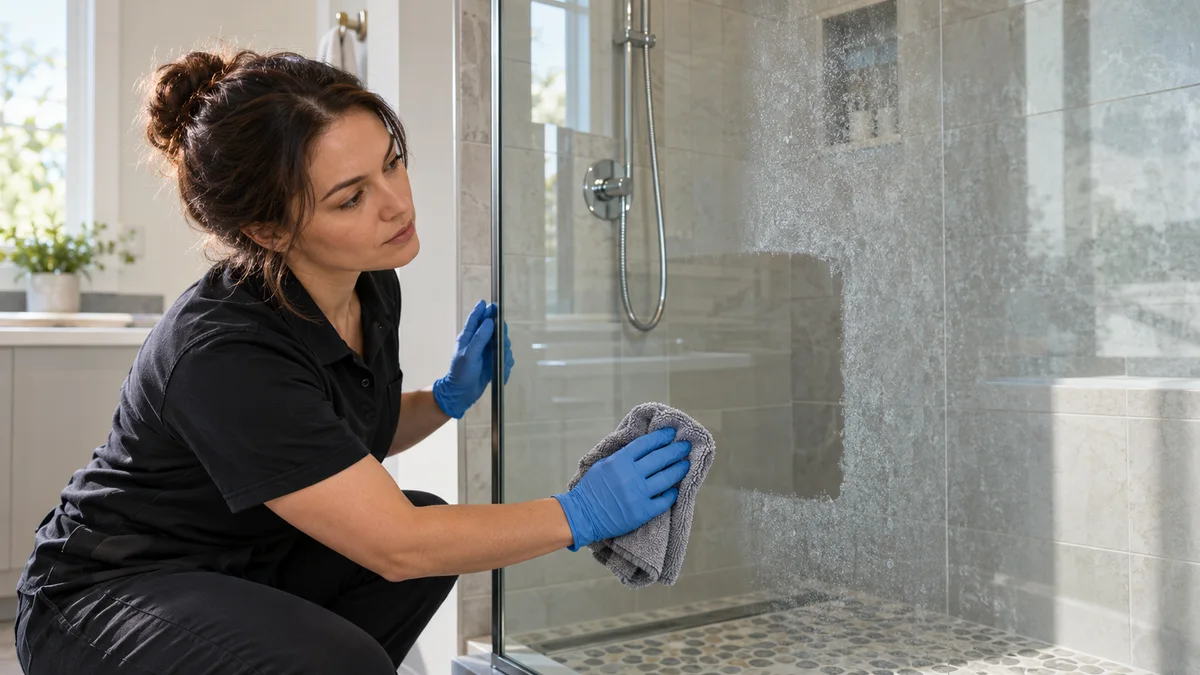
Cloudy shower glass invites the instruction “clean it until it is clear”. Similar looking haze, however, can come from water deposits, soap film, residue on a treated surface or a change to the surface itself. A technique appropriate for one glass door may be unsuitable for another door or for the adjacent frame and seals. Before ordering intensive cleaning, identify the enclosure if possible and agree on a small test area and a realistic way to judge the dry result.
This is a guide to describing a cleaning job, not a warranty diagnosis or a promise that every cloudy patch can be removed. A recently renovated bathroom may also need the post-renovation cleaning checklist. Glass in the shower still deserves a separate discussion about the door's materials and the limits of a cleaning visit.
Photograph the pattern before anyone treats it
Take one photograph of the complete door in ordinary light and another at an oblique angle that shows the cloudy areas. Note whether marks resemble individual drops, run down the pane, collect at the bottom or cover the entire sheet evenly. Describe whether the marks change after the shower has dried. Wet and dry glass can look very different; two states are more informative than a close photograph taken only with a bright flash.
Tell the cleaner what you know about the door's age, past care and recent changes. Some complaints concern the metal frame, seal or junction rather than the glass. Do not combine those different outcomes under one promise. If earlier cleaning left scratches or a new matte area, report it before choosing a product. The previous treatment is relevant to the surface, and hiding it makes a suitable test harder to plan.
Identify glass treatment and nearby materials
A shower enclosure may have a treated surface, a film or another coating with its own care instructions. Provide the model, purchase document or manufacturer instructions if available. Similar-looking doors do not necessarily have the same permitted cleaning methods. Natural stone, painted metal, chrome, grout and sealant beside the pane can also react differently. A product that is compatible with exposed glass cannot automatically be spread over every adjoining surface.
The ShowerGuard care instructions for its own doors distinguish cleaning according to the type of mark and product. This demonstrates why the actual door's instructions matter; it does not authorize that method for every shower. Ask the provider to name the proposed product and explain compatibility. If the make is unknown, start with a limited, conservative assessment suitable for the materials at hand instead of assuming that a stronger solution must work.
A wet pane can give a misleading result
Some marks are more visible after water has dried and a film remains. A wet pane may briefly look clearer without anything having been removed. Compare the test area under the same light after drying. Warm bathroom lighting and strong light from a window may reveal different features. A cleaner cannot reasonably claim success by photographing an initially dry door and a still-wet glossy test patch afterward.
Do not name a white area “limescale”, “silica” or “etched glass” as a final diagnosis from one photograph. The words imply different limits and treatments. Persistent haze calls for inspection and a restricted test using a method appropriate for the product. If a correct test leaves the area unchanged, ordinary cleaning may have reached its limit. Discuss that possibility before paying for treatment of the entire enclosure.
Agree on a small test and a stopping point
Choose an inconspicuous patch, a specified product, the permitted contact time and the required rinse or removal method in line with the door's information. Inspect once dry. A useful test shows both whether the mark improves and whether the coating, sheen, seals and hardware remain sound. If the outcome is hard to see, compare it with adjacent untreated glass in the same light rather than relying on memory.
The provider should explain when they will stop: perhaps the mark does not change after a suitable method, or the material reacts poorly. Repeatedly escalating a product without agreement cannot turn an impossible result into a safe one. Scratches from a blade or coarse pad may be worse than the original haze. Ask that sharp tools and abrasive products stay off the pane unless the actual manufacturer expressly permits the exact technique for that surface.
Protect the bottom edge and the seals
At the bottom of a shower screen, glass meets a seal, metal profile, tile and possibly natural stone. A cleaner must consider all of them before treating the edge. Agree how adjoining materials will be excluded or protected. If moisture or dark marks seem to come from beneath a profile, polishing the open face of the pane may have little effect on the complaint.
Water escaping beyond the enclosure after every shower deserves a separate assessment of seals, junctions and drainage. Do not make “seal everything” an unplanned part of glass cleaning. Waterproofing and joint repair need their own scope; the guide to grout and silicone joints helps frame that conversation. A clear pane and a watertight enclosure are tested for different outcomes.
Renovation residue is not always a water mark
Construction dust, masking adhesive, paint spots and grout residue may remain on a shower screen after work nearby. Do not label every white mark a mineral deposit because the door is in a bathroom. Say which work was done and when protective film was removed. Report whether anyone has already tried scraping the pane. Another pass with a tool could deepen a pre-existing scratch or change the coating.
There is a separate guide to paint and grout cleanup. It cannot replace the manufacturer's instructions for a particular door. Give the cleaner a list of the materials and marks so each can be considered on its own. “General bathroom clean” does not describe a delicate coated panel or a hardened spot left by building work.
Define the cleaning quote
State the approximate glass area and access to both faces. Mention whether anyone proposes taking the door off its fittings. Ordinary surface cleaning may not require removal, and its cost and risk should not be assumed silently. List the exposed glass, bottom edge, profiles and seals separately. Provide the known coating, dry photos and a record of products that have already been tried.
Ask whether the test patch is included, who approves continuation and what happens if the mark cannot be removed with the agreed safe method. Reducing a mark may be possible without making it vanish; agree how such an outcome will be reported. The quote should describe work and limits, not guarantee a “new door” appearance in every condition. Repair or replacement of damaged coating belongs to a different decision after the material and possible method are identified.
When cleaning no longer makes sense
Replacement of a pane or enclosure is a large step and should not be chosen on the evidence of one cloudy patch alone. Establish whether the surface can be cleaned safely, whether the glass itself is sound and whether the hardware functions. A replacement involves measurements, glass specification, fitting, access and removal of the old part. A cleaner is not automatically responsible for judging strength or selecting a new product.
Endless expensive attempts at a mark that has not improved in a careful test are equally unhelpful. Compare the patch result with the price and risk of continuing. Existing surface damage may be beyond a cleaning service. A useful conclusion states what was removed, what remained and why further cleaning was not proposed. It gives you a basis for another specialist or a replacement quote without pretending that a polish can restore all damage.
Inspect after the pane has dried
Look at both sides in the same conditions used for the before photos. Check the test patch, lower edge, corners and hardware areas. Confirm that the treatment has not left a duller finish and that the frame and seals appear undamaged. Ask how the chosen product was removed in accordance with its instructions. Take after photographs under comparable light; a wet, shiny photograph is not enough for this type of complaint.
Do not expect ordinary cleaning to erase pre-existing scratches. Equally, do not accept a door that only seems clear while wet if dry haze remains unchanged. Document an agreed limit with words and a photograph. Ask for care instructions that match your door rather than borrowing a recipe for an unknown brand or coating.
Reduce repeat problems without promising perfection
Ask what regular care the particular door permits: whether to remove water after showering, what soft cloth is suitable and which products should be avoided. A fixed schedule cannot represent every use pattern, water supply or glass treatment. Keep the manual alongside the description of this visit so a future cleaner does not begin with a stronger product out of uncertainty.
Notice where water goes after a shower as well as how clear the pane is. If the edge remains wet or water escapes to the room, investigate the enclosure rather than polishing more frequently. A quick look at dry glass in ordinary light may show a returning pattern before it becomes an expensive dispute. A repeat mark does not by itself prove that the previous clean was poor; compare the photographs and conditions first.
A request you can adapt
“My shower glass looks cloudy after it dries. I can share full-door and close photographs in the dry state. The model or coating is [known/unknown]. I previously used [product/no product]. Please quote inspection, a small compatible test patch, protection of frame and seals, and continuation only after we compare the dry result. Door removal and joint repairs need separate agreement.” Replace the bracketed details with your actual information.
In the cleaning service section, compare proposals by method, material care and the agreed acceptance check. The most useful response tells you what can be tested safely and when work should stop. That is more valuable for one real door than a blanket promise to remove every white mark from every kind of glass.
Internal links
Useful pages on this topic
Frequently asked questions
- Why does shower glass remain cloudy after cleaning?
- Different deposits or a change to the surface may be involved. Identify the product and coating where possible and judge a small test after it dries.
- Can any limescale remover be used on a shower door?
- No. Compatibility depends on the glass, coating, frame and seals. Follow the actual product instructions and agree a limited test first.
- How do I check whether cleaning worked?
- Compare the dry pane before and after in the same light. Wet, glossy glass can temporarily hide a mark that remains after drying.
- When should treatment stop?
- Stop if a suitable method does not improve the mark or the material reacts poorly. Stronger products or scraping without confirmed compatibility may add damage.