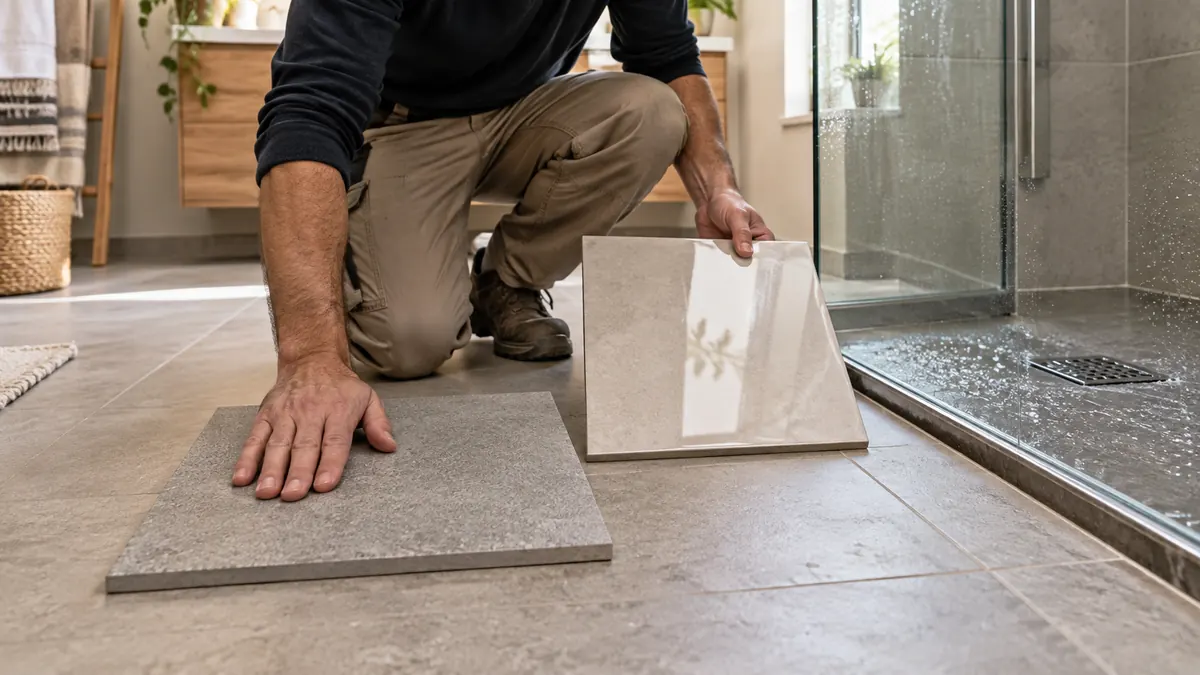
Wet bathroom tile can become slippery because of soap film, cleaner residue, a polished surface or a floor slope that leaves water standing. Each cause calls for a different response. Before ordering a new floor, find out what changes after proper cleaning and drying. If someone has already slipped, limit use of the hazardous area, remove water after showers and provide a stable support. A loose mat can itself create a trip or slip hazard.
Find out when the floor is slippery
Observe dry and wet conditions without performing a risky barefoot test. Is the problem confined to the shower exit or spread across the room? Does a particular cleaner leave a slick film? Is water still pooled minutes after the shower stops? Photograph the surface and drainage direction. Note the tile make if you retained packaging and record cracked grout, loose tiles or chips separately.
Remove residue first
Use a cleaner approved for the tile and grout. Lift soap buildup with a soft brush, rinse residues thoroughly and dry the area. Do not mix acidic, chlorine-based and other cleaners; harsh products may damage grout, natural stone or metal. The UK Health and Safety Executive stresses that floors should be left dry after cleaning because water and detergent residue can themselves increase slip risk.
If cleaning noticeably improves grip, plan regular residue removal and fix a source of recurring water, such as a leaking shower screen. If the clean surface remains slick when wet, another mop pass will not solve it. Grout joints may add some texture but should not be treated as the only safety measure.
Treatment or replacement?
Anti-slip coatings and chemical treatments are sold as alternatives to removing tile. Their compatibility, appearance, service life and cleaning requirements vary by material. The HSE advises identifying the cause first and notes that treatments can change the surface. Request a small trial in an inconspicuous area and written maintenance instructions. A claim that a wet floor will never slip is not credible.
Replacement makes more sense if the tile is unsuitable for the wet area, damaged, badly drained or due for waterproofing repairs. A tiler should assess the fall to the drain, threshold height, substrate and joints. Choose the new surface for a wet bathroom and its expected cleaning routine, not colour alone. Laying new tile over old without checking heights, bond and waterproofing can create a new problem.
Specify and inspect the work
Send photographs of the dry and wet floor, area dimensions, known tile details, pooled-water location and cleaners used. Ask the quote to separate cleaning, trial treatment, removal, waterproofing, slope correction, new tile and grout. Confirm curing time and when the shower can be used again. At handover, check water drainage, grout, tile stability and care instructions. Request a tiler with this evidence; if water stands despite a clear drain, read our shower slope guide.
Internal links