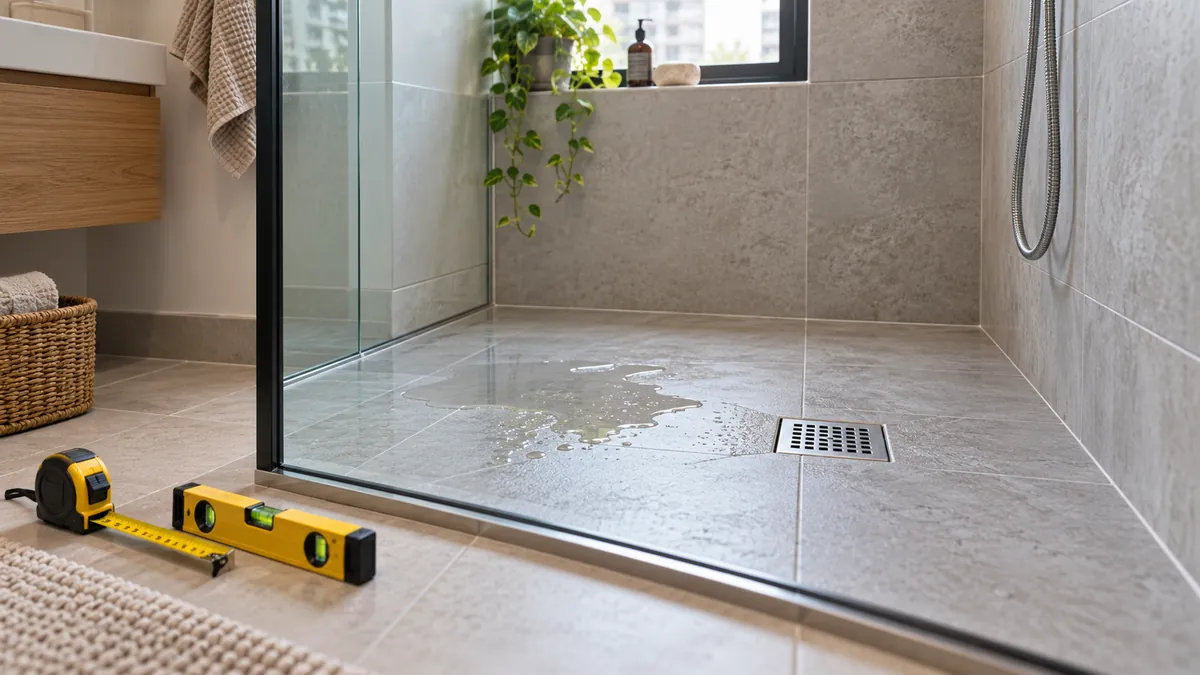
The shower drain can be clean and still leave a puddle on the tiled floor. Water may collect in one low tile, miss the drain because of an uneven slope, or escape past the screen before it reaches the outlet. A resident may understandably order drain cleaning, but repeated snaking will not change the shape of a floor. The useful task is to locate the water, document when it remains, and separate drainage capacity from surface geometry and waterproofing. This guide explains safe observations and a repair brief for a tiler or bathroom contractor without assuming that every puddle requires demolishing the whole room.
Check the outlet first, but only once
Remove visible hair and debris from the user-accessible grate according to the drain manufacturer's instructions. Do not push tools into an unknown trap or pour aggressive chemicals into a system you may later open. Observe whether water backs up above the grate during a normal shower or flows into it freely while a separate puddle remains elsewhere. Those are different symptoms. If the drain level rises, a plumber may need to check the trap or downstream line. If the grate takes water readily but a shallow pool stays on a tile, the floor profile deserves attention.
Photograph the floor immediately after the shower and again after a reasonable waiting period. Use a small removable marker outside the wet area or a sketch to note the puddle's outline. State whether the pool has always been present or appeared after new tile, glass or drain work. Do not rely on a single picture from a tilted camera to prove slope. A professional can measure elevations, inspect the surface and review the as-built layout before promising a fix.
Surface slope, outlet and threshold work together
A shower floor should direct water toward its outlet while the drain carries it away and waterproofing protects the structure. Schluter's curbless shower guidance describes these as connected parts of a system. A tile surface that falls in two directions can create a low pocket, even if the drain itself is open. Large tiles around a point drain require a deliberate layout; cuts and substrate shape matter. A linear drain uses a different geometry. There is no universal repair that can be chosen from the puddle photo alone.
The threshold and shower screen also influence what looks like a “drainage problem.” Water may run under a door, collect beside a fixed glass panel, or be trapped by a raised strip of silicone. Some screen profiles have designed drainage openings; closing them can move water to the wrong side. Photograph the door position and the puddle after a shower with the same conditions. A tiler should identify the surface fall, and a screen installer may need to check the door seal or profile separately.
A simple observation without demolition
Let the floor dry, then use a small amount of clean water under controlled conditions to see the first path it takes. Keep water within the shower and stop if it reaches an adjoining room. The test can show whether a local depression is present, but it is not a waterproofing test and cannot reveal a hidden membrane. A level, straightedge or measured points can help a professional confirm where the fall changes. Do not use a phone's angle display as the only basis for ordering new tile; tile texture and narrow joints affect a casual reading.
Note the size and location of the low area relative to the drain. Is water trapped only along the wall, around the grate, at the entrance, or in the middle? Does it drain when gently guided with a squeegee? Does a second person using the shower change the pattern? The answers help distinguish a local surface issue from a slow outlet or splashing beyond the enclosure. If water appears under a cabinet, behind skirting or on the ceiling below, stop treating it as a harmless puddle and request leak diagnosis.
Why waterproofing matters even with intact tile
Tile and grout can let moisture pass; the waterproof assembly beneath them is designed to manage it. Schluter's explanation of tiled shower water management describes how the membrane and drain connection differ between shower systems. A low surface spot is irritating, but it does not by itself prove a membrane leak. Conversely, dry-looking tile does not prove the membrane sound. The contractor needs to assess the age and construction of the shower before deciding whether a local tile correction could disturb waterproofing.
A proposal to grind a tile, add a thin layer over existing tile, or move the grate must account for the waterproof layer and the connection to the drain. Cutting through a membrane to create a better-looking surface can turn a minor puddle into hidden water damage. Ask the bidder to explain what will remain intact, what will be opened, how continuity will be restored, and how the work will be checked. If no one knows the assembly under the tile, that uncertainty should appear in the quote rather than in an unconditional guarantee.
Repair choices depend on the cause
A blocked trap may need plumbing service. A glass seal or profile may need adjustment. A single poorly set tile may allow a local correction if the underlying waterproofing can be preserved or properly rebuilt. A broad reverse slope may require removing a larger area, reshaping the substrate and reconnecting an appropriate membrane and drain. Repeated stagnant water at the entry may be linked to threshold geometry. Each option has different cost, drying time and disturbance; a contractor should explain why the proposed option matches the measured defect.
Avoid the promise that a thicker grout line or new silicone will make water flow uphill. Those materials seal certain joints; they do not create the floor's necessary geometry. Equally, avoid authorising a complete bathroom rebuild before the outlet, screen and levels have been checked. The bathroom renovation guide covers a full scope if one is justified. The guide to replacing a cracked tile illustrates why local removal can affect surrounding finishes.
Write a useful repair request
Send a wide photo of the shower, a close picture of the puddle and grate, and a short video of normal drainage. Note whether the shower has a curb, a linear or point outlet, recent renovation, visible cracks, loose tile or wetness outside. State the approximate puddle location and whether the drain backs up. Ask for an on-site diagnosis, measurement of the surface, inspection of accessible drain and screen details, and a repair option with its effect on waterproofing. Post a tiling task with these observations rather than declaring that the pipe is blocked.
Compare quotes on the same scope: diagnosis, demolition area, replacement tile availability, substrate and membrane work, drain connection, glass or threshold work, debris disposal, curing time and final test. If a matching tile is unavailable, ask how a visible replacement will look before work begins. If the shower is in a rental or a recently completed renovation, save dated photos and notify the relevant owner or contractor. Do not let a repair erase evidence before the cause and responsibility are documented.
Acceptance and the next shower
At handover, inspect the finished surface, joints, grate seating and adjacent glass. Ask which waterproofing steps were performed and keep product details and photos taken before retiling. Follow the specified time before wetting new materials. Then run a normal shower while watching where water goes, whether the outlet backs up and whether the former puddle returns. Check the dry side of the screen and any previously wet room. A visible dry result is useful, but it cannot replace a proper check of hidden work when that work was part of the repair.
The key distinction is between an open drain and a floor that actually leads water to it. Good diagnosis measures that path and considers the membrane and screen as well. It can prevent another unnecessary drain cleaning and prevent a small surface defect from becoming a concealed leak through a careless quick fix.
Internal links
Useful pages on this topic
Frequently asked questions
- Why does water stay when the drain is clear?
- A low tile, reverse slope, threshold or screen profile may be involved; measure the surface.
- Will drain cleaning fix it?
- Only if water backs up at the grate or a downstream blockage is confirmed.
- Can silicone correct floor slope?
- No. Sealant does not reshape the floor or replace waterproofing.
- When should a leak be investigated?
- If an adjacent room, cabinet or ceiling below becomes wet, stop shower use and request diagnosis.