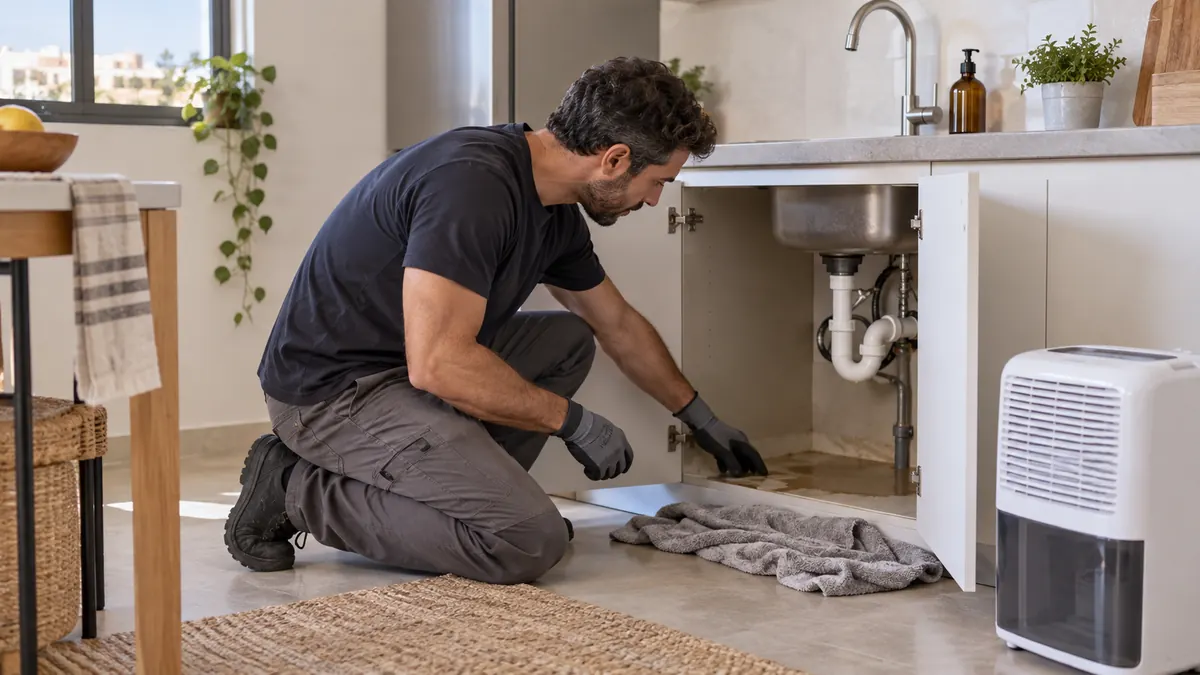
A small leak under a sink can leave water out of sight: behind a cabinet kickboard, under a rug, along floor joints and inside stored cardboard. Cleaning starts by stopping the source and making the area safe. This guide covers a limited leak of clean supply water. If sewage or floodwater entered the home, or water reached damaged electrical fittings, keep people clear and call the relevant professionals instead of treating it as routine cleaning.
Stop the leak and document it
Close the accessible isolation valve and check whether the flow stops. If it does not, shut off the apartment supply or contact building maintenance. Do not touch wet switches or appliances. Before moving furniture, photograph the source, the edge of the wet area and nearby rooms. In a rental or where another apartment may be affected, notify the owner or building contact promptly. Note when you discovered the leak. A short record helps distinguish old staining from fresh moisture and defines the repair.
Remove standing water before cleaning
Use towels or a wet-rated extractor to collect free water; a dry household vacuum is not suitable. Lift rugs, clear lower shelves and open cabinet doors to allow air through. Wash and dry used cloths separately. Do not return damp goods to a closed cupboard. The EPA advises drying wet items within 24–48 hours where possible and fixing the moisture source. That is a useful target, not proof that water trapped below flooring has disappeared.
Run a dehumidifier according to its instructions, empty its tank and check the room humidity. If ventilating instead, consider outdoor humidity. Avoid blasting hot air onto veneer, adhesives or sealant. A dry-looking tile or laminate surface may hide wet layers. Swollen boards, soft plasterboard, dark skirting or a persistent musty smell warrant inspection and sometimes moisture measurements.
Clean materials without making them wetter
After removing water, wipe hard surfaces with a product suited to the finish, remove residues and dry them. Do not mix household cleaners or saturate grout to be safe. Timber edges, chipboard and silicone joints can deteriorate after repeated wetting. Porous rugs, cardboard and insulation need separate assessment; contaminated porous material may require removal. The EPA explains why floodwater and contaminated materials call for a different cleanup plan.
Choose the right help
A cleaning crew can clear and clean possessions, remove residual water and handle several rooms quickly. A plumber must find a continuing drip, failed connector or supply fault. Wet walls, ceilings and concealed floors may need a specialist drying and repair plan. Ask for a quote that separates leak repair, access or dismantling, drying, cleaning and restoration. Identify who checks moisture again before surfaces are closed.
Send each provider the same photographs, approximate affected area, floor material and discovery time. Ask whether moving furniture, protecting dry rooms, consumables, disposal and final cleaning are included. Recheck skirting and joints the next day and several days later. If dampness returns, investigate the source before paying for another cleanup. See the kitchen cleaning guide for another practical task, or request a plumber to stop the leak.
Internal links