🧹Cleaning
How to Clean a Range Hood and Grease Filters Safely
By KABLAY Editorial · · 9 min read · Updated:
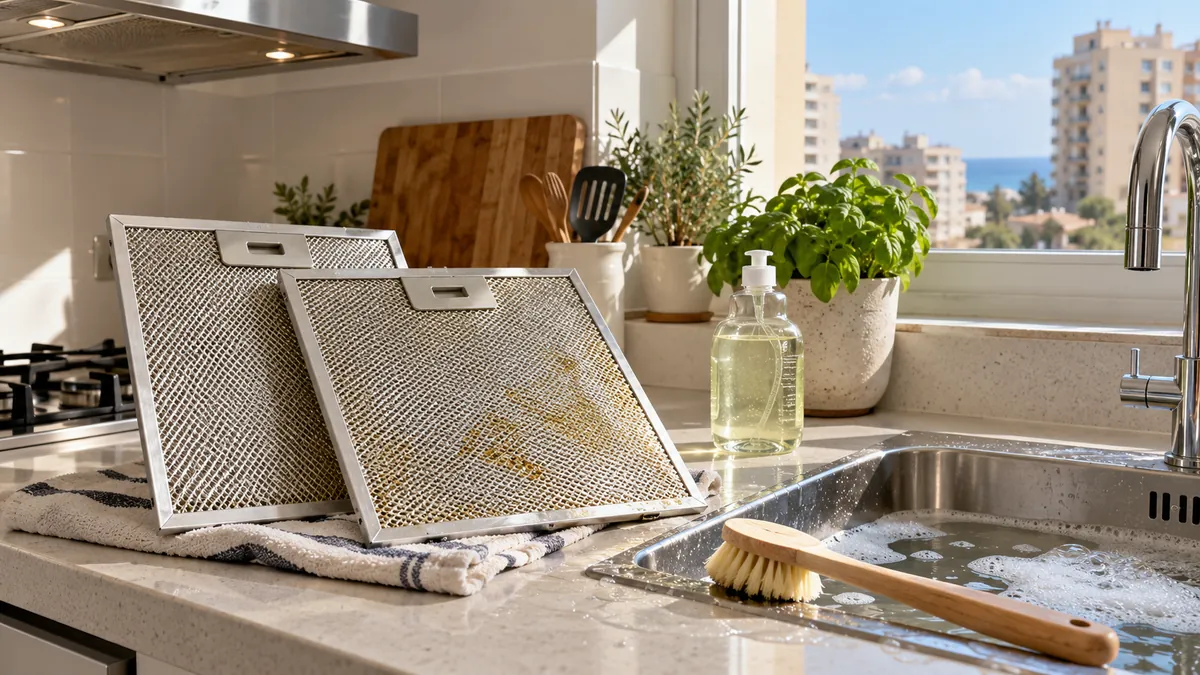
The most useful part of a kitchen extractor cleaning is often hidden above the hob: the grease filter. A greasy outside surface can be wiped in minutes, while an overloaded filter reduces normal airflow and leaves sticky deposits around the hood. In recirculating models there may also be a charcoal filter, which has a different job and usually a different maintenance rule. This guide shows how to define the cleaning job, protect the appliance and surrounding cabinets, and recognise when the problem is mechanical rather than dirt. Always use the manual for the installed model; the steps below are a planning guide, not a substitute for its instructions.
Identify the hood and its filters
First find the model label or instruction booklet. Is the hood ducted outdoors or does it return air to the kitchen after filtration? How many removable metal grease filters are there? Is a separate charcoal or carbon filter fitted? A metal mesh filter catches cooking grease and may often be washed, subject to the model instructions. A charcoal filter handles odours in a recirculating setup and may require replacement rather than washing. Do not treat an unknown cartridge as washable simply because it looks like a filter.
The Bosch owner guide recommends checking the manual for removal, washing its metal filters in warm soapy water, and drying them before reinstallation. It separately describes replacing charcoal filters on applicable models. These are examples from one manufacturer, not universal intervals for every appliance. If the unit has unusual plastic, coated, paper, or combined elements, look up the exact part number before soaking anything. Photograph the filter orientation and latches so the parts can go back securely.
Start with power and access
Turn off the hood, allow the hob and lights to cool, and follow the appliance manual for safe power isolation. Keep wet cloths away from controls, lamps and wiring. Never spray cleaner directly into the motor housing or ventilation duct. If a light fitting or panel must be opened beyond the user-maintenance steps, stop and involve a suitable technician. Gloves can protect hands from sharp filter edges. A stable step stool and a clear worktop are safer than balancing over pots or leaning across a hot cooker.
Cover a porous countertop or sensitive cabinet finish before removing greasy parts. Prepare a basin or sink large enough for the filters and a place where they can drain without staining wood. Take an overview photo, then a close picture of heavy deposits and any damaged mesh. This record helps distinguish a cleaning result from an existing mechanical fault. If the hood is mounted high, integrated into cabinetry, or requires unsafe reach, describe that access when requesting a cleaning visit.
Wash the removable metal filter
Release the latch exactly as the manufacturer shows and support the filter with the other hand so it cannot fall. Remove loose surface grease with a soft cloth. Soak a washable metal filter in warm water with a suitable mild detergent, then brush gently along the mesh and rinse thoroughly. Do not crush the layers or scrape them with a knife. Let the filter drain and dry fully before reinstallation. Some manufacturers permit dishwasher cleaning for certain filters; that permission and any temperature limit belong to the model instructions, not to a general internet recipe.
An extremely loaded filter may need repeated gentle cleaning rather than one harsh chemical bath. Strong acids, caustic products, chlorine, and abrasive pads can attack aluminum, coated surfaces or nearby stainless steel. Do not mix cleaners. Test any proposed degreaser on a small compatible area and follow its label for dilution, contact time, ventilation and gloves. If the mesh is torn, frame bent or latch unreliable, ask whether the correct replacement part is available. A filter that does not lock in place should not be put back into service.
Clean the accessible hood body
Wipe the outer shell with a soft cloth and mild soapy water, then dry it. On stainless steel, follow the direction of its visible grain and avoid products the appliance maker excludes. Bosch, for example, warns against chlorine-based cleaners and abrasives for its stainless hoods. Clean the reachable filter holder while the filters are out, using a damp cloth without dripping into electrical parts. Remove grease from the adjacent wall and cabinet only with a product compatible with their finish. Painted cabinets, laminated panels, natural stone and stainless steel need different care.
Avoid dismantling the motor, fan, internal wiring or inaccessible duct to “finish the job.” Ordinary domestic cleaning covers the user-accessible surfaces and removable filters. A greasy duct, broken damper, unusual fan noise or weak airflow after clean filters needs separate inspection. Ask what can be seen without damaging the installation. A cleaner may clean the accessible hood and flag a technical fault; a repair technician or ventilation specialist handles the equipment fault. This boundary should be written into the estimate.
The charcoal-filter decision
In a recirculating hood, the carbon element reduces odours rather than catching the bulk of cooking grease. Many disposable carbon filters are replaced on a schedule; some special designs have different regeneration instructions. Read the model and filter information before purchasing a part. A washing process suitable for metal mesh may ruin a disposable charcoal cartridge. If you have no label, send a photo of the cartridge and hood model to the supplier. An unusually strong smell after cleaning may mean the charcoal element is spent, the filter is installed incorrectly, or the cooking vapour is simply not being captured well.
A ducted hood may not have a charcoal element at all. Paying for an unspecified “new filter” is therefore a poor way to buy service. Ask the provider to list the exact part number, quantity and whether it is supplied or only recommended. Keep the packaging until you verify fit. If a technician proposes cutting a generic sheet to fit a system designed for a shaped cartridge, ask how that solution complies with the appliance instructions and maintains airflow.
When cleaning is a team job
A resident can often wash one accessible filter, but a whole kitchen after months of heavy cooking is different. Grease may coat the hood exterior, tiles, cabinet tops, range area and nearby wall. A cleaning team can allocate time and safe products to all agreed surfaces, protect materials and leave the appliance’s technical parts alone. Define whether the quote covers just the extractor, the cooking surface, wall tile, upper cabinets, oven and disposal of used materials. “Kitchen cleaning” should not silently imply dismantling a hood.
Send photos of the hood, filters and surrounding surfaces, the appliance model, the approximate height and whether water and a suitable sink are available. Ask who supplies detergents and tools, whether any part is to be replaced, and whether the team will remove and refit filters. If there is hardened grease above cabinets, describe it separately. The post-renovation cleaning guide deals with construction residue, a different problem. Create a cleaning task that names each kitchen surface and the extractor explicitly.
Check the result and prevent a repeat
At handover, the filters should be dry, seated correctly and latched. No cleaner should remain around controls or lights. Run the hood briefly at normal settings after everything is dry; listen for new vibration and confirm ordinary airflow. An improvement in cleanliness does not prove that a duct is clear or that an old motor is healthy. Keep the product and part details with the appliance manual. Set a reminder based on the manufacturer's guidance and how heavily the kitchen is used, then inspect the visible filter before it becomes heavily loaded again.
The best cleaning plan separates washable metal filters, replaceable or model-specific charcoal elements, accessible exterior surfaces and technical ventilation work. That distinction protects the hood and makes quotations comparable. If a smell or weak extraction persists after correct filter care, request appliance diagnosis instead of repeating a stronger chemical wash.
Internal links
Useful pages on this topic
Frequently asked questions
- Can charcoal filters be washed like metal filters?
- Often not. Check the model and part instructions; many charcoal cartridges are replaced.
- Can a metal grease filter go in a dishwasher?
- Only if the specific appliance instructions permit it and their conditions are followed.
- What must stay dry during hood cleaning?
- Do not spray water or cleaner into controls, lamps, the motor or duct.
- Why is extraction still weak after cleaning?
- A duct, damper or fan may need technical inspection rather than a stronger cleaning chemical.