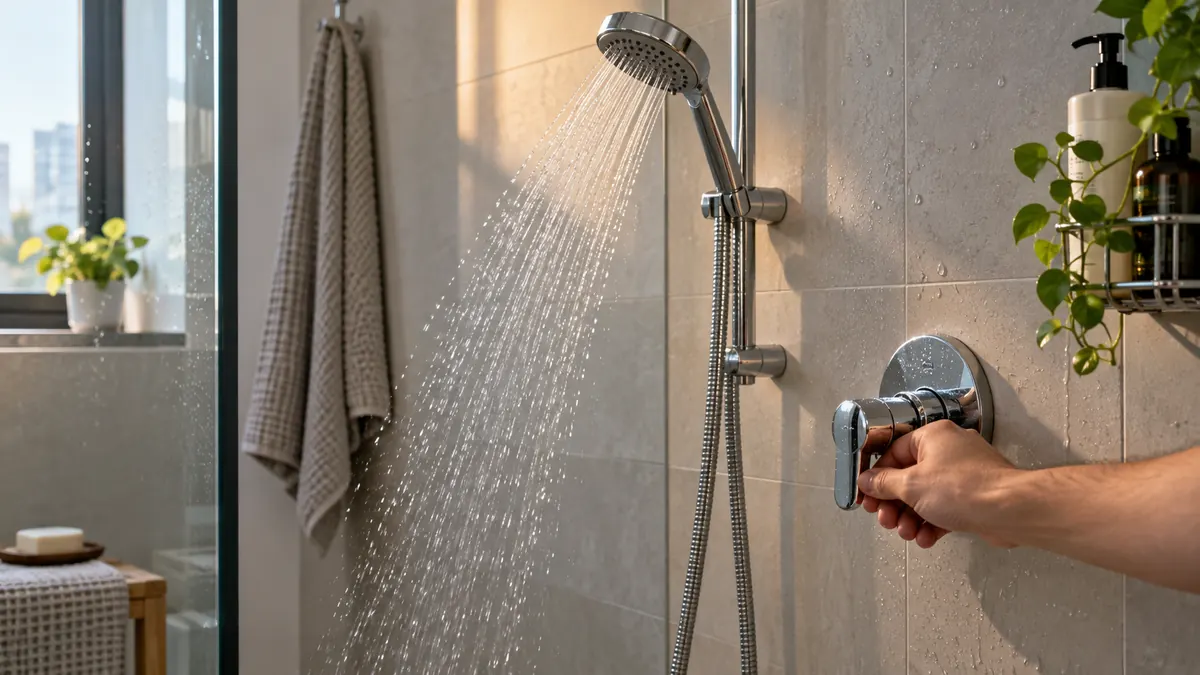
When shower water swings from cold to uncomfortably hot, the mixer is not always at fault. Changes in pressure while another fixture runs, a water heater, a restricted filter or a worn cartridge can all affect the result. Start with observation rather than dismantling. If changes are severe, limit use of the shower, especially by children or anyone with reduced mobility. Raising the temperature setting to compensate for a cold spell can make the next hot spell unsafe.
Record when the change happens
Does it follow a toilet flush, a second tap opening or a washing machine starting? Does it happen at a particular time? Is the problem limited to the shower, or is the kitchen tap affected too? Do hot and cold supplies have similar flow? A note of the time and a short video of the handle position are more useful than simply saying the water fluctuates. Do not create scalding conditions solely to film the issue.
Separate the mixer from the hot-water supply
If several taps change temperature under similar conditions, inspect the heating source and supply before blaming the shower mixer. An Israeli apartment may use an electric boiler, a solar water-heating arrangement or a shared building system. If only the shower is affected, the plumber can examine the mixer cartridge, thermostatic element or diverter. A restricted shower head and low flow can also influence some heating systems. The home's actual installation determines the diagnosis.
Manufacturers show why parts differ. Moen describes temperature stops and balancing components on its products, while Delta distinguishes pressure-balancing from thermostatic control. Those are examples, not instructions to dismantle an unidentified fitting.
Safe checks before the visit
Clean an accessible shower head according to its manual and check that the flexible hose is not kinked. Compare another tap during normal use. Tell the plumber if the problem began after water-heater work, a building shutdown or a new fixture. Do not open a concealed wall mixer without knowing how to isolate it; a leak inside the wall can cause substantial damage. Have electrical parts of a heater checked by an appropriately qualified professional.
Request a diagnosis and verify the result
Describe the mixer type, approximate age, heating system, affected outlets and any link to other water use. Send a photograph of the external fitting and visible model marking. Ask for supply pressure and temperature to be checked before approving a cartridge, thermostat or complete mixer replacement. A quote should state diagnostic cost, compatible parts, access and making good. A concealed unit should not be ordered from a handle photo alone.
After repair, test the shower in normal use and then with a second tap opened, together with the plumber and without risking a burn. Temperature should be predictable, the diverter should work and joints should stay dry. Keep the replacement part details and invoice. If the problem remains at several outlets, make sure the report identifies an upstream issue. Request a plumber with your observations; our shower drainage guide addresses a separate bathroom symptom.
Internal links