🎨Painting and plaster
Rusty Balcony Railing: Preparation and Painting
By KABLAY Editorial · · 9 min read · Updated:
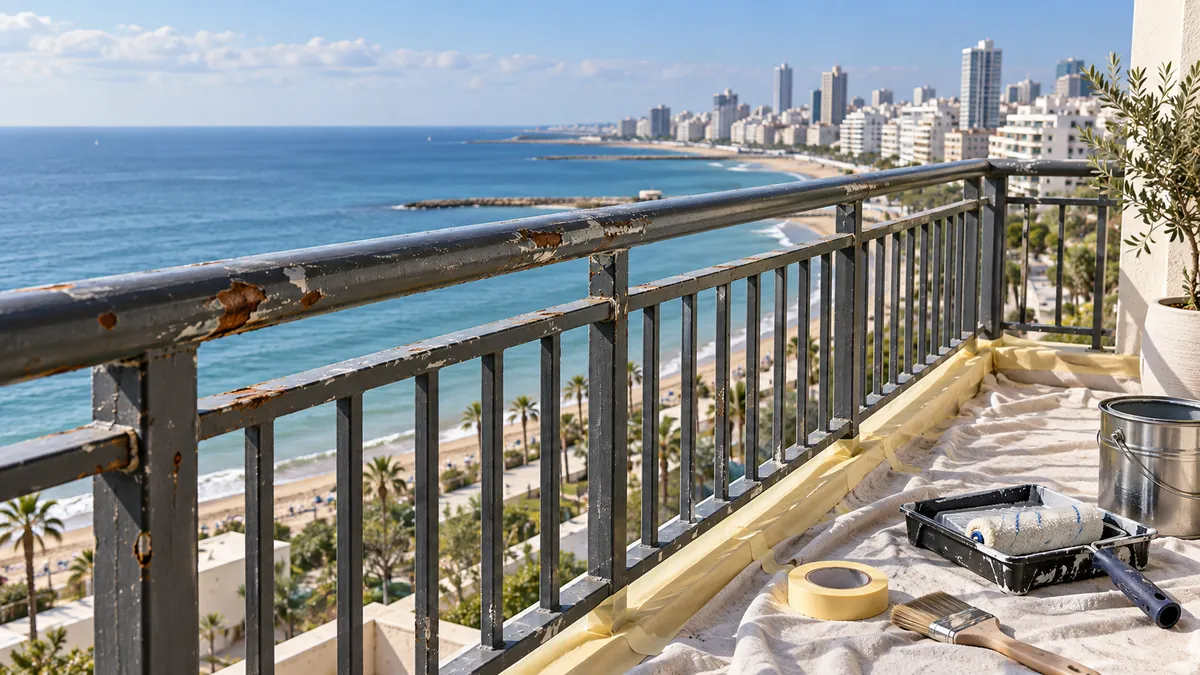
Rust on a balcony railing can be a small coating problem or a warning that the metal and its anchors need repair. A fresh coat of paint makes both cases look similar for a few weeks. Before discussing colour, inspect where corrosion appears, whether the railing moves, and how a worker can reach every side safely. In coastal Israeli apartments, wind, salt deposits and strong sun make preparation especially important, but the exact coating must suit the actual metal and site. This guide helps you separate cosmetic painting from structural work and request an estimate that names the preparation, primer, finish and access method.
Check stability before scraping
From a safe position, look at the top rail, vertical members, welded joints, base plates and places where metal meets concrete. Photograph flaking paint, orange staining, pitted areas and any cracking around anchors. Do not lean your weight on a suspect railing to “test” it. Movement, a loose anchor, a broken weld, a visibly thinned bar or crumbling concrete call for prompt assessment by a suitable professional. Paint does not restore the original strength of a weakened guard. Keep people from using a balcony edge that may be unsafe until it is assessed.
Small rusty spots on an otherwise sound surface can be a coating job, but a painter should not be asked to hide a structural problem. Ask whether the inspection is included or whether a metalworker or engineer must assess the railing first. Note whether a condominium or building manager controls the exterior appearance or shared railing. Do not assume all balconies have the same ownership or approval procedure. Record the condition before work, especially in a rental or a building with several balconies showing similar damage.
Identify the metal and the existing coating
A railing may be steel, galvanized steel, aluminum, or a mixed assembly. The old finish might be liquid paint or a factory coating. Surface preparation and primer must be compatible with both substrate and remaining sound coating. A magnet and visual clues can help a contractor, but they are not a complete specification. Ask the bidder to state the identified material and proposed product system. Painting over unknown chalky or peeling layers leaves the new finish dependent on whatever failed underneath.
The Sherwin-Williams surface preparation guidance distinguishes preparation of steel from aluminum and galvanized steel, including removal of contamination and corrosion. It also calls for timely priming of cleaned bare steel. Product instructions still govern the selected system and local weather. A contractor should not replace a manufacturer's primer with an arbitrary “universal” can without checking adhesion and compatibility.
Why seaside exposure changes the work
Salt deposits and airborne grime can sit under loose paint. Simply brushing orange areas and coating over contamination gives the new paint a poor base. Cleaning, rinsing where appropriate, drying, removing loose finish and treating corroded metal are separate stages. The work should include the underside and connections that are reachable with safe access, not just the side visible from the living room. If the exterior face cannot be reached safely from the balcony, a proper access plan belongs in the quote.
Sun and heat also affect application conditions. Paint on a hot metal rail in direct midday sun may behave differently from paint on a shaded, dry surface; follow the product's stated temperature and recoat windows. Wind can blow dust or spray toward neighbours and vehicles. Ask how surrounding tile, glass, plants and facades will be protected. For a coastal location, choose a system whose technical sheet allows the exposure and substrate. Avoid a promise that any one product makes future maintenance unnecessary forever.
A real preparation sequence
A competent scope begins with inspection, protection of the area and removal of loose, unsound coating. The worker cleans grease, dirt and salt contamination, removes rust by the method appropriate to the metal and coating, treats edges and corners, and allows the surface to dry. The chosen primer goes onto the prepared bare areas or full surface according to the system instructions. Finish coats follow the specified coverage, thickness and drying intervals. In a Rust-Oleum handrail project guide, cleaning, removal of loose rust, masking, spot priming and finish application are distinct steps.
Do not assume every rail must be stripped to bright bare metal, and do not assume a quick wipe is enough. The correct level of preparation depends on the condition, existing coating and system selected. Corrosion around welds and bases deserves closer attention than a broad flat bar. Ask for a small sample area if colour, texture or compatibility is uncertain. A written scope should say whether old paint remains where sound, whether rusted spots are taken back further, and what happens if hidden damage appears during preparation.
Access and safety are part of the quote
Exterior painting above ground level is not an ordinary reach from a kitchen stool. Workers need a safe method for both sides of the guard, especially near an open edge. Do not agree to a plan that requires leaning through or over a corroded railing. Ask who supplies access equipment, how the area below will be protected and whether the building needs advance notice. If only the inside face is in scope, write that limitation plainly and expect the exterior face to remain a maintenance issue.
A balcony may have tile, drainage, sliding doors and furniture that must be protected. Overspray or grinding dust can damage glass and neighbouring finishes. Confirm whether the team will use brush, roller or controlled spray and who cleans the site. The guide to painting doors and trim covers different surfaces; for a railing, the metal system and exposure matter more. Create a painting task with close photos of rust and a wide photo of access.
Compare repair and replacement honestly
If corrosion has perforated a section, a weld has failed or an anchor is unstable, painting alone should be paused. A metalworker may propose repair or replacement, and a qualified assessor may be needed for a safety decision. Ask for a separate price for structural work before the coating work. The replacement section should fit the existing guard's design and the building's requirements; do not infer compliance from visual similarity alone. If only a small sound area is affected, a targeted coating repair may be sufficient. Obtain a clear explanation for either recommendation.
Avoid comparing a price for “one coat over rust” with a price for cleaning, preparation, primer, two finish coats, access and disposal as though they were identical services. Ask each bidder to list area or length, number of sides, product names, number of coats, drying and return visits, hardware or weld repair, protection, waste removal and warranty terms. The cheapest line item can become expensive if it excludes the work that makes the coating adhere.
Inspect the finished railing
After the specified drying period, look for unpainted undersides, gaps around bases, drips, missed rust, overspray and damage to adjacent tile or glass. The finish should be continuous where the scope promised, without sealing intended drainage gaps or moving joints indiscriminately. Check the repair photos against the initial record. Do not use a newly coated rail as a load test; any structural concern must have been resolved separately. Keep the product names, technical sheets and invoice so the next maintenance visit can use compatible materials.
A durable result starts with an honest diagnosis. Stable metal with coating failure needs thorough surface preparation and a matching exterior system. A weak guard needs safety work before a decorative coat. Treating those as different jobs gives residents a safer balcony and a quote they can actually compare.
Internal links
Useful pages on this topic
Frequently asked questions
- Can I paint straight over a rusty railing?
- Check structural soundness and prepare the substrate for the selected system; paint cannot repair a weak guard.
- When is a metalworker needed?
- A moving anchor, failed weld, hole or visibly thinned member needs structural assessment.
- Does the outer face need painting?
- If included, plan safe access. Painting only from inside leaves the exterior face untreated.
- What should quotes specify?
- Preparation, primer and finish, sides covered, access, anchor repair, protection and warranty.