🎨Painting and plaster
Painting Doors and Frames in Israel: A Practical Guide
By KABLAY Editorial · · 12 min read · Updated:
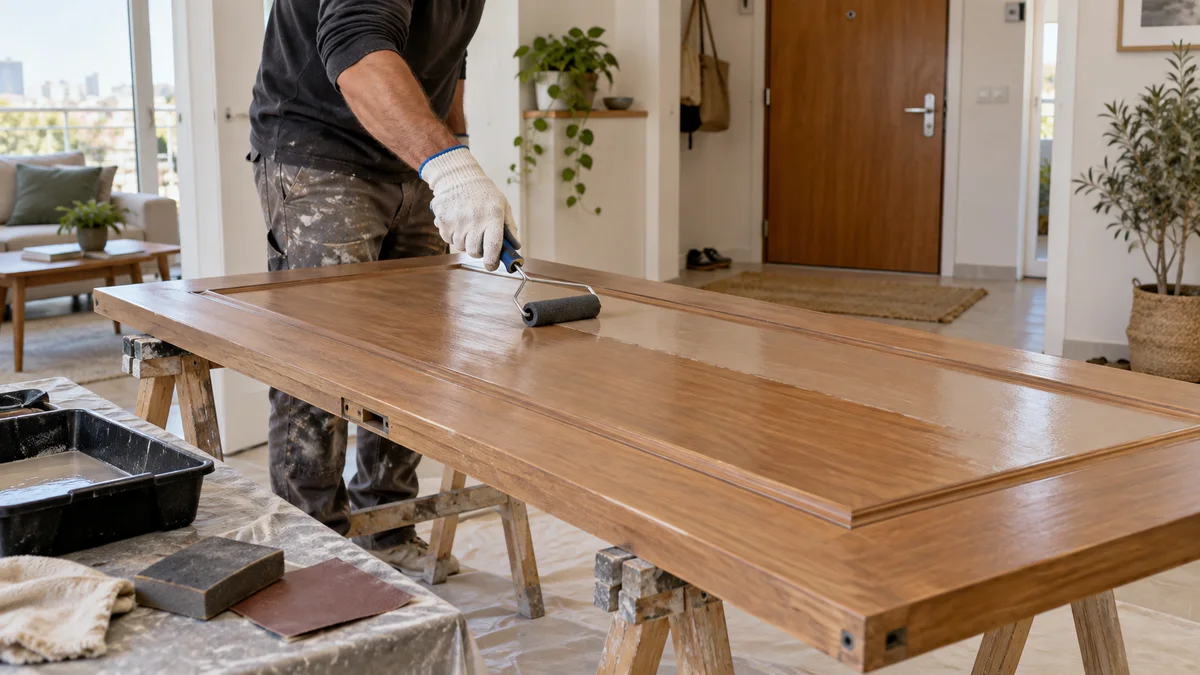
Painting doors and frames can refresh an apartment without replacing every door, but the work is less predictable than repainting a sound wall. A door is touched, closed, rubbed by seals and cleaned repeatedly. Wood, metal and a laminated factory finish need different preparation, and an attractive result must still open, close and latch correctly.
This guide helps you decide what to ask a painter in Israel, describe the material, compare a quotation and plan the drying period. It concerns ordinary decorative work. A fire-rated door, protected-room door or another specialist assembly requires its manufacturer's instructions and the appropriate specialist. Decorative painting must not alter a safety mechanism or compensate for a door that already fits badly.
Make an inventory before asking for prices
List each door and frame rather than sending only the total number. Note interior or exterior position, approximate size, material if known, current finish and whether both sides are included. Photograph the whole assembly, edges, hinges, handles and damaged areas. Show peeling paint, swollen edges, rust or a coating that has lifted around a handle.
Describe the desired change: a similar colour refresh, a move from dark to light, or repair of a visibly damaged finish. Say whether the apartment is occupied and whether the doors must remain usable every evening. Include access, parking and your preferred language. Those details help the painter explain whether the proposed schedule is practical before you reserve a date.
First decide whether the problem is decoration or repair
A door that drags, will not latch or has loose hinges needs a functional assessment before a new finish is applied. Painting an edge can change a close fit, but it cannot correct the underlying geometry. Photograph rubbing points and explain when the problem started. Ask who will handle adjustment and whether it is a separate scope.
Swollen material, persistent moisture or damaged layers may make repair or replacement more appropriate than a simple repaint. Do not book a fixed-price cosmetic job on the assumption that every defect can be hidden. Agree on an inspection and ask for the condition that would make the painter stop and propose another route.
Identify wood and wood-based doors
A solid timber door, a veneer-covered door and an engineered door panel are not interchangeable substrates. Ask what the visible skin is and whether previous paint or varnish is sound. A smooth painted surface may conceal a thin veneer or another finish that cannot tolerate aggressive sanding. The preparation should preserve the material you intend to keep.
For wood, specify whether grain remains visible or the goal is a covering finish. Ask how dents and damaged edges will be treated, what primer and topcoat are proposed and how the painter will test compatibility. The manufacturer's product information should support the selected system; a familiar brand name alone is not a complete specification.
Metal doors and frames
For metal, separate ordinary surface wear from corrosion and persistent water exposure. Describe where rust appears and whether a previous repair has already failed. The quotation should identify preparation, treatment of affected areas and the compatible coating system, rather than promising to paint over whatever is there.
Tell the contractor whether the door receives sunlight or rain and whether it is an entry door or an interior metal frame. Discuss locks, hinges, seals and manufacturer labels before protection begins. Coating moving components or obscuring important markings is not an acceptable shortcut. Do not let decorative work alter the operation of a specialised safety door.
Laminated or factory-coated doors need a compatibility check
A glossy or laminated skin may not accept a generic wall paint system. Ask for an identification of the surface, the proposed preparation and a discreet trial where appropriate. The decision should consider adhesion and appearance after the relevant drying or curing interval, not only how the first wet coat looks.
If a skin is lifting or an edge is damaged, obtain a repair recommendation before choosing paint. A new coating cannot reliably glue every unstable layer back into place. If the material cannot be identified, compare the uncertainty and preparation cost with a repair or replacement proposal before committing to a full set of doors.
Select products for the exact material and use
Record the primer, topcoat, colour and sheen. A decorative wall product is not automatically the appropriate finish for a frequently handled door. Ask for the product sheet and instructions covering the actual substrate. Tambour's material-specific guidance illustrates why wood, metal and existing coatings are considered separately when selecting a painting system.
Discuss cleaning, sunlight exposure and the look you want. A high-gloss finish can make surface irregularities more noticeable; a colour sample is more useful in the apartment than on a phone screen. Ask how the proposed coating will match existing skirting boards and neighbouring frames, especially if only some doors are being repainted.
Removing the leaf versus painting it in place
Ask whether the door leaf will be removed, worked on a stable support, transported to a workshop or painted in position. These options affect access to edges, protection, room availability and the number of visits. If transport is proposed, clarify responsibility, packing, identification of each leaf and the return date.
In-place work may be appropriate for some jobs, but it still needs space for preparation and safe movement around the door. Clarify whether the hinges remain attached, how surrounding surfaces are protected and which edges are included. A quotation for one visible face is different from a complete finish on both faces and accessible edges.
Handles, locks and hinges
Specify which hardware will be removed and which will be protected in place. Keep parts together and label them by door. Ask who reinstalls them and checks the latch afterward. A new handle, lock repair or replacement hinge should be recorded as a separate agreed item rather than appearing unexpectedly on the final invoice.
For specialist doors, do not remove or adjust seals, closers, locking components or other safety-related features without the manufacturer's permitted procedure and an appropriate professional. If the contractor cannot explain the assembly, limit the proposed work until that information is available. A neat paint edge is not more important than a functioning safety component.
Drying, recoating and return to use are different milestones
A finish can be dry to touch before it is ready for another coat or regular handling. Ask the painter to distinguish these stages for the named product under the expected conditions. Do not copy a time from another coating and treat it as a universal rule. Temperature, ventilation and application also affect the practical schedule.
Plan which doors can remain open and how privacy and security will work overnight. Ask when contact with seals, normal closing and cleaning can resume. Keep children and pets away from the working area and maintain the ventilation required by product instructions. Do not close two freshly coated contact surfaces together simply because the outer face looks dry.
What changes the total price
The number of leaves is only one cost factor. Material, damaged layers, changing colour, edge work, hardware, frame complexity, protection, access and repeat visits all matter. A small job may have a minimum charge because setup and travel are still required. Obtain written offers for the same scope before deciding which total is better value.
- Each leaf and frame, with material and condition.
- One or both faces and the agreed accessible edges.
- Preparation and repairs before coating.
- Primer, finish product, colour and sheen.
- Removal, transport, protection and hardware handling.
- Drying intervals and temporary loss of use.
- Cleanup, waste removal and VAT where applicable.
- Extra-work approval and the correction procedure.
If a quote says only “painting five doors”, request the missing detail. Compare repair allowances and exclusions alongside the amount. Ask what happens if preparation exposes a damaged skin or more corrosion than the photographs showed. Any change should be explained and approved before that work starts.
Inspect appearance and operation at handover
After the appropriate drying stage, inspect under normal daylight and room lighting. Look for missed areas, drips, rough patches, paint on hardware and uneven edges against walls or floors. Check the agreed colour and sheen across the doors. If an old defect was excluded, refer to the written scope rather than assuming that it was automatically repaired.
With the contractor, check opening, closing, latching and the function of handles or locks that were handled. Do not force a sticking door against fresh paint. Note any problem and agree on an adjustment at the appropriate time. Keep product names, spare paint where agreed, care instructions and photographs of the completed work.
Prepare a useful request on Kablay
For example: “Four interior doors and their frames in [city], two faces per leaf, current finish photographed. One damaged edge needs assessment. Apartment occupied; bedroom doors need planned downtime. Please specify preparation, products, hardware handling, visits and when normal use can resume.” Attach separate photographs for each assembly and say who provides materials.
Browse painters for the decorative scope, and discuss a separate handyman task if adjustment or ordinary hardware repair is needed. For a larger finish project, use the ceiling painting checklist to coordinate protection and the sequence of work. A successful door refresh combines an appropriate coating with predictable use of the apartment and a careful functional handover.
Internal links
Useful pages on this topic
Frequently asked questions
- Can a laminated door be painted?
- Identify the skin and coating compatibility first, with a discreet trial where appropriate. An unstable skin needs separate repair; a generic wall coating is not automatically suitable.
- Does the door leaf need to be removed?
- It depends on material, edge access, the selected process and apartment conditions. Agree on removal, transport, reinstallation and hardware responsibility before starting.
- When can I close a newly painted door?
- Follow the named coating's instructions under the actual conditions. Touch-dry, recoating and ordinary use can have different milestones.
- Can a protected-room door be repainted like an ordinary door?
- Specialist assemblies require the manufacturer's instructions. Decorative work must not alter safety features, seals or mechanisms.