🔧Plumbing
Bathroom Plumbing Renovation in Israel 2026: Pipes, Waterproofing and Prices
By KABLAY Editorial · · 13 min read
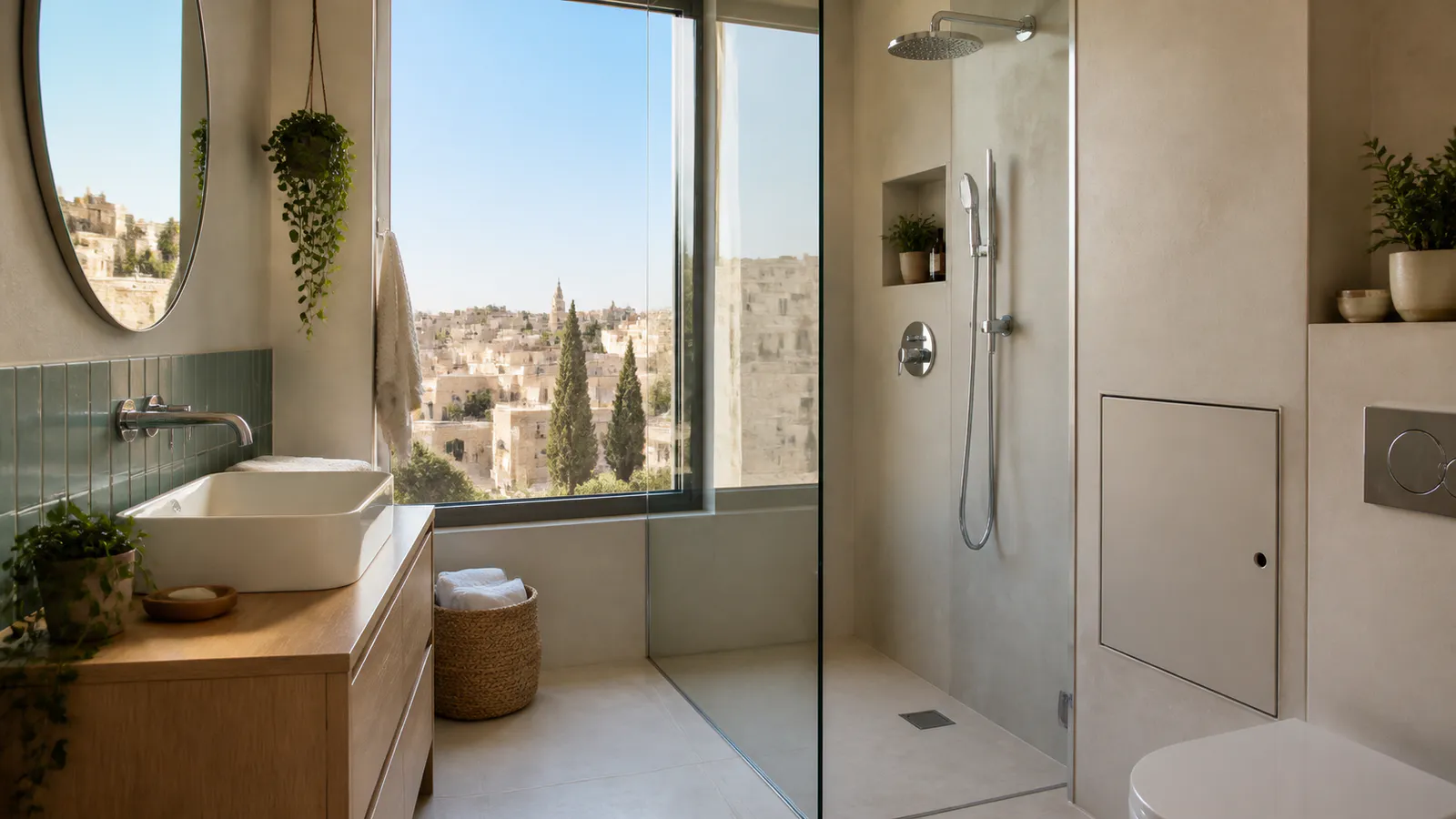
In a bathroom renovation, the most expensive decisions disappear behind the finish: water routes, waste level, isolation valves, service access and floor falls. Closing the wall before testing means even beautiful tile and fixtures cannot protect the budget from reopening.
This guide coordinates plumbing, waterproofing and tiling, with 2026 labor prices and a pre-close checklist. Start with plumbers in Israel or compare plumbers in Jerusalem.
Plan before demolition
- Exact positions for basin, toilet, shower, washing machine and hot-water connection.
- Fixture, outlet, niche and mirror heights measured from the finished tile level.
- Cold, hot and waste routes, including the constraints of existing services.
- Access to isolation valves, traps, flush mechanisms and concealed joints.
- Floor level, threshold height and fall direction to the drain.
- Electrical points and wet zones coordinated with the appropriate electrician.
Photograph the room, measure walls and openings, and record fixture models or dimensions before a pipe moves. A simple water layout or full-size wall marking is far cheaper than changing a connection after tiling.
When to replace pipework instead of adding one point
In an older apartment, check pipe age and material, corrosion, previous patches, pressure and route. Not every renovation needs a total replacement, but connecting a new bathroom to a weak old line leaves that line as the next failure point. If the work reaches a shared riser, coordinate with the building committee rather than treating it as private pipework.
Useful task pages include water-system design, cold-water distribution and waste-pipe laying.
Drainage and falls: where plumbing meets tile
The drain position controls tile cuts and the complexity of the floor fall. A remote drain, a route with too many turns, or insufficient build-up height must be resolved before waterproofing. Plumber and tiler should approve the drain height and floor build-up together.
For base, finish and balcony decisions, read tile-over-tile versus removal. A dedicated floor-drain installation page helps define that task.
Waterproofing is a separate system
Test pipework before waterproofing and test waterproofing before tile. Every pipe, valve, niche or frame penetration needs a designed detail rather than visible silicone alone. Photograph routes and membrane layers before they disappear; that record makes future drilling and service less uncertain.
Who owns what: plumber, tiler and electrician
Most expensive bathroom rework comes not from bad workmanship but from the empty space between two trades. Drain height, floor build-up, who applies the waterproofing, who drills through the membrane for a tap, who makes good the chases — all of it should be assigned in writing to a named person before work starts.
- Who strips out the old fixtures and who removes them from site.
- Who sets the finished floor level and the fall to the drain.
- Who applies the waterproofing and who checks it before tiling.
- Who drills through a finished membrane and with what sealing detail.
- Who closes the chases and makes good the walls after pipework.
- Who connects the washing machine, the water heater and electrical points in the wet zone.
When independent trades work in sequence, name a coordinator — yourself or one of them — and keep a shared thread with photos of every stage. When each person can see what the previous one left behind, very little remains to argue about at handover.
Wall-hung toilets and concealed frames
A concealed frame saves visual space, but the mechanism must remain serviceable through the flush plate or a planned access. Before closing, verify anchoring, outlet position, finished height and compatibility with the selected bowl. See the task page for concealed toilet-frame installation.
Solar tank, electric heater and the washing machine
In Israel hot water usually comes from a rooftop solar tank combined with an electric element for winter days and cloudy evenings. The distance between the tank and the outlet decides how long cold water runs before it warms, so where the shower and basin sit affects daily comfort, not only pipe cost. In a top-floor or roof apartment, check both pressure and the route of the lines before the layout is fixed.
Israeli washing machines often live in the bathroom or on the service balcony. The machine needs a dedicated valve, a stable waste connection at the right height and a surface that does not amplify vibration — not a temporary hookup into the basin trap. A dryer, dishwasher or plumbed fridge each add points that belong in the plan from the start.
For separate jobs, open the pages for water heater installation, water heater connection and appliance water connection. Where the system is shared with the building, confirm what may be changed inside the flat before ordering materials.
Israel plumbing labor prices in 2026
The KABLAY plumbing price list gives comparison points of about ₪130 per meter for cold-water routing, ₪150 per meter for hot water, ₪70 per meter for waste pipe, ₪1,500 for water-system design, ₪980 for a concealed frame, ₪900 for a wall-hung toilet, ₪360 for a floor drain and ₪280 for a mixer installation.
The actual quote depends on demolition, access, route length, diameter, material, point count, concrete drilling, waste and wall repair. Fixtures, taps and waterproofing products may not be included. Separate labor, materials and sanitaryware so competing offers cover the same scope.
The building, the neighbors and shutting off the water
In an Israeli apartment building, a bathroom renovation almost always reaches beyond your own front door. Closing a riser affects every household in the entrance, the noise carries to the floor below, and a leak downward becomes an insurance matter rather than a question of manners. Tell the vaad bait and the neighbors in advance, and put the date and duration of the water shut-off in writing.
- Find and test the apartment isolation valve before work starts, not during an incident.
- Check the hours your municipality allows noisy work — the rules differ between local authorities.
- Photograph the downstairs neighbor’s ceiling before work begins if old stains are already there.
- Check what your home policy and the building policy each cover, and who files a claim.
- Agree the waste route, lift protection and a place for rubble bags.
- Work touching a shared riser is coordinated with the building, not decided inside the flat.
A sequence that avoids opening twice
- Measure and plan around selected fixtures.
- Isolate safely, demolish carefully and record existing services.
- Install water, waste and service points.
- Test pressure, flow and drainage before closing.
- Close chases and form the base and falls.
- Apply and check the waterproofing system.
- Tile while preserving outlets and access.
- Install fixtures, mixers, traps and flexible seals.
- Run a complete test with every fitting operating.
- Hand over photographs, care notes and part references.
What to send for an accurate quote
- City, building type, floor, lift and parking.
- Room dimensions and photographs of all four walls.
- What stays and what moves.
- Toilet, mixer, basin, shower and drain models if selected.
- Known pipe condition and any shared riser.
- Who owns demolition, waterproofing, tiling and electrical work.
- Timing, warranty and milestone-based payment terms.
Red flags
- A final price without dimensions, photos or a visit.
- Closing walls before pressure and drainage tests.
- No access to a concealed mechanism or isolation valve.
- Plumber and tiler using different drain heights.
- A quote that does not name pipe materials and diameters.
- A promise that surface silicone will repair failed waterproofing.
- Full payment before testing and final fixture installation.
Handover test
Run hot and cold water at every point, flush repeatedly, fill and empty the basin, and operate the shower. Inspect every accessible joint and watch the water meter when all outlets are closed. Check for odor, unusual noise, ponding and moisture at the threshold. Keep the pre-close pipe photographs and model receipts.
If a leak is suspected, stop before tiling and follow the leak first-response guide. For a complete Jerusalem brief, attach the plan and photos to a preselected plumbing request.
Internal links
Useful pages on this topic
Frequently asked questions
- When should bathroom pipework be replaced?
- Assess age, material, corrosion, repairs and pressure. Not every renovation needs total replacement, but a new room should not be tied into a weak line without evaluation.
- What does water routing cost in Israel?
- KABLAY comparison points are about ₪130 per meter for cold water and ₪150 per meter for hot water, before access, materials and making good.
- Who is responsible for the fall to the drain?
- Plumber and tiler should jointly approve drain height and floor layers. The written quote should assign responsibility clearly.
- Can a concealed toilet mechanism be closed without access?
- The mechanism must remain serviceable through the flush plate or a planned access opening compatible with the selected model.
- What is tested before tiling?
- Test pressure, flow and drainage, then check the waterproofing system to its specification. Photograph pipes and membrane before they disappear.