🔧Plumbing
Dripping Faucet in Israel: Repair or Replace?
By KABLAY Editorial · · 12 min read · Updated:
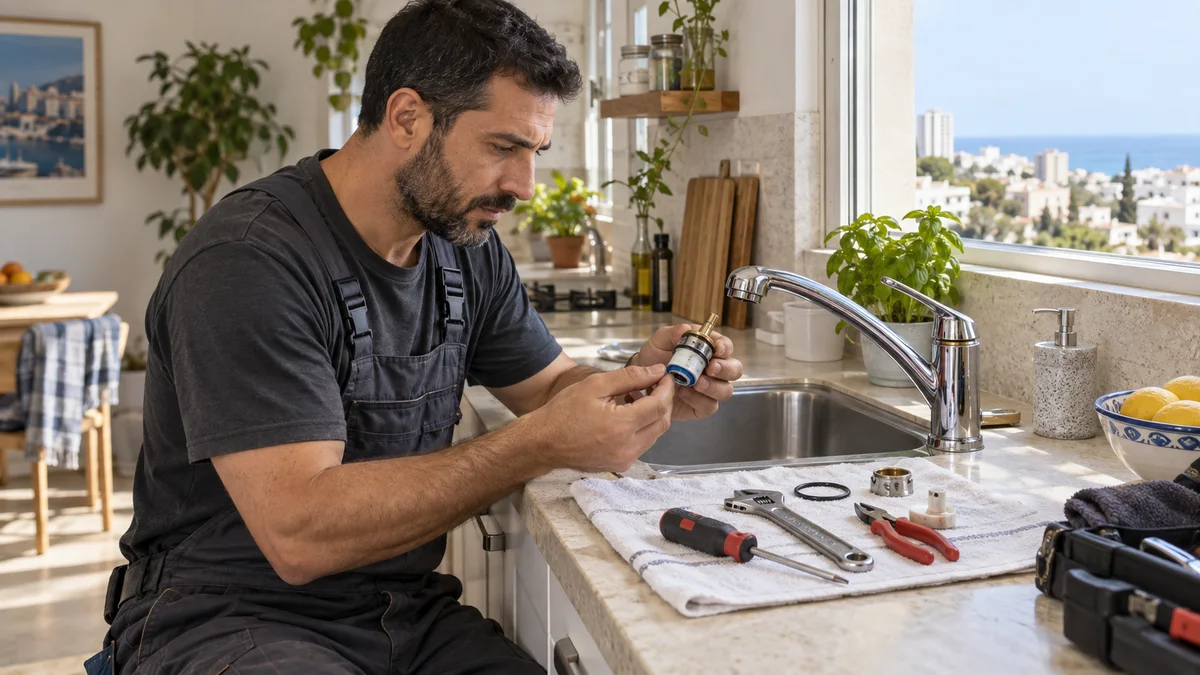
A faucet that keeps dripping after the handle is closed is easy to ignore until the sink is wet every morning or the cabinet begins to smell damp. Replacing the whole tap is not always the right first purchase. A serviceable cartridge, seal or connection may be repairable, while a damaged body or unavailable part may make replacement more sensible. This guide helps you describe a dripping kitchen or bathroom faucet in Israel, ask a plumber useful questions and compare the complete repair cost with a replacement.
Find where the water first appears
Start with observation rather than dismantling. Dry accessible surfaces with a soft cloth, then watch the spout, the handle area, the base and the cabinet underneath. Photograph the first visible wet point and note whether the faucet is running or closed. Water can travel along a hose or a fitting before falling somewhere else, so the final puddle does not automatically identify the failed component. Keep the area clear enough for the plumber to inspect it.
Separate a continuing drip from a few drops that drain out immediately after use. Note how long the symptom continues, whether it happens every time and whether the handle position changes it. A leak around the base while water is running is a different description from dripping at the spout when the tap is closed. A wet drain trap is another job again. These distinctions make the initial call more useful and reduce the chance of ordering the wrong replacement part.
When to bring the visit forward
Water escaping inside a cabinet, a spreading wet patch or a visibly damaged supply hose deserves prompt attention. Remove belongings from the affected area and avoid nearby electrical equipment when water is present. If you know the appropriate accessible shutoff and it operates normally, use it to stop the supply. Do not force a corroded valve or dismantle a connection while it is under pressure. Ask a plumber for urgent help when isolation is uncertain or the leak cannot be contained.
A small spout drip is usually easier to schedule than an uncontrolled supply leak, but record changes rather than assuming it will stay small. Tell the plumber if the apartment will be empty, if the sink is used constantly or if the only shutoff is shared with other residents. The wider guide to a water leak before the plumber arrives can help you organise the information and access for a more urgent situation.
Identify the tap before buying a cartridge
Take a full photograph of the faucet and any visible manufacturer marking. Keep the purchase receipt or installation invoice if available. A single lever, two handles, a pull-out kitchen spray and a concealed shower control can use very different service parts. Even cartridges that look similar can differ in their size, orientation and connection details. Buying a part from a photograph alone can turn one planned visit into several unsuccessful attempts.
Delta's parts identification guidance connects repair parts to the product model and the type of symptom. The useful principle is to identify your own product first, even when it is a different brand. Ask the plumber who will confirm compatibility, where the part will come from and what happens if the original faucet cannot be identified.
Dripping does not prove that every faucet needs a cartridge
A cartridge is part of the control mechanism in many faucets, but not every faucet uses the same design or the same repair kit. Seals and other service components can also be involved. The plumber should explain which component is suspected, what observation supports that diagnosis and what will be checked once the supply is safely isolated. The term cartridge repair should not hide an assumption that has never been tested on the actual tap.
If the problem occurs only while the faucet is running, include that detail. If water appears underneath, the inspection should cover the visible supply connections and the faucet assembly as appropriate, without overlooking the drain. Ask for separate descriptions of the leak source and any collateral cabinet damage. Repairing the water escape does not automatically include replacing a swollen cabinet floor or restoring a stained countertop edge.
A poor stream is a separate symptom
Splashing or low flow can make a tap feel defective even when the shutoff mechanism works. Describe whether the issue affects this tap only, hot and cold water equally or the whole apartment. The outlet aerator or spray head may need inspection, but a restricted stream is not proof that the cartridge caused the drip. Give the plumber both symptoms and let the inspection distinguish them.
Do not remove a flow regulator simply to make the water look stronger, and do not apply a universal descaling mixture to an unknown finish. Some outlet parts require a specific key or cleaning method. Delta's low-flow guidance identifies obstructed outlet components as one possible cause. Use the instructions for your model, rather than forcing a decorative ring with pliers or treating a finish as bare metal.
Compare repair with full replacement
A repair is attractive when the body is sound, a suitable service part is available and access is straightforward. Replacement may be a better option when the body is damaged, several components have deteriorated or the needed part cannot be supplied reliably. Ask for both complete options when the difference is unclear. The comparison should include the plumber's work, parts, access and any return visit, not just the price of the cartridge beside the price of a new faucet.
Consider how much disruption each option creates. A pull-out tap may have components below the sink, while a wall-mounted or concealed fitting can have a different access problem. Do not assume that replacing a decorative trim also replaces the body behind a wall. Ask exactly what will be removed, what will remain and whether tile or other finishing work could be needed. Written scope makes these differences visible before you agree.
Check the supply valves and working space
Empty enough of the cabinet for safe access to the connections. Tell the plumber about drawers, a waste sorting system, a water filter or another appliance that limits reach. Photographs of the cabinet interior help estimate the visit. Agree who moves removable items and whether dismantling cabinet components is included. A simple part can still take substantial labour when the assembly is inaccessible.
The available shutoffs also matter. A valve that cannot isolate the water may need attention before the faucet can be serviced. Ask whether this is included or priced separately, and whether a building-wide interruption might be necessary. Where shared access is required, coordinate with the responsible building contact in advance. Do not let the visit begin with an assumption that every tap has a working local valve within easy reach.
What a written quote should cover
Send the same photographs and symptom description to each plumber. Ask for the inspection charge, the proposed part, labour, VAT where applicable and the conditions for a return visit. If the final diagnosis requires dismantling, agree how a revised price will be approved before additional work. If you supply the part, clarify who is responsible for checking that it matches and what the visit costs if it does not.
- The faucet and the first visible leak point.
- The model or a plan to identify it.
- Inspection, isolation and access requirements.
- The specific repair part or replacement product.
- Labour, materials and any second visit.
- Protection and cleaning of the work area.
- Checks after restoring the water supply.
- Written terms for corrections if the same symptom returns.
A low starting price can exclude sourcing, a difficult shutoff or access work. Ask about those items explicitly. There is no single sensible repair price for every faucet and apartment in Israel. A clear offer describes the actual equipment and problem, and explains which findings could change the total.
Inspect the result with the plumber
After the agreed work, ask the plumber to demonstrate normal opening, closing and temperature adjustment. Observe the original leak point in both running and closed states. Check accessible connections beneath the sink for fresh wetness and ask when to inspect them again after the visit. A dry spout alone does not establish that every disturbed supply connection is dry.
The handle should work as intended without requiring an unusual position to stop the water. Check a pull-out hose and spray mode if the faucet has them. Look for scratches to visible finishes and confirm that cabinet items can be returned without pressing on hoses. Ask for the name of the fitted part and retain the invoice, before photographs and any written correction terms.
If the dripping returns
Record when the symptom came back and whether it is the same leak point. A short video is often more useful than repeatedly moving the handle until the drip temporarily stops. Contact the plumber with the part details and the original scope. A returning symptom may need renewed diagnosis rather than another identical part ordered without checking the wider assembly.
A useful Kablay request says: “The kitchen tap drips from the spout after closing; brand or model [details], started [date]. The cabinet is [dry/wet], local valves [known/unknown], photos attached. Please compare a compatible repair with replacement and include inspection and testing.” Start with the plumbing category; for replacement planning, the faucet replacement guide explains additional access and installation considerations. The aim is a checked diagnosis and a functioning tap, with a price you can understand before the work proceeds.
Internal links
Useful pages on this topic
Frequently asked questions
- Does a dripping faucet always need a new cartridge?
- No. Water can come from a seal, hose, connection or damaged body. Identify the leak location and faucet model before choosing a repair.
- Can I buy a universal cartridge in advance?
- Similar-looking cartridges can have different dimensions and connections. Agree on a compatible part using the model details or the plumber’s inspection.
- How should I compare repair with replacement?
- Compare the total diagnostic, parts, labour and additional visit costs. For replacement, include the new faucet and any necessary supply hoses or isolation valves.
- What should I check after the repair?
- Opening and closing, hot and cold flow, spout movement and dry connections beneath the sink. Watch whether dripping continues after closing and keep the work description.