🏢Renovation
MaMaD (protected room) in Ashkelon 2026: what you can do, what you must not touch, and who is actually qualified to work — a full legal guide
By KABLAY Editorial · · 15 min read
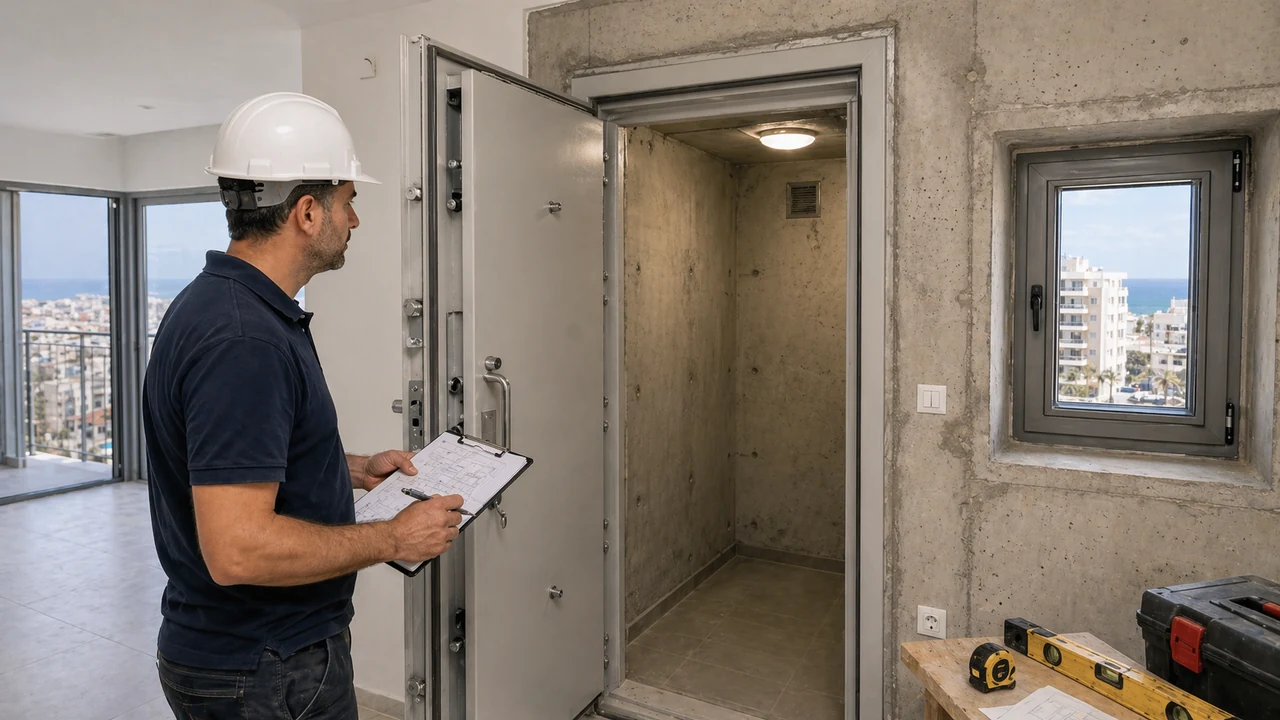
Ashkelon, Jerusalem and Sderot are the three cities where MaMaDs don't stay theoretical — they get opened and closed many times a year. Since 2001, Ashkelon has absorbed rocket fire from Gaza in an almost continuous cycle. The result: thousands of MaMaDs in a state of "live testing" — pressure waves, vibrations, debris on the roof, door seal stress, occasional hairline cracks. And still — most Ashkelon residents don't know what is and isn't allowed in their MaMaD, who is legally authorized to work on it, and what legal and insurance risks they take on when they hire "any contractor" to hang a shelf or run an AC line.
This guide is a direct answer to those questions — based on the Civil Defense Law, the Home Front Command specification regulations, and court precedents. It explains what a MaMaD is legally, what its protected envelope consists of, which actions are allowed without approval, which require a new building permit, and who is really qualified to perform them. It also covers 2026 prices and common pitfalls in the Ashkelon market.
1. What a MaMaD is — and why Ashkelon is the test case
A MaMaD (ממ"ד) = a residential protected space. It's a room unit inside an apartment, built from reinforced concrete, with a blast-and-gas door, a sealed window, a protected ventilation system, and an envelope designed to withstand blast pressure, shrapnel, and atmospheric compression. Following a 1992 amendment to the Civil Defense Law, every new residential construction in Israel is required to include a MaMaD for each apartment.
Buildings from before 1992 typically don't have a private MaMaD but rather a floor shelter or communal shelter (MaMaK, public miklat, or shared courtyard shelter). In Ashkelon, most of the shikunim in Afridar, the old city center, and Carmel still rely on a communal shelter — unless they have undergone a Tama 38 project that added a MaMaD.
💡 What's unique about Ashkelon: according to Home Front Command publications, Ashkelon is among the top 3 most rocket-struck cities in Israel. That means a MaMaD in Ashkelon is not a "security add-on" — it's a functional tool opened 5-40 times per year. Its maintenance is not formal, it is critical.
2. The legal framework: law, regulations, and the competent authority
The Civil Defense Law, 5711-1951 is the umbrella statute. The Civil Defense Regulations (Shelter Construction Specifications), 5750-1990 are the technical regulations that mandate every detail of the MaMaD: wall thickness, reinforcement steel type, blast door specs, sealed window, ventilation system, floor elevation, etc. The competent authority: IDF Home Front Command (Pikud HaOref / פקע"ר). In practice, MaMaD approvals go through the municipal engineering department, which forwards a technical file for Home Front Command review.
What this means for renovation work:
- A MaMaD is not just a room. It's a structural component protected by law. Changing its building envelope (walls, ceiling, floor) requires a permit.
- A contractor who performs an envelope change without a permit — is violating the Planning and Building Law + the Civil Defense Law. Criminal offense, heavy fines, and mandatory restoration to the original state.
- The person who hired the contractor (the apartment owner) — is also liable if they knew or should have known. "I didn't know" is not always a defense.
- The insurance company — if an event (damage from a rocket) occurs in a MaMaD that has undergone unauthorized modification, the insurer may reject the entire claim, not just the MaMaD-related portion. This is one of the most dangerous clauses that few people are aware of.
3. Standard MaMaD structure: what's inside the protected envelope
- Walls: 20-30 cm reinforced concrete, with a double steel mesh. Unlike drywall — you can't "hammer a nail" without planning.
- Ceiling: 20-25 cm reinforced concrete.
- Floor: reinforced concrete, monolithically connected to the walls — you can't lift it or replace piping underneath without compromising the envelope.
- MaMaD door: a steel door with internal insulation and peripheral seals. Weight: 80-140 kg. Spec: withstands proximity blast (ballistic + compression), gas sealing during chemical events. Only certified manufacturers (Rav Bariach, Rosenberg, Pladelet and others with Home Front Command approval).
- Sealed window: a double-glazed window with a hermetic steel shutter. Cannot be replaced with a regular window.
- Ventilation piping: usually a single opening lined with steel, with optional connection to an NBC filter (only in some buildings).
- AC sleeve: a pre-built opening for an AC line with a hermetic cover. Any other opening — strictly forbidden.
4. What is prohibited in a MaMaD — full list
These are actions that require a new building permit with an engineering file, a structural engineer's approval, and Home Front Command approval. A contractor who performs them without a permit — exposes you to criminal, civil, and insurance liability:
- Drilling or breaking a MaMaD wall — even a "small" drilling for a 50 kg shelf can damage the steel mesh. Law: any drilling deeper than the allowed finishing layer (typically 4-5 cm) — forbidden without engineering calculation.
- Replacing the MaMaD door with a regular door — absolutely prohibited. An interior house door cannot withstand blast wave pressure.
- Removing door rails or the steel frame — the frame is part of the monolithic envelope.
- Replacing the sealed window with a regular aluminum/PVC window — prohibited. The sealed window is part of the blast envelope.
- Enlarging the door or window opening — requires a full re-calculation of the structure.
- Running piping (water, electricity, gas, ventilation) through the MaMaD wall — prohibited without approval; every opening compromises sealing.
- Breaking the wall to connect with an adjacent room — absolutely prohibited, even if you want to "expand the living room."
- Removing the door threshold (the small step at the entrance) — it's part of the sealing system.
- Removing or blocking the ventilation opening — critical for function during a chemical event.
- Coating walls with flammable/toxic materials — some oil-based paints, certain glues, and synthetic panels may release toxic gases when heated — prohibited per Home Front Command specs.
⚠️ The most common pitfall: installing a split AC. Many residents don't know — you cannot drill an external MaMaD wall to run gas/electric lines for an AC. You must use the built-in AC sleeve. If there is no sleeve — you cannot install an AC that requires an external opening.
5. What is allowed in a MaMaD — without approval
Not every action requires a permit. These actions are allowed without approval, under conditions:
- Wall painting — water-based paint only, no oil-based (standard putty + supercryl paint, for example). No spray-based "breathable" coatings.
- Hanging light shelves (up to ~15 kg) — with short screws only (up to 4 cm depth), preferably on the built-in mounting rail if one exists. Heavier racks — require calculation.
- Placing light furniture — bed, wardrobe, table, chair. No wall-fixing.
- Use as a children's room/office/storage — allowed and common. The condition: the MaMaD must be clearable within 30 seconds of alert — no blocking the door with heavy wardrobes, no covering the window with a gallery.
- Installing an AC through the designated AC sleeve — allowed, with a professional AC technician. You cannot widen the sleeve or add a second sleeve.
- Replacing an existing light fixture or switch — allowed by a licensed electrician. Condition: no "new opening" in the wall.
- Replacing door/window seals — allowed; see section 8.
- Replacing flooring — allowed, as long as the monolithic envelope is not compromised (the concrete layer beneath is not removed).
6. Who is authorized to work on a MaMaD: professional breakdown
In Israel there is no separate "MaMaD contractor license." Instead, there is a layer of who is authorized for what:
Work that does not penetrate the envelope (permitted for any experienced professional):
- Painting, hanging light shelves, furniture — a handyman with experience and insurance.
- Replacing a light fixture/switch — a licensed electrician (license tier 2+).
- Replacing door seals — a certified technician from the door manufacturer or a handyman with OEM parts.
Work that penetrates or modifies the envelope (only specific authorized parties):
- MaMaD door replacement — only a certified technician from a Home Front Command-approved manufacturer. The new door must be of the same performance grade (or higher), with a compliance certificate. Known manufacturers in Ashkelon: Rav Bariach, Rosenberg, Pladelet, Bahir, Hoprim.
- Sealed window replacement — similar. Certified manufacturers only, Home Front Command certificate.
- Deep drilling, wall breaking, piping transit — requires an engineering file from a registered structural engineer (listed in the engineers' registry), municipal engineering department approval, Home Front Command approval, and a registered contractor with appropriate classification (renovation contractor classification — usually G-1 or higher).
- NBC filter replacement (in buildings with a filter system) — only a Home Front Command-certified technician.
- Inspection after a rocket fall or event — a registered structural engineer, or Home Front Command service itself — you can request a free professional visit via oref.org.il or by calling 104.
7. After an event — what to do
In Ashkelon, events are a matter of "when" not "if." After a rocket impact near the building, or after an unusual event (explosion, heavy object fall, significant shaking):
- Immediately — check that the door opens and closes freely. If it's "stuck" or squeaking — that's a sign of slight frame displacement.
- Within hours — scan the walls visually for hairline cracks. A crack 0.2-1 mm wide is not necessarily dangerous, but should be documented (photo).
- Within a day or two — request a Home Front Command inspection (free) via oref.org.il. They'll send a technician to check door, window, sealing, cracks.
- If the inspection reveals a problem — hire a private structural engineer for a detailed report (₪900-2,200). The report is the basis for an insurance claim or a request to the municipality for repair funding.
- Don't make changes on your own — until one of the authorized parties has given approval.
8. Annual maintenance — what to check every year
- Door opening and closing — should be smooth, no squeaking. If it squeaks — rails need lubrication, or the frame has shifted slightly.
- Rubber seals around the door — should be flexible without cracks. Replace every 5-10 years (₪300-700 + OEM parts).
- Sealed window — check that the shutter functions.
- Ventilation opening — not blocked (no objects in front).
- Emergency lighting — some MaMaDs are equipped with a battery-backed light fixture. Check it works.
- Emergency supplies present — water, dry food, flashlights, battery-powered radio, first-aid kit, at least one blanket per person.
- Clear access — the door is not blocked from outside, the MaMaD interior can be cleared in 30 seconds.
9. 2026 prices in Ashkelon — full breakdown
Ashkelon prices for MaMaD maintenance are 5-15% below Tel Aviv. Expertise level is relatively high (this is an established, well-known market).
Routine maintenance (no envelope impact):
- MaMaD door seal replacement — ₪300-700 (labor) + ₪200-500 OEM parts.
- Lubricate + adjust door rails — ₪180-350.
- Lock repair/replacement — ₪250-600.
- Full door service (adjustment, lubrication, seals, lock) — ₪450-950.
- General MaMaD check (structural engineer, informal, no official document) — ₪400-800.
- MaMaD painting (small 2.5×2.5 m room) — ₪1,500-3,500 including materials.
- Sealed window seal replacement — ₪200-500.
Work with permits / envelope modification:
- Full MaMaD door replacement — ₪5,000-9,500 (new door + delivery + installation by certified manufacturer). Includes compliance certificate.
- Sealed window replacement — ₪3,500-7,500.
- NBC filter replacement (in buildings with a system) — ₪1,000-2,500.
- Structural engineer report after event — ₪900-2,200.
- Permit issuance for minor change via Home Front Command (with engineer involvement) — ₪2,500-6,000 until permit received.
Adding a MaMaD to an old apartment (big project):
- As part of Tama 38 — usually no direct cost to tenant, part of the contractor project.
- Private project (in an apartment with a private yard or large balcony) — ₪60,000-140,000 with all permits. Most residents don't go through this.
💡 Ashkelon-specific tip: the Ashkelon municipality periodically provides grants for reinforcing MaMaDs and MaMaKs (especially after rounds of fighting). Check the municipal website (ashkelon.muni.il) under "housing grants" or "restoration and protection" before spending out of pocket.
10. 7 red flags of a problematic contractor in Ashkelon
- "No permit needed, everything's fine" — any work penetrating the envelope always needs one.
- Offers to replace the MaMaD door with a regular door "for aesthetics" — criminal offense; modification makes the MaMaD non-compliant.
- Offers to drill a MaMaD wall for external AC connection without checking if there's a sleeve — dangerous.
- Doesn't ask about permits or Home Front Command approval before wall breaking.
- Presents as "Home Front Command-certified" but doesn't show a certificate — you can check the manufacturer list at oref.org.il.
- Works cash-only, no invoice — without an invoice, insurance won't recognize the work and you can't claim.
- No written warranty on labor or parts.
Summary
In a city where MaMaDs are tested many times per year, not every tradesman can touch them. The law is clear: routine maintenance — any insured professional. Envelope changes — only an engineer + permit + registered contractor + Home Front Command-certified technician. Cutting corners in this system doesn't save money — it creates criminal liability and voids insurance.
KABLAY is a marketplace connecting clients with independent specialists. KABLAY does not guarantee availability, the number or timing of responses, licensing, documents, price, quality, or outcome; check the specialist and proposed terms before contracting.
Internal links
Useful pages on this topic
Frequently asked questions
- Is it legal to use the MaMaD as a children's room or office?
- Yes, absolutely. The law only requires that the MaMaD remain "clearable" within 30 seconds of alert — meaning don't block the door with heavy furniture, don't cover the sealed window, and don't obstruct the ventilation opening. Most Ashkelon families use the MaMaD as a children's room — it's allowed and recommended.
- My renovation contractor said we can run an AC line through the MaMaD wall — is that reliable?
- No. That's a violation of Home Front Command regulations, and if discovered — criminal fine + mandatory restoration. You must use the designated AC sleeve. If there's no sleeve, you cannot install an AC requiring an external opening. Ask a structural engineer to review the file before work begins.
- A rocket landed 300 meters from my home — should I check the MaMaD?
- Yes. Request a Home Front Command inspection (free) at oref.org.il or by calling 104. They'll send a technician within 1-5 days. If they detect cracks or a sealing problem — you'll need a private engineer's report (₪900-2,200) for an insurance claim or municipal funding.
- I have an apartment in a building from 1985 — I don't have a private MaMaD, only a communal shelter. Is that legal?
- Yes. The law mandates a MaMaD only for construction from 1992 onward. Older buildings have a communal shelter as part of the building. If you want to add a private MaMaD — it's a big project (₪60,000-140,000) requiring Home Front Command approval, an engineer's file, and a municipal permit. In many cases it's better to wait for the building's Tama 38 project that will add MaMaDs.
- Can an insurance company deny a claim because of a modification to the MaMaD?
- Yes — and this is one of the biggest dangers few are aware of. If the MaMaD has undergone unauthorized modification (even years ago, even by a previous owner), the insurance company may reject a claim for any damage in the home, not only MaMaD-related. Before buying an apartment in Ashkelon, ask for a "MaMaD approval" from the owner — a document declaring that no illegal modifications were made.