🏢Renovation
Apartment Renovation Budget in Israel 2026: The Real Cost — Complete Price Guide
By KABLAY Editorial · · 13 min read
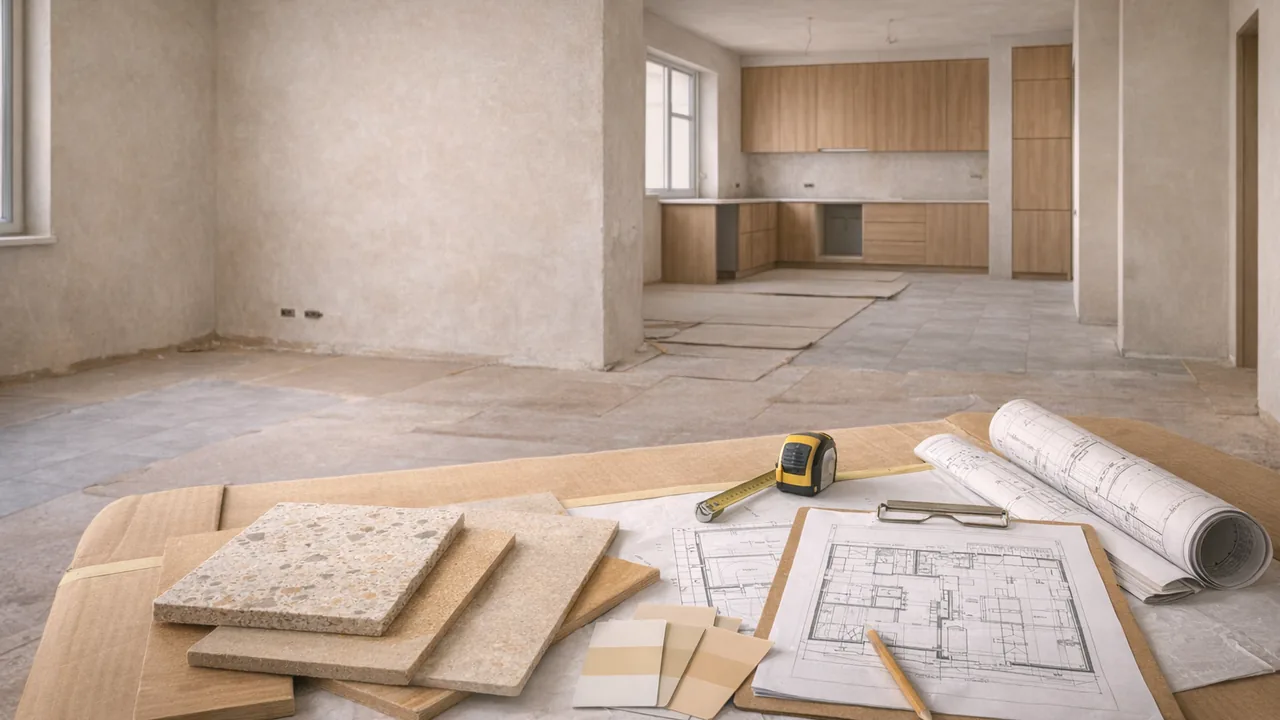
An apartment renovation (שיפוץ) is one of the biggest expenses Israelis face after buying the property itself. In 2026, prices have risen 8-12% compared to 2024 due to more expensive materials, labor, and logistics. The spread between contractors remains huge: for the same scope of work, you may hear quotes of ₪150,000 and ₪280,000.
This guide walks you through real 2026 prices, hidden traps, and how to build a budget that survives contact with the first week of demolition.
If you are already building a renovation budget: also open the page for renovation in Israel and the guide 80 sqm apartment renovation for more concrete numbers.
Three renovation tiers: what they actually cost in 2026
Start by defining which tier you need. In Israel, three levels are commonly distinguished — they differ not only in price, but also in timeline, mess, and whether you need temporary housing.
1. Cosmetic renovation (שיפוץ קוסמטי) — ₪15,000-40,000
The budget tier: wall painting, crack filling, outlet/switch replacement, new fixtures (faucets, shower head), possibly new skirting boards and interior doors.
- 3-room apartment (~75 m²): ₪15,000-25,000
- 4-room apartment (~95 m²): ₪25,000-40,000
- Timeline: 1-2 weeks
- Can you stay in the apartment: yes, if you work room by room
2. Partial renovation (שיפוץ חלקי) — ₪30,000-90,000
Full replacement of the bathroom or kitchen, leaving the rest of the apartment untouched. Includes demolition, new utility lines, tile, fixtures or kitchen cabinetry.
- Turnkey bathroom only: ₪25,000-55,000
- Kitchen only (no cabinets): ₪20,000-45,000
- Kitchen + bathroom: ₪45,000-90,000
- Timeline: 3-6 weeks
3. Full turnkey renovation (שיפוץ כללי) — ₪120,000-300,000+
Everything changes: floors, walls, ceilings, electrical, plumbing, kitchen, bathrooms, doors. Often with layout changes (wall removal, drywall construction).
- 3-room apartment (~75 m²): ₪120,000-200,000 (basic-to-mid)
- 4-room apartment (~95 m²): ₪180,000-280,000
- Premium renovation (Italian tile, designer kitchen, smart home): ₪300,000-600,000+
- Timeline: 2-4 months
- Staying home: not possible — you need rental or temporary housing
2026 benchmark: the average full turnkey renovation in Gush Dan runs ₪2,200-3,500 per m² without a kitchen, and ₪3,500-5,500 per m² with kitchen and premium finishes.
Budget breakdown by trade
Knowing what each trade costs is your best defense against inflated quotes. Below are 2026 prices for a standard 3-room apartment (75 m²).
Demolition and waste removal
- Tile demolition: ₪40-70 per m²
- Non-load-bearing wall removal (drywall): ₪80-150 per m²
- Load-bearing wall (concrete/block): ₪400-800 per m² + engineer required
- Waste container (6 m³): ₪800-1,400
- Total demolition for 3-room apartment: ₪6,000-14,000
Plumbing (אינסטלציה)
- Full rework of water and drain lines: ₪8,000-16,000
- Faucet installation: ₪250-450 per unit (labor)
- Toilet installation: ₪400-700
- Water heater (דוד שמש) replacement: ₪1,500-3,500 (labor + small materials)
- Total turnkey plumbing: ₪12,000-22,000
Electrical (חשמל)
- Full rewiring: ₪9,000-18,000
- New electrical panel with breakers: ₪1,800-3,500
- Lighting point: ₪120-220 per point
- Outlet/switch: ₪90-160
- Total turnkey electrical: ₪12,000-22,000
Floors and tile (ריצוף)
- Floor tile installation: ₪90-160 per m²
- Wall tile (bathroom/kitchen): ₪120-200 per m²
- Laminate/parquet: ₪60-120 per m² (labor)
- Baseboards: ₪25-45 per linear meter
- Tile material itself: ₪60-250 per m² (wide range)
- Total floors for a 75 m² apartment: ₪18,000-35,000 labor + materials
Drywall and plaster (גבס וטיח)
- Drywall wall: ₪180-280 per m²
- Drywall ceiling: ₪180-320 per m²
- Wall plaster: ₪60-110 per m²
- Skim coat for painting: ₪40-70 per m²
Painting (צבע)
- Two-coat wall painting: ₪35-55 per m² (labor)
- Premium painting (special effects): ₪80-150 per m²
- Total painting for 3-room apartment: ₪6,000-12,000 labor + ₪2,500-5,000 materials
Kitchen
- Standard Israeli-made kitchen cabinets: ₪15,000-35,000
- Mid-range kitchen (partly imported): ₪35,000-70,000
- Premium kitchen (Poliform, Italian fronts): ₪80,000-250,000
- Natural stone countertop (Caesarstone): ₪2,500-4,500 per linear meter
- Built-in appliances (basic set): ₪15,000-30,000
Bathroom (turnkey)
- Standard bathroom (6-8 m²), basic finish: ₪25,000-40,000
- Mid-range bathroom: ₪40,000-65,000
- Premium bathroom (designer tile, walk-in shower): ₪65,000-120,000+
Doors and windows
- Interior door with installation: ₪1,500-3,500 per unit
- Entry door (steel, polymer-coated): ₪3,500-8,000
- PVC windows (חלונות בלגיים): ₪1,200-2,200 per m²
What drives the price: 5 main factors
1. Geography — up to 25-30% spread
The same renovation in Tel Aviv costs 20-30% more than in the periphery (Beer Sheva, Kiryat Shmona, Nahariya). Gush Dan (Tel Aviv, Ramat Gan, Petah Tikva, Givatayim) is the most expensive region.
- Gush Dan, Herzliya, Raanana: baseline +20-30%
- Netanya, Rishon LeZion, Holon: baseline
- Haifa, Ashdod, Ashkelon: -5-10%
- Periphery (south, north): -15-25%
2. Building age
Older buildings (pre-1990) often reveal surprises: sagging floors, corroded risers, aluminum wiring. This can add 15-25% to the budget. In newer buildings (2015+), work is typically cheaper and faster.
3. Floor number and elevator (מעלית)
If there is no elevator or it is small, hauling materials to the 5th floor and above adds ₪2,000-6,000 in logistics. Some crews refuse walk-up jobs outright.
4. Architect or designer involvement
Architect (אדריכל) fees: ₪250-600 per m² of plan, or a flat ₪15,000-40,000 for a full 3-room apartment renovation plan. Mandatory for premium work; optional for standard renovations.
5. Timeline pressure
Rush renovation (e.g., before a post-mortgage move-in date) adds 15-25%. Scheduling during the low season (November–January) can save 5-10%.
Hidden costs 80% of people forget
The most common cause of budget overruns is not the contractor 'raising the price' mid-job — it is line items that were never in the original estimate.
- Municipal permits (היתר בנייה) — for layout or facade changes: ₪3,000-15,000
- Building committee fee (ועד בית) — for 'noise and dust': usually ₪500-2,000
- Temporary housing — 2-4 months of rental: ₪10,000-30,000
- Furniture storage (mini-warehouse, עמידה באחסון): ₪400-900 per month
- Post-renovation deep clean (ניקיון לאחר שיפוץ): ₪1,500-4,000
- Electrical capacity upgrade in old buildings: ₪3,500-8,000 (including Hevrat Hashmal process)
- Renovation insurance (ביטוח שיפוצים): ₪1,500-3,500
- Furniture and appliance transport: ₪1,500-4,000
Rule of thumb: hidden costs typically add up to 10-15% on top of the main estimate. Build them into your plan from day one.
Reserve fund: how much to set aside
Israeli industry practice: 15-20% reserve on top of the total estimate. For old buildings, up to 25%. This money covers: discovered problems (rotten pipes, rusted reinforcement), mid-project design changes, material swaps if you don't like the look.
- New construction: 10-15% reserve
- Built 1990-2010: 15-20% reserve
- Built before 1990: 20-25% reserve
Three pricing models: which to choose
1. Per square meter (לפי מ״ר)
Contractor names a price per m² and multiplies by area. Good for standardized scope, but every 'change' is billed on top.
Pros: transparent, easy to compare. Cons: does not capture complexity; extras can balloon the bill.
2. Fixed price (מחיר פיקס)
Contractor names one number for the whole project. Best protection against overruns, but requires a detailed spec and full material list upfront.
Pros: predictability. Cons: contractors build in a buffer — final price 10-15% higher.
3. Cost-plus (cost + %)
You pay actual materials and labor + 10-20% to the contractor. Suitable for premium projects where an exact estimate is impossible.
Pros: flexibility. Cons: requires trust and tight receipt control.
Payment schedule: how NOT to pay
One of the most common mistakes is a big upfront payment 'for materials.' A healthy Israeli payment schedule looks like this:
- 10-15% deposit — on contract signing
- 25% — after demolition and rough plumbing/electrical
- 25% — after plaster, drywall, screed
- 25% — after tile work and window/door installation
- 10-15% — after final cleaning and acceptance
Red flag: a contractor demanding 40-50% upfront 'to buy materials.' Materials are purchased in stages — there is no reason to freeze half the budget at day one.
7 warning signs: when to walk away
- No written estimate or contract — only verbal agreements
- Price significantly below market (25-30% cheaper than competitors)
- Refuses to show previous projects or references
- Electrician (חשמלאי מוסמך) or plumber without a license
- Demands full or near-full prepayment
- Unwilling to specify material brands in the estimate
- Poor command of your language and refuses to translate the contract
How to save without cutting quality: 8 proven tactics
- Get at least 3 quotes — the spread between first and third can be 30-40%
- Buy materials yourself (tile, fixtures, doors) — save 10-20% vs contractor markup
- Don't change the layout unless critical — demolition and permits eat budget
- Choose local brands: Tambour, Nirlat (paint), Hamat, Azur (fixtures), Negev Ceramica (tile)
- Phase the work — bathroom this year, kitchen next. Less stress, easier cash flow
- Work in the low season (November-January, excluding holidays): 5-10% discount
- Hire a foreman, not a 'company' — a private specialist has lower overhead
- KABLAY is a marketplace connecting clients with independent specialists. KABLAY does not guarantee availability, the number or timing of responses, licensing, documents, price, quality, or outcome; check the specialist and proposed terms before contracting.
Two real 2026 budget examples
Example 1: Full renovation of a 3-room apartment, Rishon LeZion, 2005 building
- Demolition and waste removal: ₪10,000
- Plumbing: ₪18,000
- Electrical: ₪16,000
- Drywall and plaster: ₪22,000
- Tile (bathroom, kitchen, hallway): ₪28,000 labor + ₪18,000 materials
- Laminate in bedrooms: ₪12,000 labor + ₪9,000 materials
- Painting: ₪8,000 labor + ₪3,500 paint
- Fixtures and faucets: ₪12,000
- Mid-range kitchen: ₪55,000
- Doors (5 units): ₪12,000
- Built-in appliances: ₪22,000
- Hidden costs (permits, cleaning, 3 months temp housing): ₪30,000
- Main estimate: ₪275,500
- + 15% reserve: ₪41,300
- Final budget: ~₪317,000
Example 2: Cosmetic renovation of a 4-room apartment, Netanya, 2012 building
- Painting entire apartment: ₪12,000
- Replace 3 faucets: ₪1,800
- New fixtures in guest bathroom: ₪6,000
- Outlet and switch replacement: ₪3,500
- Wall patching and small repairs: ₪4,000
- New laminate in one room: ₪5,500
- Post-work cleaning: ₪1,800
- Subtotal: ₪34,600
- + 10% reserve: ₪3,500
- Final budget: ~₪38,100
Conclusion: where to start
A successful renovation is not about finding the cheapest contractor — it is about a precise budget and a solid contract. Before you start:
- Define your tier (cosmetic / partial / full)
- Get 3-5 itemized quotes
- Add a 15-20% reserve on top
- Verify licenses and references
- Sign a written contract with a clear payment schedule
KABLAY is a marketplace connecting clients with independent specialists. KABLAY does not guarantee availability, the number or timing of responses, licensing, documents, price, quality, or outcome; check the specialist and proposed terms before contracting.
Internal links