🪟Tiling
How to Choose Bathroom Tiles in Israel: Size, Finish, Price & 2026 Trends
By KABLAY Editorial · · 10 min read
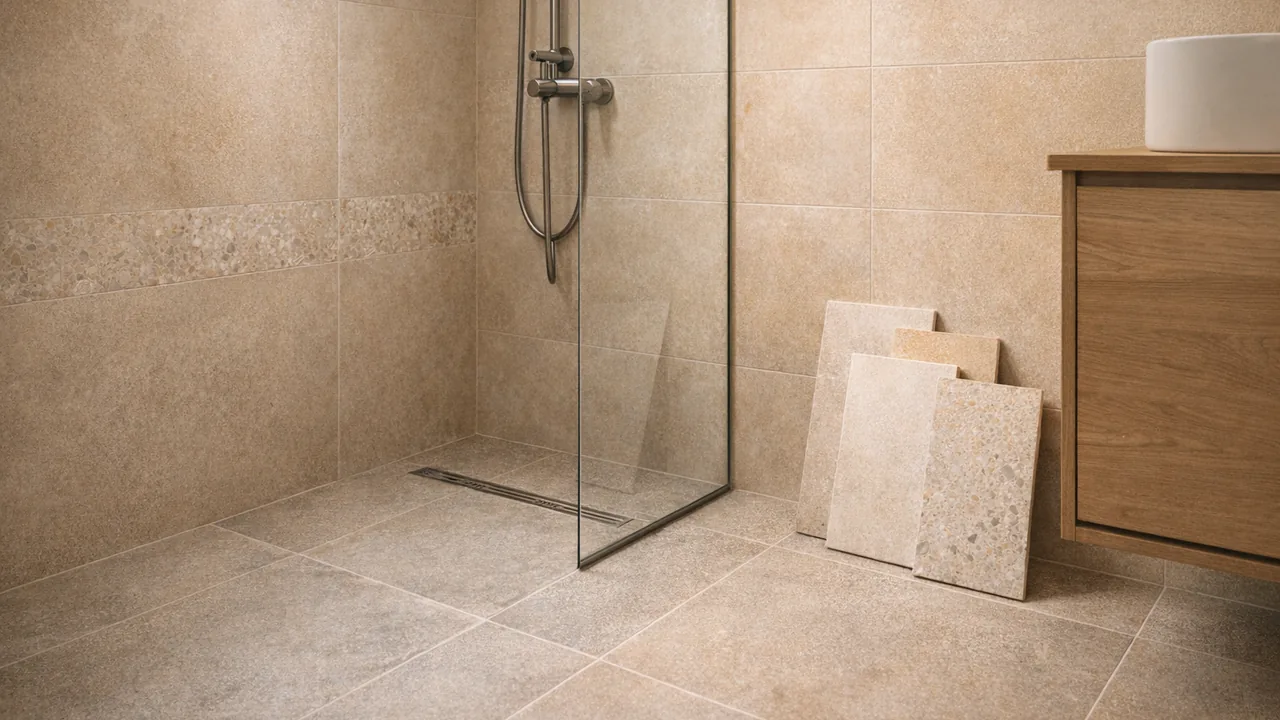
Choosing bathroom tiles is one of the most impactful decisions in an apartment renovation. Unlike paint that you can redo in a weekend, tiles stay on your walls and floor for 20-30 years. A wrong choice — and you may have to live with it for years, or pay thousands of shekels to tear it out and start over.
In this guide we cover everything you need to know before buying: sizes, finish types, safety standards, prices in Israel, 2026 trends, and how to choose a qualified tiler.
If you are choosing tiles for a real project: also open the page for tiling specialists and the broader guide to renovation budgeting so you can price both tiles and labor.
Tile size — why does it matter so much?
Tile size directly affects how the room looks and how much labor is required.
Large tiles (60x60, 60x120, 80x80 cm)
- Make the room appear bigger and more spacious
- Fewer grout lines = a clean, modern look
- Easier to clean (less grout surface that collects dirt)
- Require a very level surface — if the floor is uneven, tiles will rock
- More waste from cutting — need extra material reserve
Medium tiles (30x60 cm)
- The most popular size for bathrooms in Israel
- Good balance between appearance, price, and installation ease
- Suitable for both walls and floors
Small tiles and mosaic (up to 10x10 cm)
- Beautiful decorative effect, especially in shower niches or accent walls
- Many grout lines = more maintenance
- Recommended as accents, not full coverage
Rule of thumb: the smaller the bathroom, the larger tiles actually make it look more spacious. It is counterintuitive, but fewer grout lines = less "visual noise."
Finish types — glossy, matte, or something in between?
Glossy finish
- Reflects light — visually enlarges the room
- Very easy to clean
- Elegant, clean look
- Downside: shows every water drop and fingerprint
- Recommended: for walls
Matte finish
- Hides water stains and fingerprints
- Warm, natural look — very popular in 2026
- Downside: slightly harder to clean (grout lines hold more dirt)
- Recommended: for floors and walls
Satin finish (semi-matte)
- Good compromise — not too shiny, not too flat
- Hides stains reasonably well and easy to clean
Textured finish
- Mimics natural stone, wood, or concrete
- Very trendy in 2026 — especially terrazzo and concrete effects
- Downside: cleaning requires attention as dirt gets caught in the texture
Anti-slip rating — mandatory for bathroom floors
According to Israeli standards, bathroom floors must be anti-slip. The rating is marked with the letter R and a number:
- R9 — minimum for a residential bathroom
- R10 — recommended for walk-in showers (without a shower tray)
- R11 and above — for especially wet areas (pools, courtyards)
Always check the rating on the packaging before buying. A beautiful wall tile installed on the floor without an R rating is dangerous and does not meet the standard.
Tile prices in Israel (2026)
- Basic ceramic: ₪40–₪80 per sqm
- Mid-range (Israeli brands and imports): ₪80–₪180 per sqm
- Porcelain / porcelain stoneware: ₪100–₪250 per sqm
- Designer / Italian-Spanish imports: ₪200–₪400 per sqm
- Mosaic: ₪150–₪500 per sqm
Where to buy: chains such as Shekem Electric, Home Center, Machsanei Hashmal (renovation departments), and specialized tile shops. Buying directly from warehouses can save 15–30%.
Important: always buy 10–15% more than the calculated quantity — for cuts, breakage, and future repair reserves.
2026 bathroom trends in Israel
- Extra-large tiles (120x120, 120x260) — a seamless slab look
- Terrazzo effect — porcelain that mimics broken terrazzo stones
- Warm tones — cream, clay, khaki, peach
- Wood-effect porcelain for floors — looks like wood but is water-resistant
- Mixed materials — one tiled feature wall, the rest painted
- Minimal grout lines (1–2 mm) with grout color matched to the tile
How much does a tiler cost in Israel?
Bathroom tiling labor (materials not included) typically costs:
- Floor only: ₪100–₪180 per sqm
- Wall tiling: ₪120–₪200 per sqm
- Full bathroom (floor + walls, ~15–25 sqm): ₪3,000–₪6,000 labor
- Including materials (adhesive, grout, waterproofing): ₪5,000–₪12,000 total
Prices depend on tile size (larger = more expensive to install), pattern (straight, diagonal, herringbone), and room complexity (niches, steps, drainage).
How to choose a good tiler?
- Ask to see previous work (portfolio / photos)
- Check client reviews
- Make sure they also do waterproofing (mandatory in bathrooms!)
- Request a written quote with a breakdown: labor, materials, timeline
- KABLAY is a marketplace connecting clients with independent specialists. KABLAY does not guarantee availability, the number or timing of responses, licensing, documents, price, quality, or outcome; check the specialist and proposed terms before contracting.
Common mistakes to avoid
- Using wall tiles on the floor (no anti-slip rating)
- Cutting corners on waterproofing — the last place to save money in a bathroom
- Not buying a reserve — then the same series is discontinued
- Choosing snow-white tiles that show every stain
- Hiring a cheap tiler — poor tile work costs double to fix
Conclusion
KABLAY is a marketplace connecting clients with independent specialists. KABLAY does not guarantee availability, the number or timing of responses, licensing, documents, price, quality, or outcome; check the specialist and proposed terms before contracting.
Internal links