🔧Plumbing
Flooded a Neighbor in Ashkelon, or Got Flooded: What to Do, Who Pays and When to Call a Plumber
By KABLAY Editorial · · 12 min read
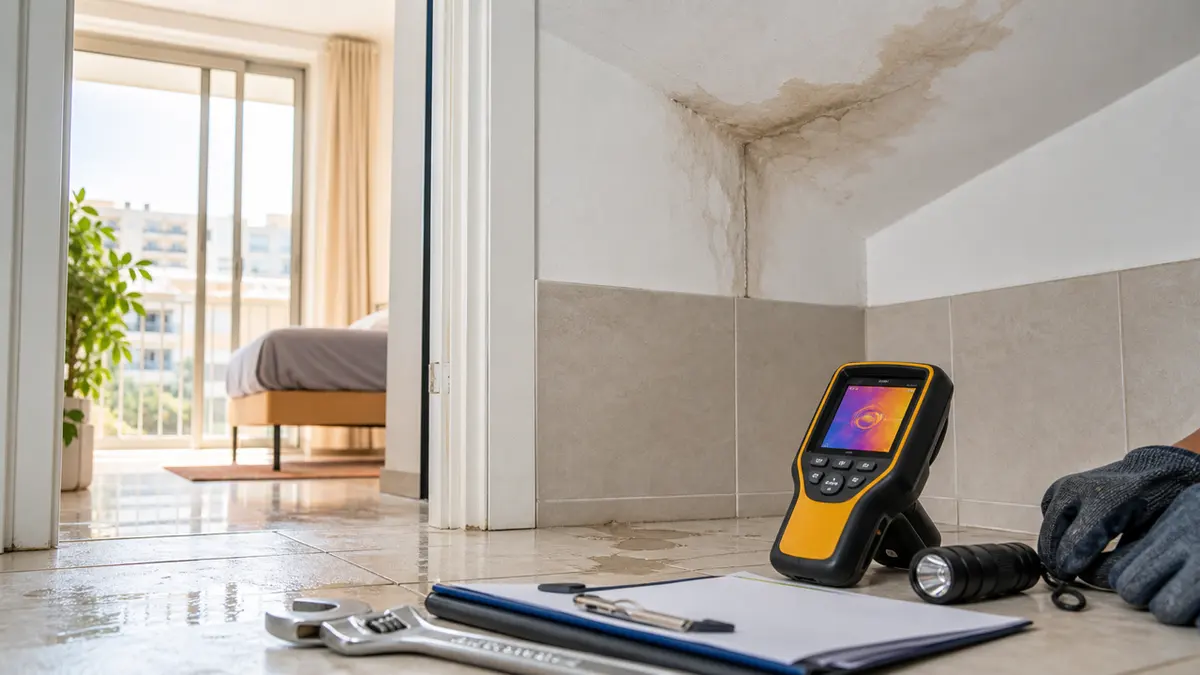
A flood between apartments in Ashkelon usually starts the same way: a wet stain on the neighbor ceiling, water near the skirting, an angry phone call from the floor below, or dripping from your own ceiling. The expensive mistake is to argue immediately about blame. The correct order is different: stop the water, document, identify the source, and only then discuss responsibility, insurance and payment.
This is a practical guide, not legal advice. It explains what to do in the first 30 minutes, how an Ashkelon plumber separates a private pipe from a shared riser, roof waterproofing, solar water heater or sewer issue, and what documents are useful before talking to insurance or the building committee.
The first 30 minutes
- Close the main water valve in the apartment suspected as the source. If the source is unclear, close your own valve temporarily and ask the upstairs neighbor to do the same.
- Turn off electricity near the wet area. Water near an outlet, light fixture or electrical panel is an immediate safety risk.
- Take photos before cleaning: ceiling, wall, floor, water source, water meter, pipe cabinet and damaged belongings.
- Remove standing water with towels, a squeegee or wet vacuum. Do not leave parquet, furniture or drywall sitting in water.
- Call a plumber who can diagnose, not only repair. If there is a dispute, you need a written cause, not just "I replaced a pipe".
How to identify the source
The first visible sign is not always the true source. A ceiling stain may come from an upstairs water line, sewer line, solar heater on the roof, shared riser or exterior waterproofing. Ashkelon adds two local patterns: older buildings in Migdal, Afridar and Ramat Eshkol with aging pipes, and newer towers in Barnea and Agamim where handover defects or fresh renovation work can be the cause.
- Clean water that drips during use — often a water pipe, tap connection, washing machine or boiler.
- Sewer smell or cloudy water — suspect drainage, trap, toilet or sewer riser.
- A stain that grows after rain — roof, exterior wall or balcony waterproofing, not necessarily indoor plumbing.
- Several apartments affected — high suspicion of a shared riser or building line.
- A sudden jump in the water bill — possible hidden water line even without visible dripping.
Who usually pays
In general, piping that serves one apartment is handled by that apartment owner or their insurance. A pipe, roof, exterior wall or riser serving most residents is usually a building committee and shared-property issue. Real cases can be gray, so the professional diagnosis matters more than assumptions.
Working rule: if the plumber did not write what the source was and what was repaired, proving responsibility to a neighbor, building committee or insurer becomes much harder.
What to request from the plumber
- A clear source description: water line, drainage, riser, boiler, waterproofing or appliance connection.
- Before and after photos, including the opened point if demolition was needed.
- An opinion on whether the fault looks private or connected to shared property.
- A detailed invoice: diagnosis, opening, replacement, pressure test, drying.
- For insurance: a short report with date, address, likely cause and recommended next steps.
When thermal camera or moisture testing helps
If the source is hidden, do not rush to break tiles. Thermal imaging, moisture measurement or a pressure test can reduce demolition and produce better documentation. This is especially useful after renovations, around drywall ceilings, and when a neighbor or insurer disagrees about the source. See also the guide to thermal leak detection in Ashkelon.
2026 prices in Ashkelon
- Emergency plumber visit during regular hours: ₪250-450
- Night, Shabbat or holiday visit: ₪500-900
- Basic leak detection and pressure test: ₪350-800
- Thermal camera or moisture-meter check with report: ₪700-1,800
- Local wall or floor opening and pipe repair: ₪900-3,500
- Shared riser or building-line section replacement: ₪2,500-12,000, usually through the building committee
- Drying, plaster and paint after water damage: ₪1,200-8,000, depending on damage area
Expensive mistakes
- Cleaning before photos — without photos, the damage scope is hard to prove.
- Repairing without a report — the work is done, but the source is undocumented.
- Painting a wet wall — paint will bubble and mold will return. Dry and measure moisture first.
- Blaming the neighbor without testing — the source may be a shared riser or roof.
- Not involving the building committee when a shared line is suspected — reimbursement becomes harder later.
How to post the job on KABLAY
Write your Ashkelon neighborhood, whether you are the suspected source apartment or the damaged apartment, when the wetness started, whether there is sewer smell, whether the water is clean, and whether insurance is involved. Add photos of the ceiling, wall, water meter and pipe cabinet. This helps the plumber arrive with the correct equipment: pressure test kit, thermal camera, moisture meter or pipe parts.
Summary
In a neighbor-to-neighbor flood in Ashkelon, the first goal is not winning the argument. It is stopping damage and creating facts. A closed valve, photos, professional diagnosis and a short report save days of conflict. If it is a private pipe, the relevant apartment owner or insurer handles it. If it is a riser, roof or shared line, involve the building committee. In every case, without proper diagnosis it is hard to know who should really pay.
Internal links
Useful pages on this topic
Frequently asked questions
- Should I call insurance immediately?
- If you have home insurance with water-damage coverage, notify them early rather than after the repair is finished. Before the call, take photos and stop the water. The insurer or agent will explain whether to use an approved service plumber or a private plumber.
- Who pays if the shared riser leaks?
- A riser serving several apartments is usually handled as shared building property, so the building committee should be involved. You still need a plumber report showing that the source is actually shared.
- Can I ask the plumber for a report?
- Yes. When a neighbor, building committee or insurer is involved, ask for a short report with source, repair, photos and invoice. It is not a legal opinion, but it is an important working document.
- What if the upstairs neighbor does not open the door?
- Document everything, shut your own water if relevant, contact the building committee and try written contact. If there is electrical danger or active flooding, escalate through the committee, building manager or relevant emergency service.
- Does insurance cover mold after a leak?
- It depends on the policy, source of damage and how quickly the issue was handled. Mold caused by delay or poor drying can be problematic. Report, document and dry professionally as early as possible.