⚡Electrical work
Sparking Outlet — Real Dangers and What to Do Immediately: 2026 Israel Electrician Guide
By KABLAY Editorial · · 13 min read · Updated:
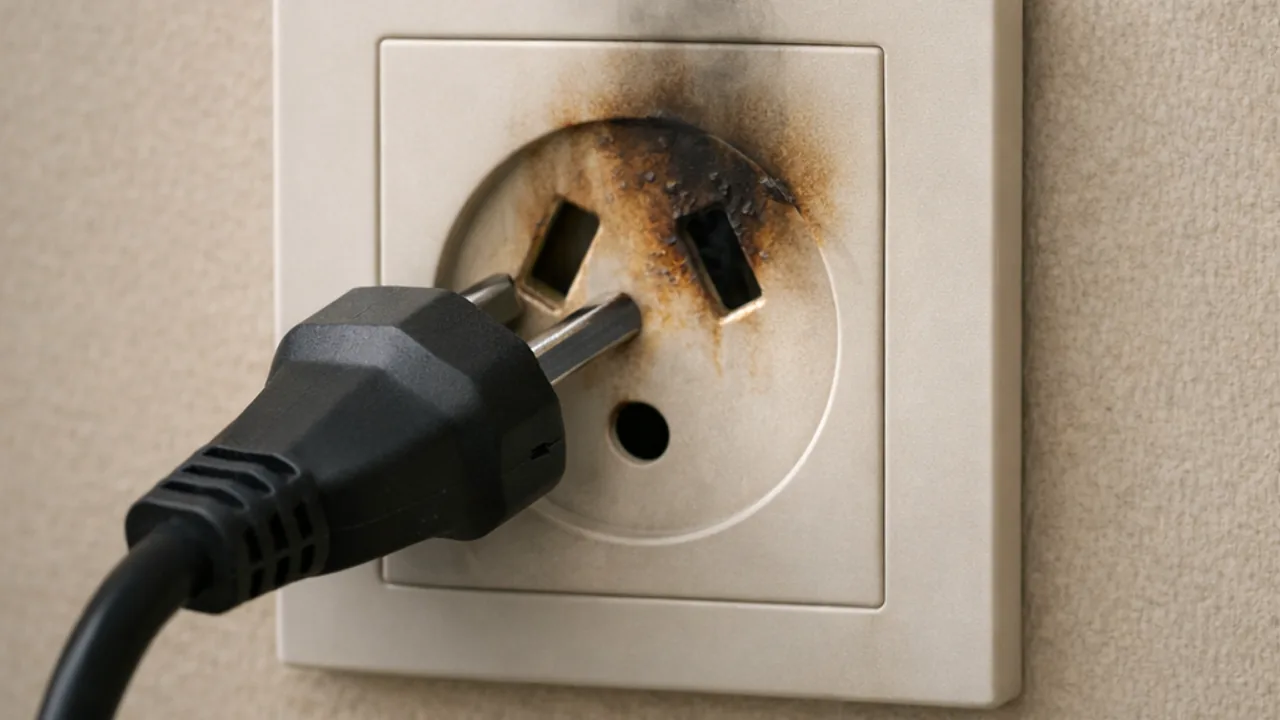
A sparking outlet is not a cosmetic glitch — it is one of the most dangerous warning signs in any home. According to Israel Fire and Rescue Services data, more than a third of apartment fires nationwide start from a faulty electrical circuit, and in the majority of those cases the first sparks were visible in an outlet days, weeks or even months before the fire. An electrical arc burns at 3,000°C or higher — hot enough to ignite plastic, wood and cable insulation within seconds.
This guide explains when a spark is normal and when it is a life-threatening fault, the 6 steps to take immediately, the typical causes in Israel (especially in older buildings), how a licensed electrician diagnoses the problem, 2026 repair prices, and how to prevent the issue long-term.
A one-time spark vs. a dangerous spark
A brief bluish spark when plugging something in is usually normal — it is a microscopic flashover as the circuit closes under load (air conditioner, water heater, kettle). It lasts less than 1/10 of a second, there is no smell and no black marks around the outlet.
But if you see any of these signs, stop using the outlet immediately:
- Large, colored sparks (orange, yellow, green)
- A spark that lasts more than 1-2 seconds or happens repeatedly
- Clicking or buzzing sounds from the outlet even with nothing plugged in
- A spark accompanied by a burning plastic smell or smoke
- Black or brown scorch marks around the socket holes
- Outlet that is warm to the touch after the device has been unplugged
- Spark combined with a tripping circuit breaker or RCD
- Lights flickering in the room at the moment of the spark
Rule of thumb: a spark that looks scary is scary. You don't need to be an electrician to recognize it — your instinct is correct.
The 6 most common causes in Israel
1. Loose screw connections (cause number 1)
Over 10-30 years of use, the screws inside the outlet loosen due to thermal cycling: every time a device turns on and off the copper heats up and cools down a little, and the screw gradually loses its clamping force. A "tight" connection becomes a weak contact, and a weak contact creates a tiny electrical arc. Each cycle heats the copper further, the copper anneals (softens), and the connection becomes even looser. One day — a visible spark.
This is especially common in homes 15+ years old, at outlets with heavy loads (A/C, fridge, oven), and in older apartment blocks in Haifa, Ashdod, Netanya and Jerusalem.
2. Outlet overload
In Israel, a single outlet is rated at 16 A (~3,600 W). Classic scenario: the tenant plugs a splitter into the socket and runs a water heater + iron + kettle at the same time = 4,500 W, well above the limit. The outlet overheats, the plastic deforms, and eventually — a spark. This is widespread in 2-3 room apartments designed decades ago, when typical loads were far lower than today's.
3. Copper "annealing" from chronic heat
Copper that is repeatedly heated above 80°C loses its springiness ("annealing"). A conductor that was stiff and responsive becomes soft and stops pressing firmly against the screw. The process is irreversible — only replacing the cable fixes it.
Source of chronic heat: persistent load near the limit, poor in-wall insulation, or a loose connection (see cause 1 — a vicious cycle).
4. Humidity and condensation
Israel has 60-85% humidity for most of the year in coastal cities (Tel Aviv, Haifa, Rishon, Ashkelon, Hadera). In bathrooms, kitchens and near dripping air conditioners, condensation seeps into the outlet, creating a leakage path between live-neutral-ground — and an arc. An outlet that starts sparking only in the morning or after a shower is a textbook humidity case.
5. The device itself (not the outlet)
Sometimes the problem is not the outlet but the plug or cable of the device. A torn cable, a plug with exposed wires, a counterfeit phone charger — all create an arc at the contact point. Simple test: plug a different device into the same outlet. No spark? The device or cable is at fault. Spark with a different device too? The outlet is at fault.
6. Old aluminum wiring (pre-1980 apartments)
A minority of Israeli apartments (mostly in older shikun buildings from 1960-75 that were never rewired) still use aluminum wiring. Aluminum heats up twice as fast as copper under the same load, oxidizes when exposed to air, and forms a semi-conductive layer at the connection points. It is a permanent source of sparks and warm plates.
If the building is pre-1980 and has never had a full rewire, it is worth checking during any comprehensive electrical inspection (panel + outlets + terminations).
What to do immediately: 6 steps
- Do not touch the outlet itself. If a device is plugged in — unplug it by the plug, not the cable (pull gently; if the plug is stuck or hot, skip to step 2).
- Turn off the circuit breaker for that room on the electrical panel. Israeli panels are usually labeled — find the group that covers the room. If unlabeled, turn off the main breaker.
- Ventilate the room if there is a burning smell. Open windows, move people and pets out, and check for hot spots in the wall above the outlet.
- Do not use the outlet — not even "just for a second" — until a licensed electrician inspects it. Mark it with red electrical tape and leave a note.
- If there is smoke, flames or a strong burning smell, switch off the main breaker for the apartment, evacuate, and call 102 (fire department). Do not pour water on electricity.
- Book a licensed electrician with a valid electrician license checked in the Ministry of Labor registry as soon as possible. Night / Shabbat — consider an emergency call (+50-100% surcharge); weekday — 1-2 business days is optimal.
5 absolute taboos
- Do not replace the outlet yourself unless you are a licensed electrician — in Israel it is legally prohibited for any work beyond a bulb change, and even that is a gray area if you lack the license
- Do not pour water on a sparking outlet — instant electrocution risk; electrical heat is extinguished with dry powder, CO₂, or only after cutting power
- Do not try to "seal it" with duct tape or electrical tape — that is cosmetic; the fault inside continues to smolder
- Do not splice wires directly or install a temporary connection — "temporary fixes" are the #1 cause of electrical fires in Israel
- Do not replace a tripping breaker with a higher-rated one because "it keeps falling" — you are removing the protection, not fixing the cause
How an electrician diagnoses the problem
A good electrician does not replace the outlet "blind" — they run a sequence of tests to determine whether the problem is in the outlet, the cable, the panel or the whole circuit:
- Visual inspection of the outlet and the wiring inside the wall — scorch marks, deformed plastic, frayed conductors
- Megger (insulation resistance test) — measures whether insulation between live-neutral-ground has broken down from heat or moisture. Must be >1 MΩ
- Thermal camera (IR) — finds hot spots inside the wall without dismantling. Common in professional work, saves hours of labor
- Torque screwdriver — tightens outlet screws to the manufacturer's exact spec (usually 0.8-1.2 Nm). Over-tightening also causes damage
- RCD trip-time test — must operate in <30ms at 30 mA. A slow RCD will not stop electrocution before damage occurs
- Ground resistance test — grounding must be <4 Ω. Poor grounding is the reason electricity tends to "leak" through outlets
2026 prices in Israel
- Diagnostic visit + single outlet test: ₪250-450
- Single outlet replacement (no wall repair): ₪200-450
- Outlet + in-wall wire repair (without new conduit): ₪400-900
- Tightening all outlet screws in the apartment + thermal inspection: ₪350-800 for a 3-room apartment; ₪600-1,400 for 5 rooms and up
- Replacing a circuit group (5-8 outlets) with a new cable to the panel: ₪1,200-3,500
- Panel tightening + load verification: ₪400-900
- Replacing a single breaker: ₪180-380
- Installing an RCD (30 mA) where none exists: ₪450-1,100
- Rewiring a single room (new conduit in the wall + cable): ₪1,800-6,500
- Full rewiring of an 80 m² apartment: ₪18,000-45,000 (new panel, outlets, lighting)
- Night / Shabbat / holiday emergency call: +50-100% surcharge
- Full electrical inspection before buying an apartment (with protocol): ₪600-1,400
Legal and insurance notes
Electrical work should be handled by an electrician with a valid license matching the task. Requirements vary by panel, load, building and inspection context, so verify the current license in the official Ministry of Labor registry before regulated work.
- For panel work, new lines and high-load appliances, ask which license grade is required for the specific job.
- Ask whether the electrician carries professional or third-party liability insurance and whether they can provide a receipt or written work description.
- For insurance-sensitive cases, ask what report, protocol or inspection document may be needed before work starts.
- Home insurers may request proof of who performed electrical work and whether policy conditions were followed.
Prevention: 6 long-term rules
- Full electrical inspection every 10 years, or immediately when buying an older apartment. ₪600-1,400 now saves thousands in future repairs
- Test the RCD monthly by pressing the "T" button — if it does not trip, call an electrician
- Do not splitter-stack 3+ heavy appliances (A/C, dryer, water heater) into one outlet. These need their own dedicated circuits
- Outlets on exterior walls or in bathrooms must be IP44 or higher
- Replace all outlets in the apartment every 15-20 years, not just the ugly ones. Internal aging is invisible from the front
- Heavy appliances (A/C >1.5 HP, electric oven, dryer, water heater) must be on their own 20-32 A circuit, not on a shared outlet line
How to pick an electrician for a sparking issue
- valid electrician license — ask to see it; do not rely on verbal claims
- Professional or third-party liability insurance — ask whether a certificate is available
- Experience with "spark hunting" — thermal camera, megger, not just "I'll replace the outlet"
- Transparent quote with a clear split: diagnosis → recommended fix → warranty
- Written warranty of at least 1 year on the work; 3-5 years is better
- Completion report or protocol — useful evidence in insurance-sensitive cases
- Neither overly conservative nor reckless — if the electrician recommends "replace everything" for any small issue, they are selling; if they say "it's nothing" for a scorched outlet, they are not serious
KABLAY is a marketplace connecting clients with independent specialists. KABLAY does not guarantee availability, the number or timing of responses, licensing, documents, price, quality, or outcome; check the specialist and proposed terms before contracting.
Bottom line
A sparking outlet is not a "I'll deal with it tomorrow" kind of issue — it is the first warning light of your electrical system, just like an engine light on a dashboard. A fire can start within minutes, and within days the wiring is damaged enough that replacement costs triple. In every case, the first step is to turn off the relevant breaker, tape the outlet red, and book a licensed electrician with a valid electrician license checked in the Ministry of Labor registry.
The economic logic: ₪250-450 on a timely diagnostic visit is the best investment you will make — the alternative is ₪3,000-8,000 to repair a whole circuit after a fire, or ₪50,000+ to renovate an apartment after a real incident. In Israel, where heat, humidity and consumption are all high, inspect the system every 10 years, press the RCD "T" button once a month, and never ignore a strange spark. That is how an outlet stops becoming a fire-department story.
Internal links
Useful pages on this topic
Frequently asked questions
- My outlet sparks only when I plug in an iron, is that normal?
- No. A one-time blue spark when inserting a plug is normal, but if the spark recurs every time the iron is plugged in, or the outlet is warm after 10 minutes of use, that is overload or a loose connection. Do not wait — it will get worse.
- Can I replace the outlet myself?
- Legally in Israel — no. The Electricity Law requires a licensed electrician for any work beyond a bulb change. Technically it is also unsafe: without a megger and knowledge of proper torque, your "repair" can cause a fire within months. ₪200-450 for an electrician is cheap insurance.
- What is an RCD and why do I need it in an old home?
- An RCD detects a 30 mA current leak and disconnects in under 30 ms — fast enough to prevent electrocution from killing someone. Post-1990 homes require it; older homes sometimes don't have one, which is life-threatening. Installation: ₪450-1,100. It is the single best safety upgrade in any older home.
- Why is my outlet warm to the touch?
- Heat means overload, a loose connection, or a cable too thin for the load. In all cases — a fault. Immediate fix: unplug the device and call an electrician. If heat persists without a device plugged in, there is a serious in-wall fault — turn off that group.
- How much does a full electrical inspection cost before buying an apartment?
- ₪600-1,400 in Israel 2026. The inspection covers: megger, thermography, RCD test, ground resistance, and a written report. Critical investment — in many older Israeli apartments, the panel or wiring requires ₪8,000-20,000 of urgent replacement, which you can push onto the seller or negotiate into the price.
- Does home insurance cover a fire from an outlet?
- Only if the last electrical work was performed by a licensed electrician with a protocol. Insurance may refuse if: work was DIY; there is no protocol; the panel does not meet the standard (old ceramic fuses). Keep every electrician protocol for at least 15 years.