🔧Plumbing
Sewer Blockages in Ashdod: Causes, Unclogging, and Prevention
By KABLAY Editorial · · 10 min read
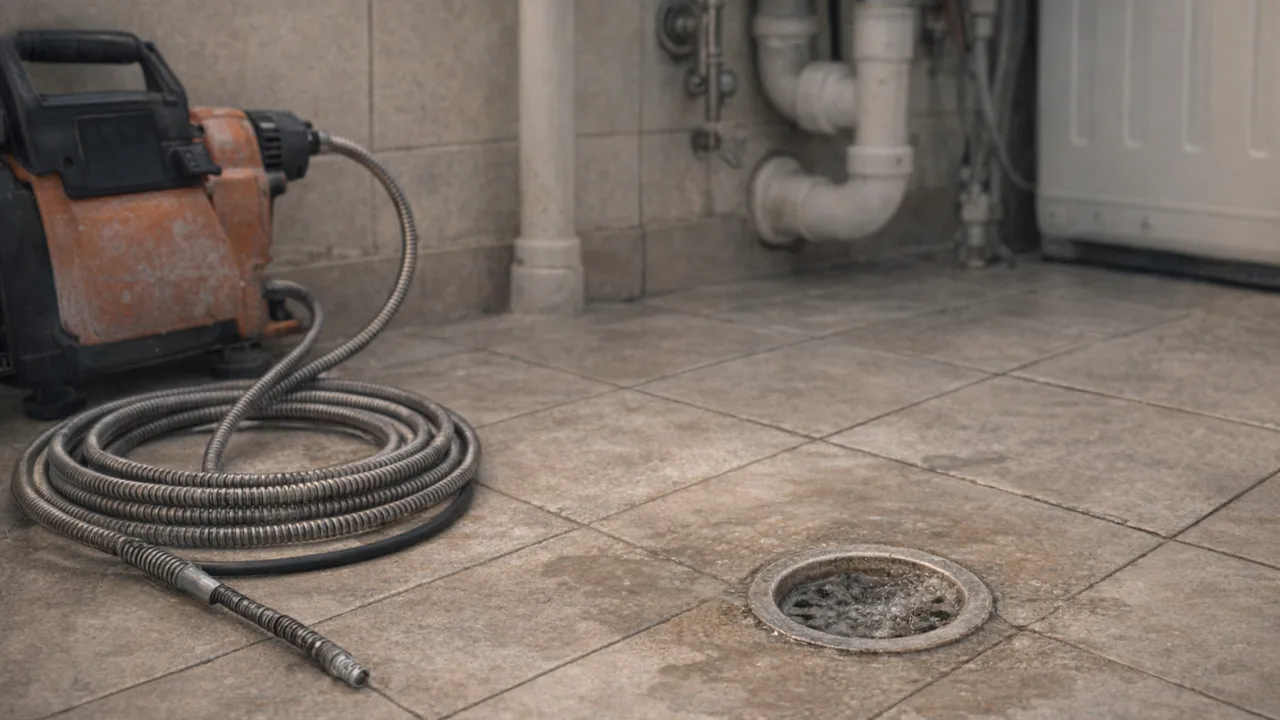
Ashdod is one of Israel's toughest cities for sewers and drainage. There are objective reasons: the country's largest seaport drives a high water table in the southern neighborhoods; the older rovas (Aleph through Dalet) were built in the 1950s-70s with cast-iron sewer lines that are reaching the end of their service life; in rainy winters the stormwater and domestic sewage systems partly overlap, overloading the main collectors; and the municipal ficus and sycamore plantings produce aggressive roots that actively destroy pipes at 30-year depth.
If you have ever waited three hours for a plumber while a blocked riser flooded two floors below you, you are not alone. This guide explains why blockages are common in Ashdod, how to spot them early, what the different unclogging options cost in 2026, and what actually works for prevention.
If you need a local fix fast: open plumbing in Ashdod; when the blockage is deep or keeps coming back, the task page for hydrodynamic drain cleaning is the right follow-up.
Why Ashdod has more sewer problems than the average Israeli city
1. The older rovas were built 50-70 years ago
Rova Aleph is the oldest — built 1957-65 for North African immigrants. Rovas Bet and Gimel — 1960s-70s. The sewer systems in these neighborhoods were originally cast iron (barzel yatzuk), which in Israeli conditions — and in contact with salty groundwater — lasts 50-60 years at most. Those limits have already passed, and the pipes are corroding, cracking, and deforming under load.
2. High water table near the port
In the southern and western parts of the city (rovas Aleph-Gimel, industrial zone, port), the water table sits 2-4 meters below grade. Two negative effects follow: groundwater pushes on sewer pipes from outside and seeps through any crack, undermining the risers; and in the rainy season the saturated soil cannot absorb water, which overloads the stormwater system and eventually the main collector.
3. Street tree roots
Ashdod (like Ashkelon and Beer Sheva) has planted ficus (ficus retusa) and sycamores along its streets for decades — they produce dense shade and are low-maintenance. The problem is their roots actively seek water and grow into any crack in a sewer line, progressively destroying it. In the older rovas this is the main cause of blockages in the street portion (upstream of the manhole).
4. Winter storms and stormwater mixing with sewage
Ashdod receives 450-550 mm of rain per year, 70% of it in December-February. In older parts of the city the stormwater and domestic sewers partly cross (a palliative fix from the 1980s). In a heavy storm the level in the main collector rises, and water can back up into apartments through bathroom or kitchen floor drains — the "unexpected floods" that get posted to Facebook groups after every storm.
Types of blockages in your apartment — from local to systemic
Kitchen sink
Most common — 60% of calls. Cause: grease solidified in the trap and the horizontal drain. In Ashdod it is made worse by hard water: minerals crystallize on the grease and create a "cement" that hands alone cannot remove.
- Symptoms: slow drainage, gurgling, odor
- DIY: baking soda + vinegar + boiling water, plunger, chemicals like Mr. Muscle or Sano Kalman
- Pro: mechanical snake — ₪200-400, 30-60 minute visit
Shower and bath
Hair + soap + minerals. Second most common in Ashdod. Typically the trap under the tub clogs, sometimes the floor-level drain for the whole level.
- Symptoms: water stands in the pan, takes 30+ seconds to drain
- DIY: drain-hair tool (plastic with teeth) + hot water
- Pro: snake + hydro-jet — ₪250-500
Toilet
Paper, hygiene products, wet wipes (the main villain — they do not break down as the manufacturer claims). In Ashdod it is often a consequence of neighbors on upper floors flushing miscellaneous items, causing a riser blockage.
- Symptoms: water does not drain or drains slowly, rises when flushed
- DIY: large plunger (pompa), soft metal toilet snake
- Pro: heavy snake or hydro-jet — ₪300-600
Main riser (standpipe)
The worst case. The blockage runs the whole height (4-8 floors in a typical Ashdod building); water rises into lower apartments through drains and toilets. Requires building committee (vaad bayit) coordination — the riser is common property.
- Symptoms: multiple apartments complain at once, water comes up rather than drains
- DIY: impossible
- Pro: heavy snake (₪500-1,200) + sometimes hydro-jet (₪1,500-3,500) + camera inspection (₪400-800)
Street sewer / manhole
Between the building and the city main, pipes often clog: tree roots, construction debris from nearby projects, or simple wear. In Ashdod, ficus roots are almost always the cause.
- Symptoms: blockage does not clear with local work, water slowly drains from all points in the house
- DIY: impossible
- Pro: high-pressure hydro-jet + camera (₪1,500-5,000, sometimes needs municipal coordination)
Signs of a blockage BEFORE things burst
Catastrophes can be avoided by catching the early signals:
- Smell from the drain — the trap cannot hold back smells from below, meaning something is accumulating
- Characteristic gurgling in the toilet when you run the sink or shower — air that cannot escape through a partially blocked collector
- Drainage slower than usual — not 30 seconds yet, but noticeably slower. This is the moment when ₪200 of snaking solves the problem before it becomes a ₪1,500 emergency
- After a toilet flush, water rises in the shower — already serious, the riser is partially blocked
- Other apartments in the building have problems too — a sign of a systemic blockage in the riser or street sewer
Professional unclogging methods — 2026 Ashdod prices
1. Mechanical snake (spirala)
The standard method. A flexible steel cable with a cutter, scraper, or hook at the tip. Fed into the pipe, rotated by a motor, breaks the blockage.
- When to use: local clogs — grease, hair, paper, small roots
- Price: ₪200-500 per point (sink, toilet, tub)
- Riser price: ₪500-1,200
- Duration: 30-90 minutes
- Downside: does not fully break up limescale or root masses — the problem can return
2. Hydro-jetting (shtifat lachatz / jetting)
A special machine delivers water at 200-400 bar through a flexible hose. Different nozzles cut through any buildup and flush the pipe back to "like new".
- When to use: roots, complex limescale, grease plugs 10+ meters long, street sewer
- Price: ₪800-1,800 per apartment, ₪1,500-3,500 for riser / street section
- Duration: 1-3 hours
- Upside: result lasts 2-5 years
- Downside: not every plumber has the equipment; in old cast-iron pipes, overly high pressure can breach a corroded wall
3. Camera inspection (tzilum tzineret)
A camera on a flexible cable is pushed into the pipe and shows the exact location and nature of the blockage on a monitor. Required before any serious intervention or replacement.
- Price: ₪400-800 (live view), ₪600-1,200 with recording and written report for insurance or vaad bayit
- Essential in Ashdod: in older rovas, without a camera it is easy to miss a cracked pipe
4. Local repair (coupling, section replacement)
If the camera reveals a crack or displacement, the fix is local — the floor or wall is opened and the problem section is replaced.
- Price: ₪800-3,500 in an apartment, ₪2,500-8,000 in a riser
- Important: riser work requires vaad bayit approval
5. Full riser replacement
When a cast-iron pipe has rotted along its full height, cosmetic fixes are not an option. Rare but sometimes unavoidable.
- Price: ₪8,000-25,000 for a riser in a 4-8 floor building
- Funding: from the vaad bayit reserve or a special assessment
- Process: 1-2 weeks of work, drainage off for 1-3 days
Ashdod neighborhoods: where the problem is most acute
- Rova Aleph — the oldest, built 1957-65. Cast-iron sewers ~60 years old, many risers at their limit. High water table. Ficus trees on the streets. Scheduled camera inspection every 2-3 years is recommended here.
- Rova Bet and Gimel — 1960s-70s. Slightly better than Aleph but the same causes. Main problems — grease plugs in kitchen lines and roots in the street portion.
- Rova Dalet and Hey — 1980s-90s. Sewers already use modern materials (PVC). Problems are rarer, usually local — kitchen or shower.
- Rovas Vav through Yod-Bet — 1990s-2010s. Modern system, minimal problems, usually local.
- Marina Ashdod — newest construction, 2010s. Excellent sewer system. The one thing to watch — underground parking with pump stations that need their own maintenance.
- Kim, Neelah, Neot Yosef — 2000s, modern systems, standard local blockages.
- Industrial zone / South City — less residential, commercial profile is different.
Winter storms and apartment flooding
In Ashdod, December through February regularly brings episodes where, after a heavy storm (50+ mm in a day), water starts rising through floor drains in first- and second-floor apartments in the older rovas. This is not a "blockage" in the classical sense — it is overflow of the main collector with stormwater mixing into the domestic sewer.
What to do:
- If you are on floor 1-2 in an old rova — install a backflow valve (shastum al-chazor) on the drains. ₪200-500 per valve + ₪300-600 installation. The only reliable protection
- During a heavy storm — plug all drains
- Do not run large discharges (dishwasher, washing machine) during the storm
- Notify the municipality (iriya) — they have an emergency stormwater crew that sometimes pumps out the collector
Prevention: 7 simple rules
- Do not pour grease — not even "a little". Cooking oil from a pan goes on paper towel and into the trash
- Sink and shower strainers — ₪10-30 at ACE or Home Center. Catches 80% of hair and food debris
- No wet wipes in the toilet — despite "flushable" labels. In Israel they do not break down in the common system
- Once a month — boiling water + baking soda through the sink. Five minutes of effort, prevents grease plugs
- Once a year — preventive plumber visit (₪200-400) for trap flushing and drainage check
- In older rovas — camera inspection every 2-3 years (₪400-800). Finds problems before they become emergencies
- Every 3-5 years — riser hydro-jetting through the vaad bayit (₪1,500-3,500, split across residents). Sharply reduces emergency risk
When not to DIY
DIY fits simple local blockages (apartment sink, bath). But a professional is mandatory when:
- Several points are blocked at once — means the riser, not a local issue
- Water rises from a floor drain — main collector overload
- Two rounds of chemical drain cleaner did not help — likely something mechanical (roots, foreign object)
- A toilet clog does not clear after 10 minutes of plunging
- Strong smell from several points simultaneously
- You live in an older rova (א-ג) — the risk of mistakes is higher there
Dangerous mistake: strong chemicals (caustic soda, "Krot") in old cast-iron pipes accelerate corrosion. In 50+ year old buildings, chemicals can finish what years of corrosion began — and punch through the pipe.
How to pick a plumber for drainage in Ashdod
- Experience in older rovas — if you live in Aleph-Gimel, this is essential
- Has hydro-jet and camera — not every plumber has this equipment. If your situation is serious, a basic snake is not enough
- Transparent pricing — per-point unclog price, riser price, diagnostic hourly rate. No "we will come and see"
- Workmanship warranty — minimum 30 days (some give 90). If the blockage returns, they come back free
- Building-committee coordination — for common riser work, the plumber should prepare a quote and documents for the vaad bayit meeting
- Insurance-claim experience — if neighbors were flooded, you need a proper report for the insurance company
Conclusion
Sewer blockages in Ashdod are not random — they are a direct consequence of the old rovas' age, the high water table, and the ficus trees in the city's landscaping. The good news: 70% of problems are solved at ₪200-500 with local snaking, if you do not let them escalate. The bad news: once they reach the riser or street section, the bill can go to ₪3,000-8,000 plus potential losses from flooding the neighbors.
The main strategy is prevention and early response. Any signal — slow drain, smell, gurgling — is a reason to call a plumber now, not in three weeks. In older rovas — camera inspection every 2-3 years, riser hydro-jetting every 3-5 years.
KABLAY is a marketplace connecting clients with independent specialists. KABLAY does not guarantee availability, the number or timing of responses, licensing, documents, price, quality, or outcome; check the specialist and proposed terms before contracting.
Internal links